

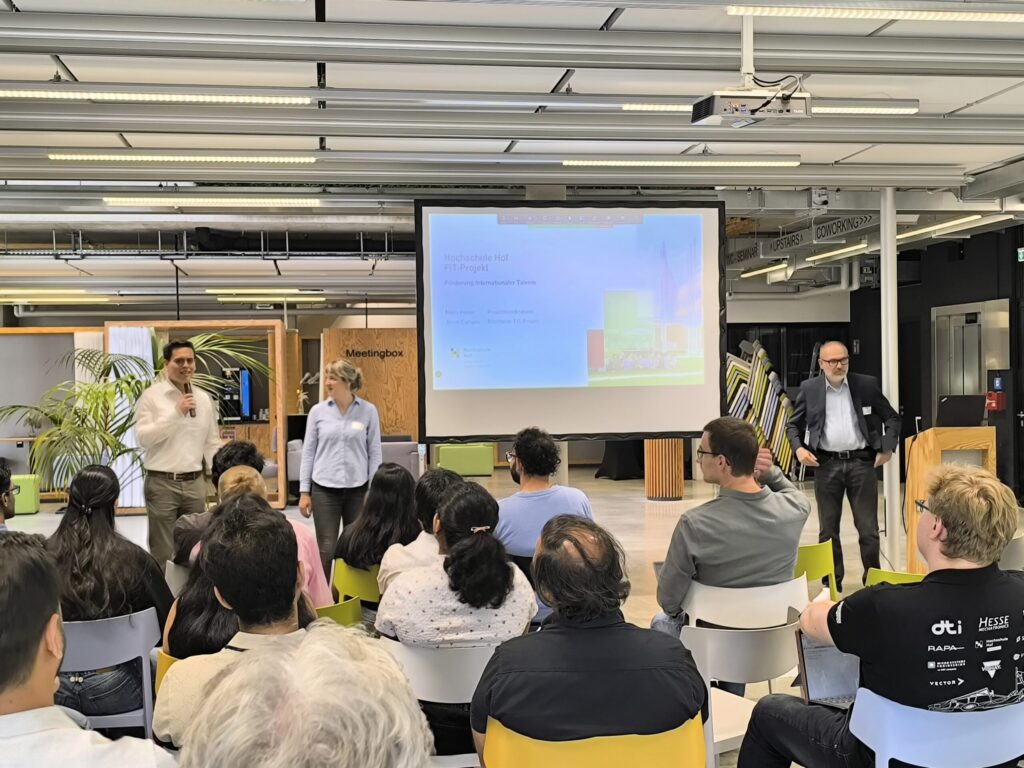
In early July, Hof University successfully hosted the event “The Use of ChatGPT & Co. in Engineering and Architecture Firms—Lessons Learned from a Student Project” at Einstein1—the Digital Startup Center on the Hof campus. Representatives from companies, engineering and architecture firms, as well as interested individuals, accepted the invitation to participate in a practical discussion on the effective use of generative artificial intelligence in planning processes for environmental and water engineering.
Project Background: FIT Project and the “Sustainable Water Management and Engineering” Master’s Program
The results presented were developed as part of the FIT project’s Ideation Week and the course “Risk Management in the Water Sector” in the English-language master’s program “Sustainable Water Management and Engineering.” Under the direction of Prof. Günter Müller-Czygan, head of the Institute for Sustainable Water Systems (inwa) and research group leader for Water Infrastructure and Digitalization, international master’s students, together with partner companies ifuplan, VTG Straub, and TNL, developed practical solutions for the concrete application of generative AI in engineering and planning-related work processes.
Focus on Practical Projects
Using real-world tasks provided by the partner companies, the students analyzed the potential of AI applications such as ChatGPT, Claude, and others, and developed innovative concepts to address specific operational challenges. Among the presentations were:
- “Building Sustainable Solutions with Data, Engineering & Experience for Bird Collision Risk Analysis and Funding Identification,”
- “LLM Usage in Workflows for Hydraulic Calculations of Stormwater Retention Tanks,” and
- “AI-Assisted Plan Mining for Flood Risk and Heavy Rainfall Preparedness.”
Students and Companies in Dialogue
The event was held partly in German and partly in English and served as a platform for discussing the presented AI innovations, promoting young talent, and exploring future collaboration opportunities.
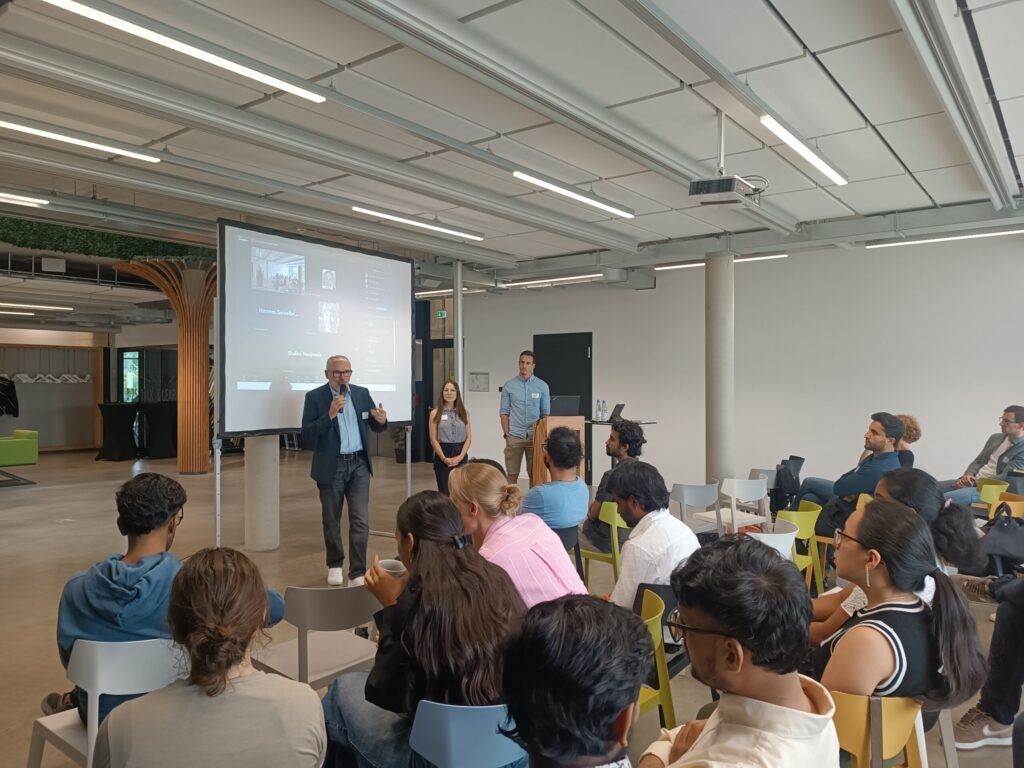
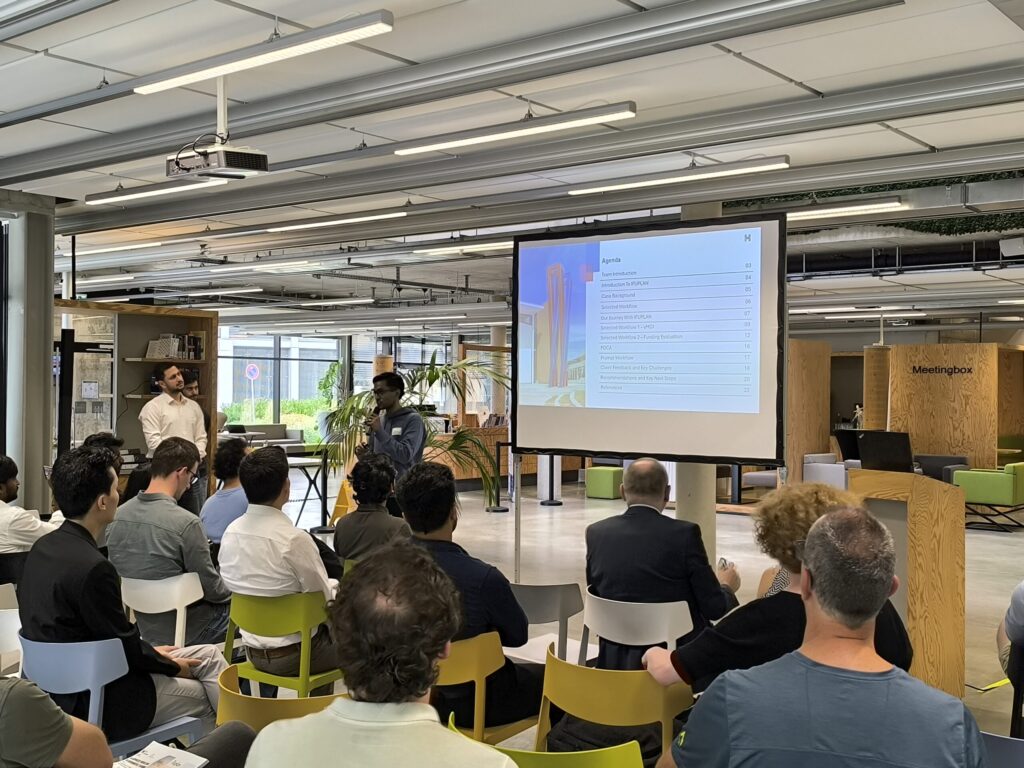
Prof. Müller-Czygan opened the event with a general keynote speech on “The Use of ChatGPT & Co. in Engineering and Architecture Firms.” The students then presented their project results in English. Finally, the corporate partners shared their experiences from the collaboration.
Response and Feedback
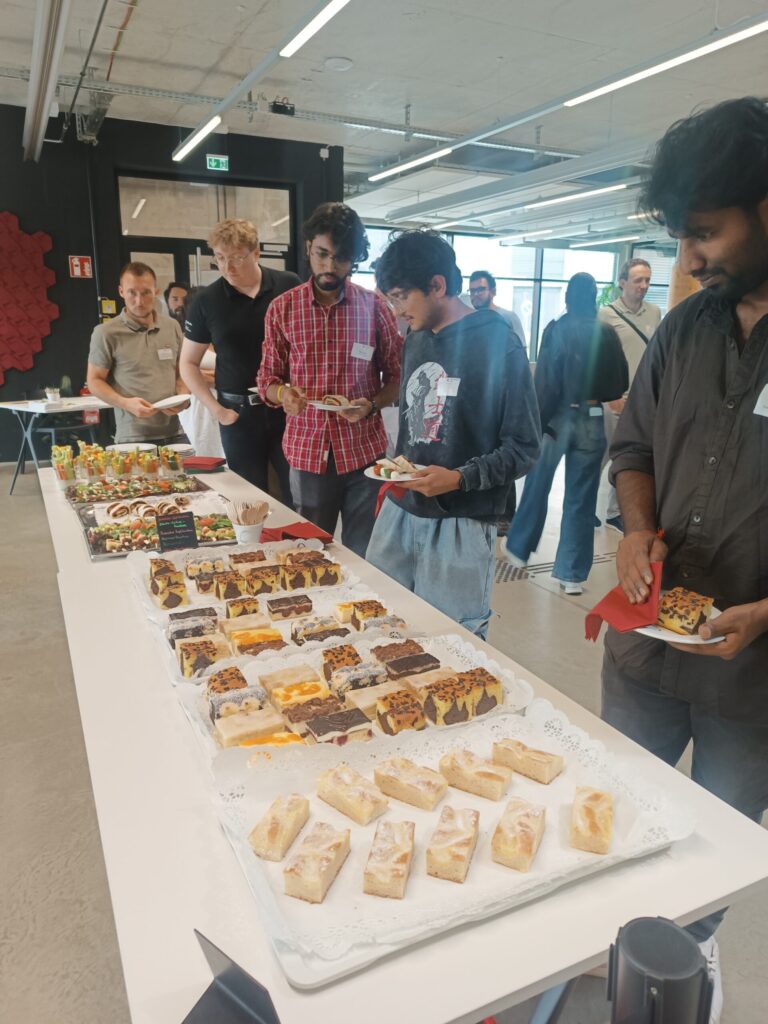
Feedback from participants was overwhelmingly positive. In particular, the combination of technical input, concrete project examples, and the opportunity for personal networking during the get-together was praised.
“Very good. It’s really great for students, for companies, and for the audience. I’d love to see more of this.”
“Good use of AI—the practical application examples were especially valuable.”
“It’s a win for everyone—for companies to gain results and insights, for students to explore potential future opportunities, and for the program portfolio as well.”
The event demonstrated that when international students, companies, and the university collaborate, all parties benefit. Students gain practical insights and develop AI skills that will be essential in the future; companies receive innovative solutions; and the university strengthens its profile as a practice-oriented, internationally focused institution and showcases its special expertise in the application of AI.
Due to its success, additional events of this kind are planned.