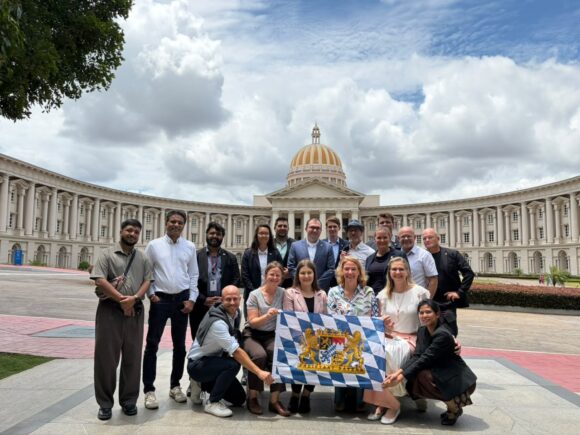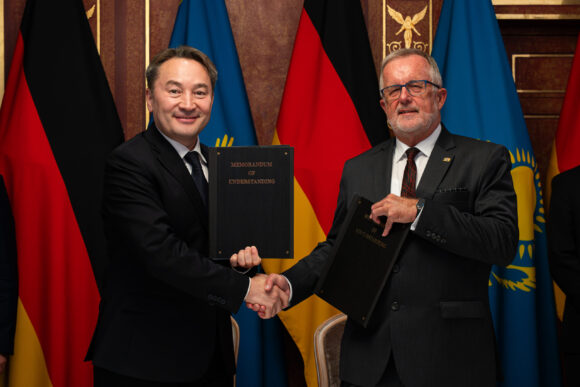


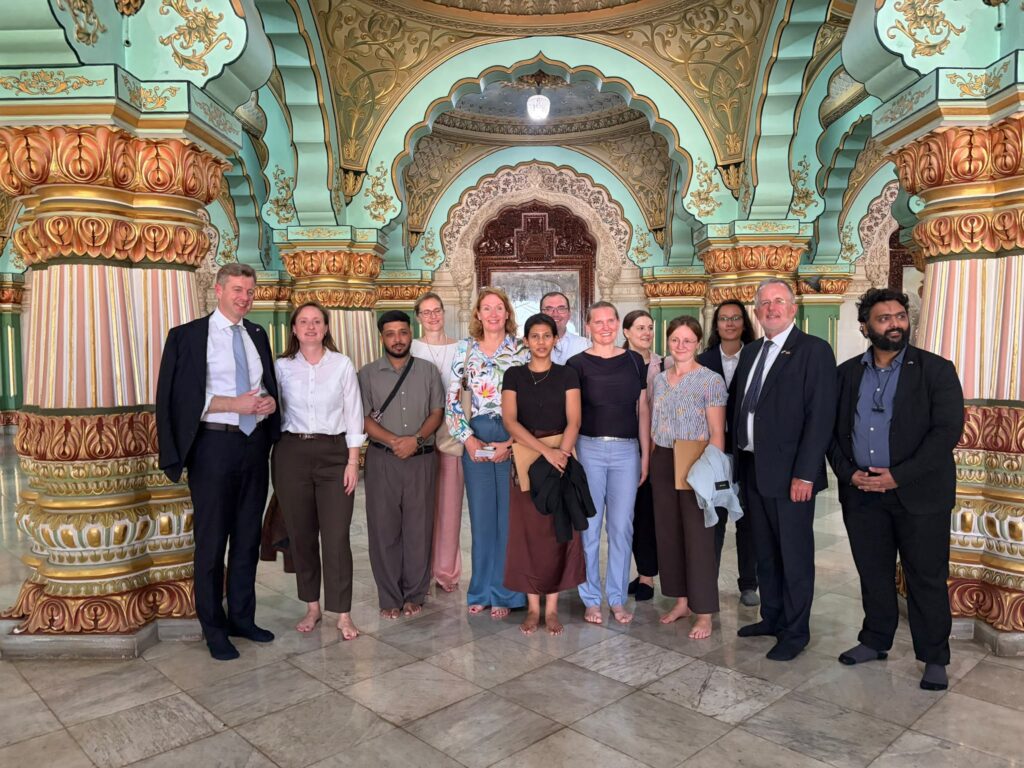
To further expand economic and scientific ties between the Hof region and the Indian subcontinent, a delegation from the Hof region traveled to India last week. The delegation was led by District Administrator Dr. Oliver Bär and the President of Hof University of Applied Sciences, Prof. Dr. Dr. h.c. Jürgen Lehmann. The trip was accompanied and co-organized by the Bavarian-Indian Center for Business and Higher Education (BayIND), which is headquartered on the Hof University of Applied Sciences campus, and the Hanns Seidel Foundation.
The goal of the trip was to strengthen existing close ties. India is already Hof University’s most important international partner: Over 20 percent of all students at Hof University come from India.
“Import and export figures between the Hof region and India have each increased more than sixfold over the past two decades. Since Hof is home to the Bavarian-Indian Center and has a large number of Indian students, we wanted to identify further areas of cooperation during our visit. As a center of higher education and as a region, we want to benefit from India’s development.”
Dr. Oliver Bär, District Administrator of the Hof District
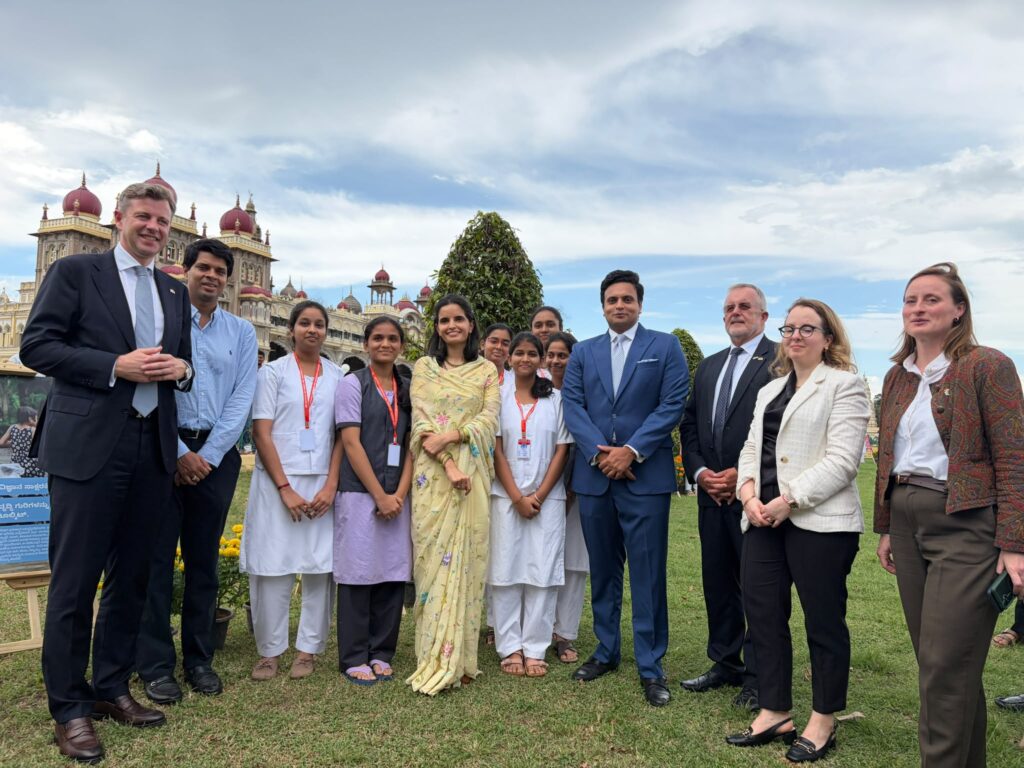
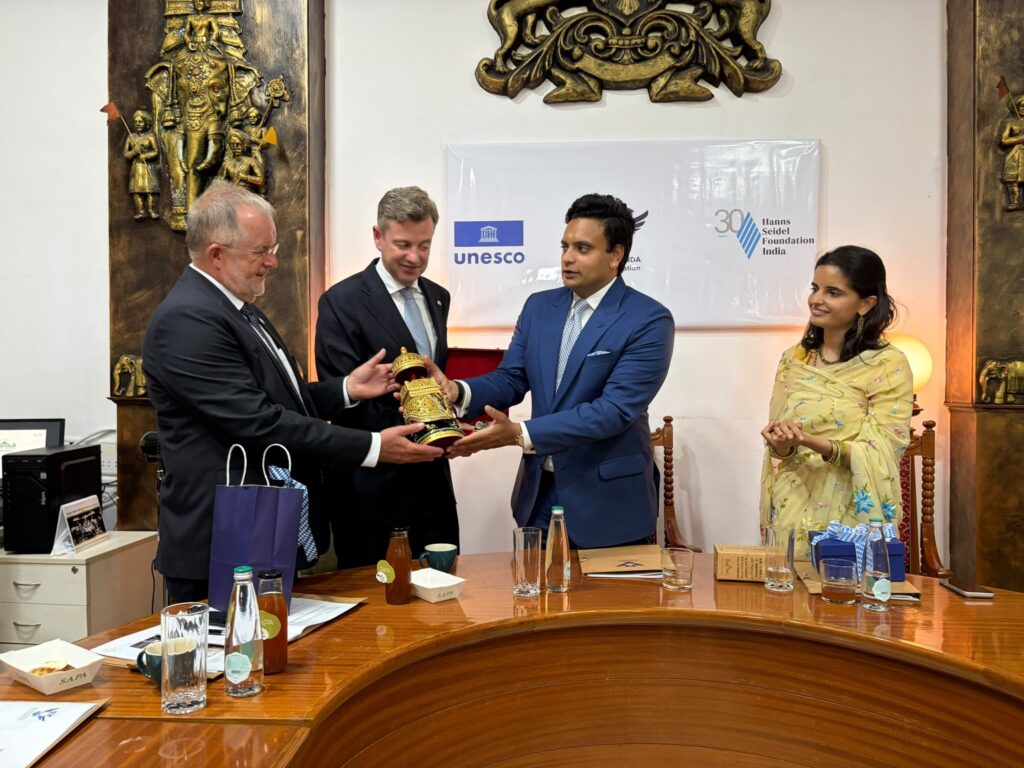
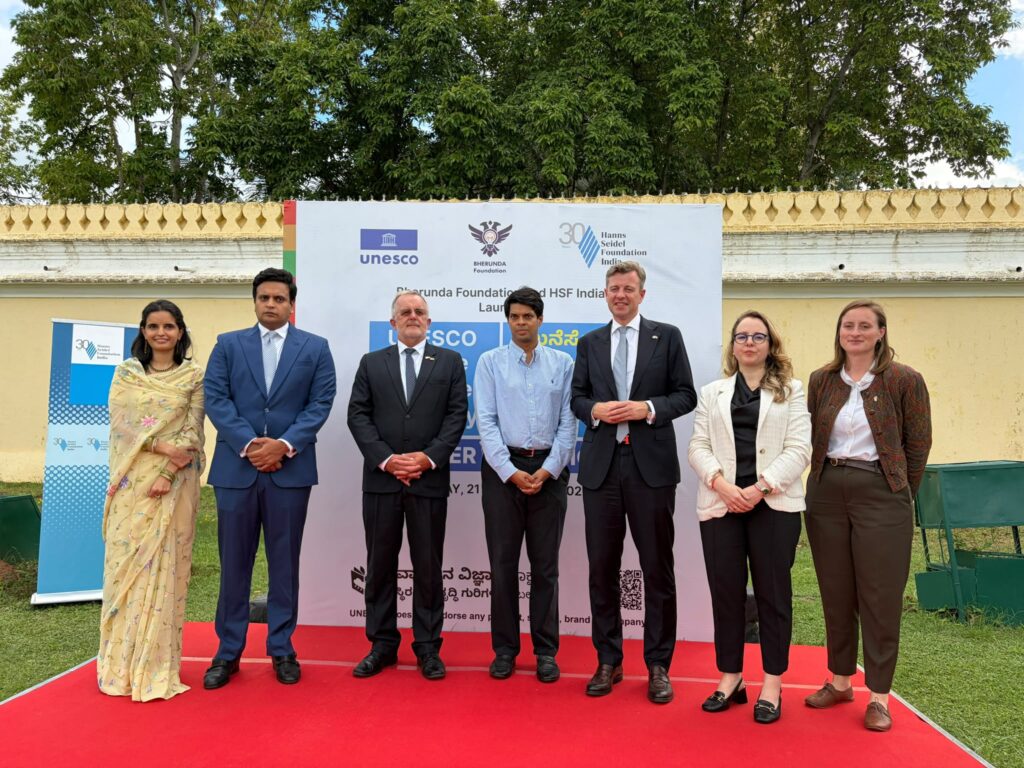
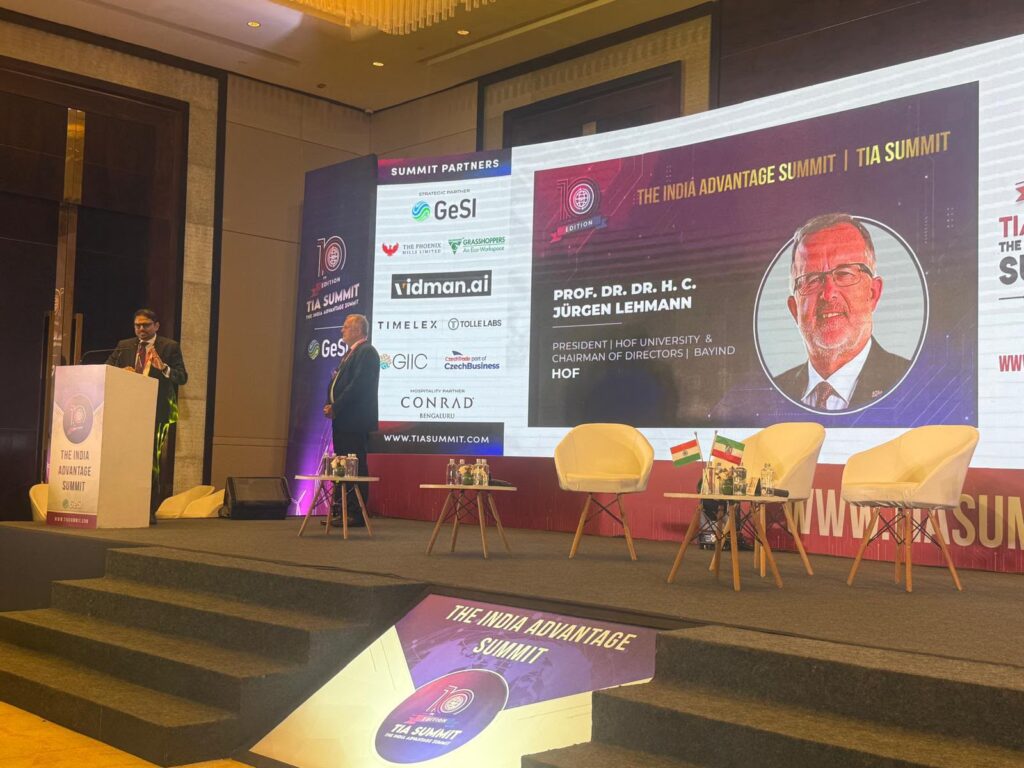
The program focused on discussions in the Indian cities of Bangalore and Mysore. The delegation met with representatives from universities, political officials, and the Maharaja and Maharani of Mysore. In addition, they spoke at the India Advantage Summit, an international business conference. The discussions centered on topics such as smart city technologies, digitalization, and sustainable water management.
In parallel with the delegation of business representatives, another group of alumni and students, led by the International Office and the Alumni Association, gained insights into India’s dynamic economy—particularly its diverse startup scene—and Indian culture.


The Indian students at Hof University of Applied Sciences have a special role to play in future cooperation. They could become an important bridge between the Hof region and India, as the university president and district administrator agree:
“The students are already here, are familiar with the region, and have gained insights into the German economy and society during their studies.”
Prof. Dr. Dr. h.c. Jürgen Lehmann, University President
The figures also underscore this: around 75 percent of Indian students who have earned a master’s degree remain in Germany. About 45 percent are still here even ten years later. The district and the university intend to leverage this potential even more effectively in the future.
“India is part of our everyday life at Hof University. We must therefore ask ourselves what we can do to turn this international strength into concrete opportunities for businesses and the entire region.”
Prof. Dr. Dr. h.c. Jürgen Lehmann
Indian students should therefore have better opportunities to connect with regional companies—for example, through internships or part-time student jobs. At the same time, they can help establish contacts with Indian companies and entrepreneurs seeking access to the German or European market.
This latest trip builds on a trend that Hof University of Applied Sciences has been pursuing for many years. The university has been active in India since 2006 and maintains numerous partnerships with Indian universities. In June 2025, the university opened its own representative office in Bengaluru.

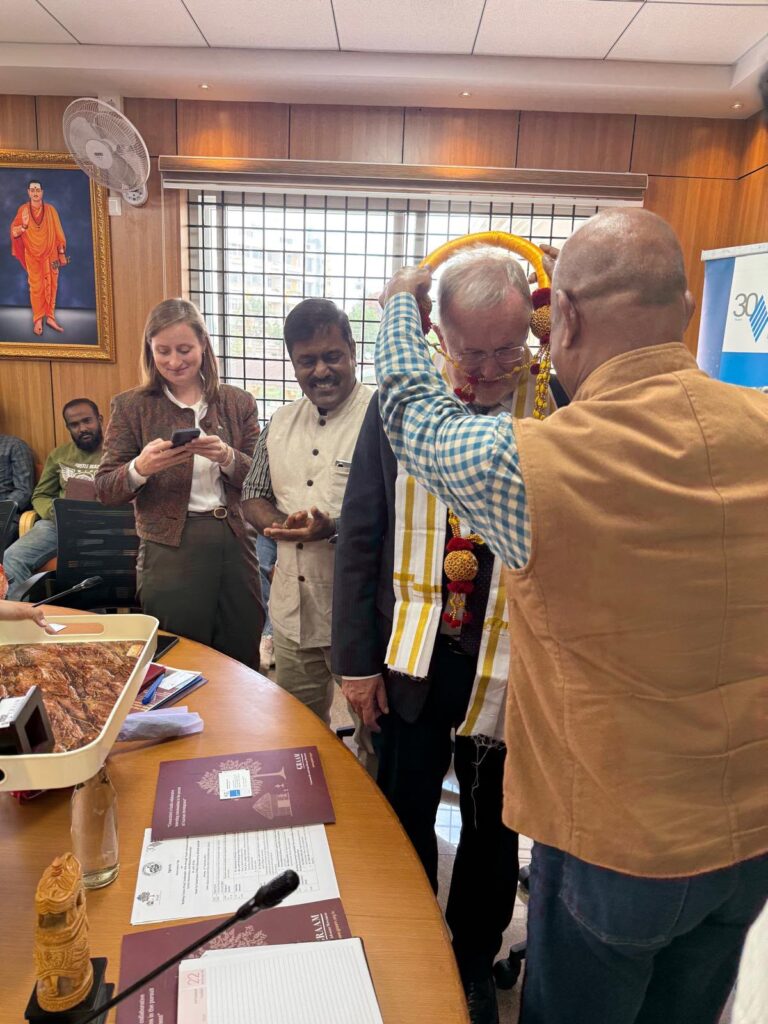
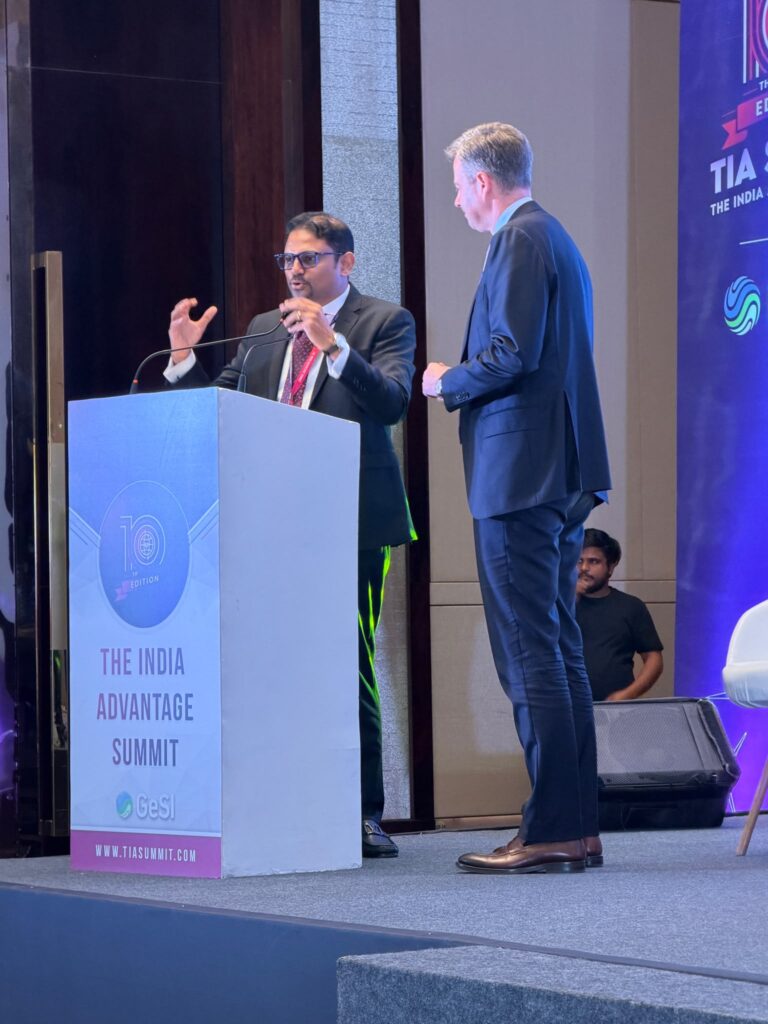
The close connection between Hof and India is also evident on the Hof campus: About a quarter of Hof University’s 4,000 students have Indian roots. Through this joint initiative by Hof University of Applied Sciences, BayIND, and the Hof district, this path is now set to take on a new dimension: international university partnerships are to give rise to even stronger economic and municipal partnerships.