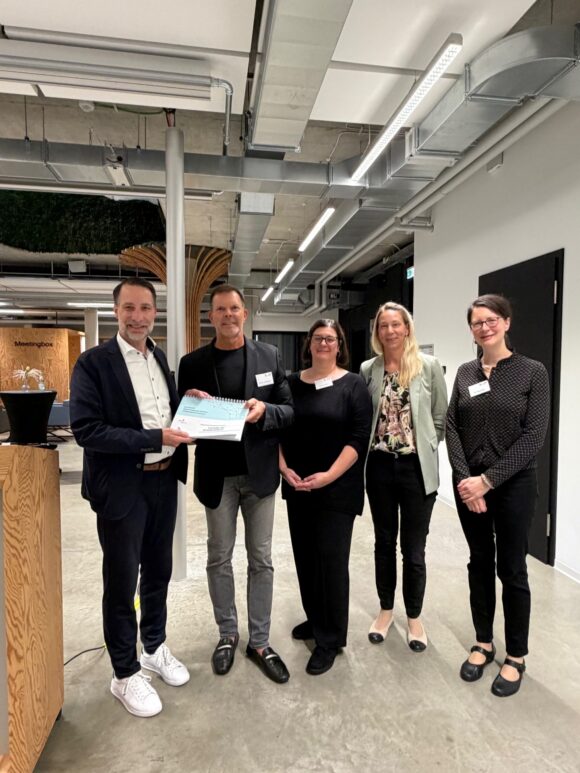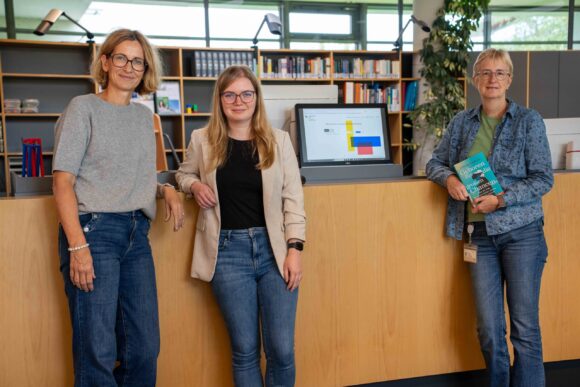


How is Hof perceived by the people who live, study, work, or spend their free time here? And where do they see room for improvement? Twelve sixth-semester students in the Sociology of Economics and Organizations program at Hof University of Applied Sciences explored these questions during the summer semester of 2026. In a comprehensive survey, 225 students and 229 passersby in the Hof city area were asked about mobility, the downtown area, shopping habits, municipal services, their connection to Hof, and other topics.
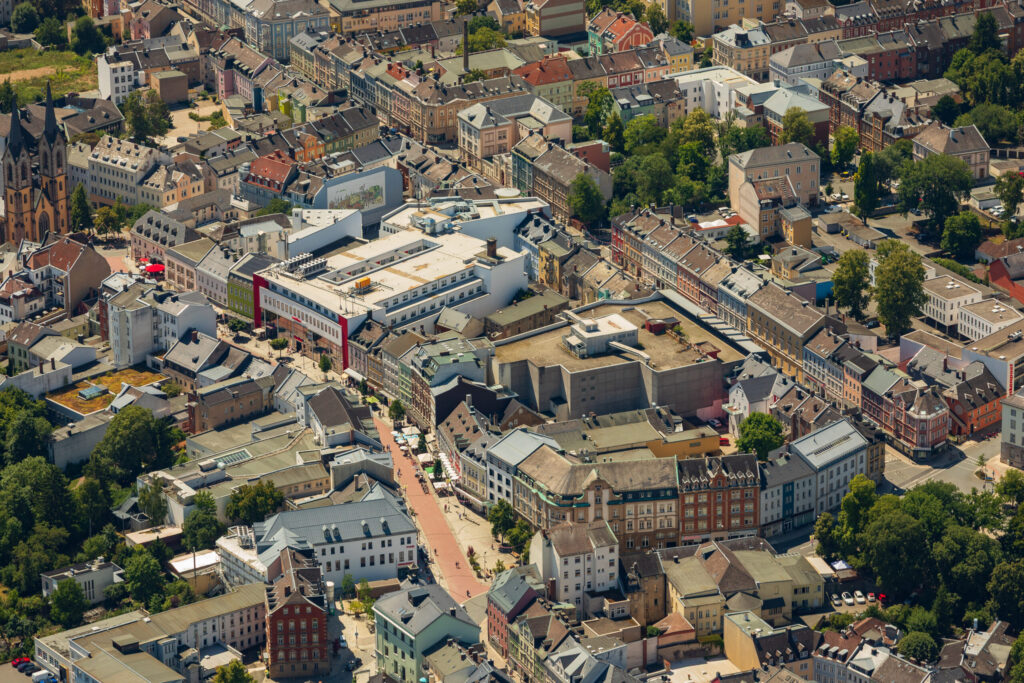
One thing in particular becomes clear: students and the rest of the population do not always view Hof from the same perspective. At the same time, there is a surprisingly high degree of agreement on many topics. The differences and similarities are particularly evident when it comes to public transit, downtown development, and the question of how the city should spend its money.
“The only requirement was: The questions must revolve around the city of Hof.”
Gerhard Plietsch, seminar leader
It was important that the students develop the questions largely on their own and that the results could later have practical applications.
Cars Dominate—But Where You Live Makes the Difference
In Hof, the car remains by far the most commonly used mode of transportation. Fifty-five percent of the passersby surveyed drive almost every day; among students, the figure is 46 percent. When daily and weekly use are considered together, about three-quarters of both groups regularly travel by car. However, where students live is the decisive factor. Two-thirds of students who live outside Hof drive every day; among students living in Hof, the figure is 38 percent. Conversely, 66 percent of students living in Hof walk every day, but only 34 percent of students who commute from outside the city do so.
This reveals a fundamental pattern in the study: Those who live in Hof can do without a car more often. Those who come from outside the city are more dependent on cars.
Public Transit: High Demand, but Significant Dissatisfaction
The study is particularly revealing when it comes to local public transportation. Students use buses and trains significantly more often than the rest of the population surveyed—and, with their semester pass, they make a not insignificant financial contribution, which is likely why they pay close attention to the value for money:
54 percent of students use public transit at least once a week, compared to just 26 percent of passersby. Among students living in Hof, the proportion is as high as 57 percent. At the same time, their assessment of the service is quite critical. Among passersby, 55 percent are somewhat or very dissatisfied with the city bus. Among students, this proportion rises to as high as two-thirds. Notably, even among students who frequently use public transportation, 65 percent are dissatisfied. Among those who rarely or never take the bus or train, the figure is as high as 70 percent. The criticism is directed less at public transit itself than at its availability. The most common request is for more frequent service: 57 percent of students and 36 percent of passersby would like to see more frequent connections. In second place is improved evening and nighttime service, cited by 45 percent of students and 28 percent of passersby. Twenty-six percent of students and 16 percent of passersby would like better connections between their homes and the university.
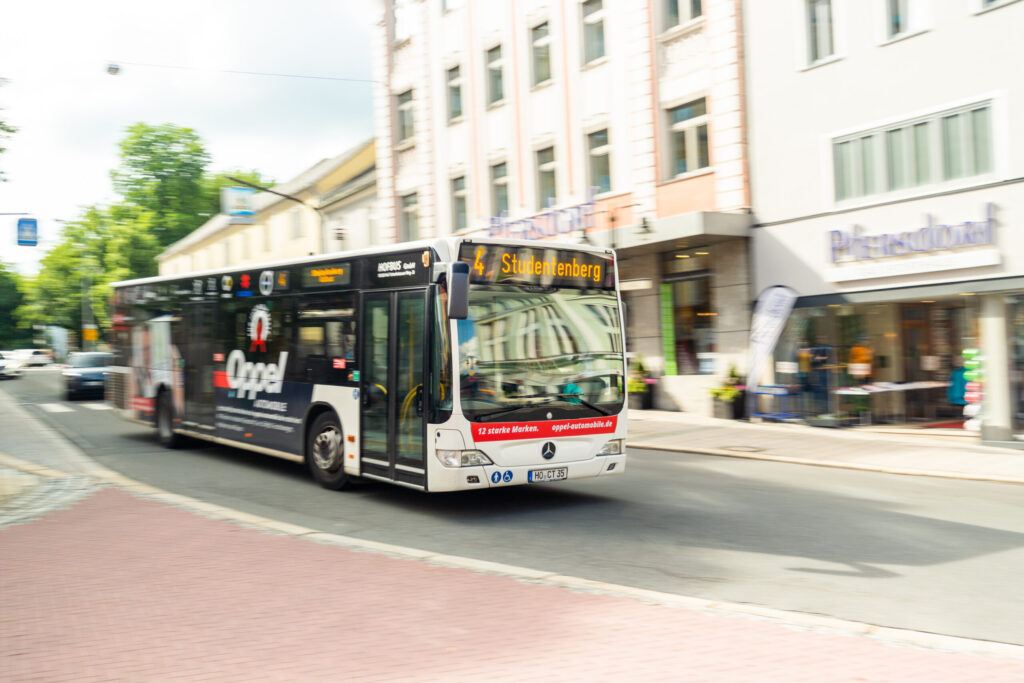
The importance of this issue is also evident when it comes to municipal spending: 83 percent of students and 65 percent of passersby are in favor of investing more money in public transit. Hardly anyone advocates for cutbacks. It is also noteworthy that support for higher public transit spending is particularly high among older respondents: among those over 70, it stands at 76 percent.
Bus Service in the Evening and at Night
The most significant criticism concerns late-night service. Between 6:00 and 8:00 p.m., 56 percent of passersby still consider the service adequate or absolutely adequate. Among students, that figure drops to just 40 percent. After 8 p.m., the assessment shifts significantly. Between 8 and 10 p.m., only 20 percent of passersby and 9 percent of students rate the service as adequate or better. After 10 p.m., the figures drop to just 12 percent and 4 percent, respectively. Conversely, 69 percent of passersby and as many as 86 percent of students rate night service as “not at all sufficient.”
This makes public transportation a key factor in Hof’s appeal—especially for young people. For students, it’s not just about getting to the university, but also about the city center, recreational activities, and destinations like Untreusee. For older people, on the other hand, the bus is particularly important for shopping.
Gerhard Plietsch had already pointed out the particular sensitivity of this issue at the start of the study:
“If you ask questions about public transportation use directly at the bus station, you may already be influencing the results. That’s why the careful selection of survey locations was important.”
Gerhard Plietsch, Seminar Leader
However, the results now show that the criticism by no means originated at just one specific survey location: Dissatisfaction runs across different groups and is also very high among regular public transit users.
Downtown: Pros and Cons
Overall, Hof’s downtown area is not rated poorly. 55 percent of passersby and 59 percent of students are somewhat or very satisfied with its appeal. However, there are significant differences by age: While only 37 percent of passersby under 30 rate the downtown area positively, the figure rises to 77 percent among those over 70.
The range of dining options stands out as particularly positive. 77 percent of passersby and as many as 80 percent of students are somewhat or very satisfied with it. Dining is thus one of the city center’s major strengths.
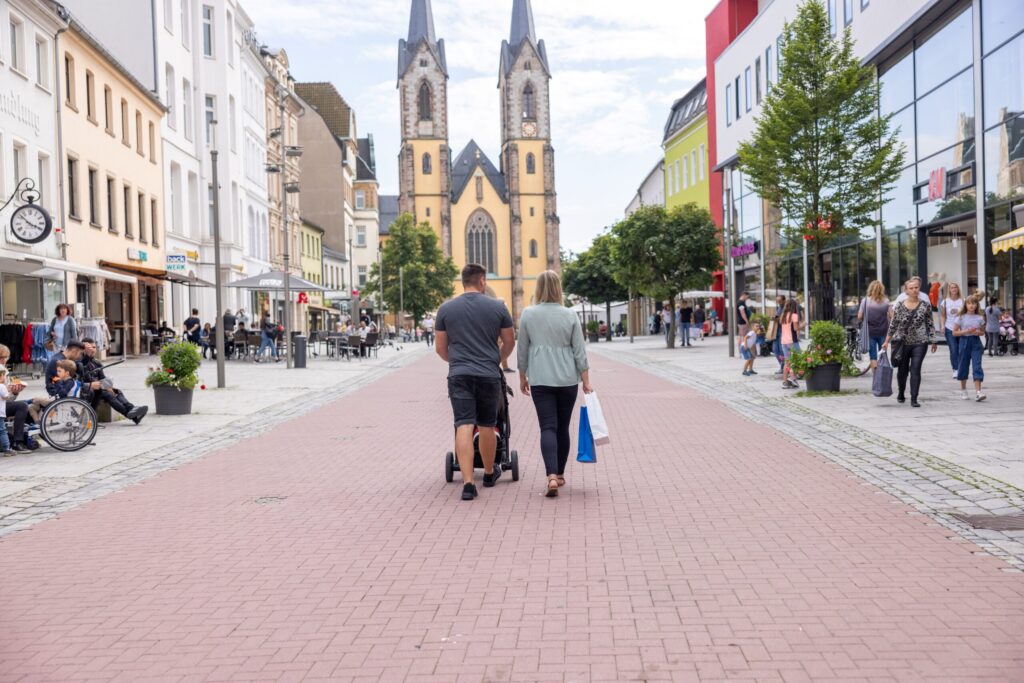
In contrast, the variety of shops is viewed much more critically: About 59 percent of passersby and 58 percent of students are somewhat or very dissatisfied with it. The atmosphere of the city center is also perceived ambivalently. Public restrooms fare particularly poorly: more than 80 percent of respondents express dissatisfaction with them.
Vacant storefronts affect shopping behavior
From the respondents’ perspective, vacant storefronts are not merely an aesthetic problem. About 60 percent of both passersby and students say they would shop in the downtown area more often if there were fewer vacant stores there. There are clear ideas about the desired reuse of these spaces: Passersby primarily want new retail stores, cafés, and restaurants, as well as cultural offerings. Students even rank cafés and restaurants first and also mention pop-up stores and other temporary concepts more frequently.
When asked what might draw people to the downtown area more often, a wider selection of stores also ranks at the top. 49 percent of passersby and 46 percent of students mention this point. For students, events are also particularly important: 52 percent would like to see more events in the downtown area.
Online retail is changing shopping behavior
The downtown area competes not only with other cities but increasingly with the internet. Fifty percent of students shop online monthly, and another 32 percent do so weekly. Among passersby, the figures are around 30 and 27 percent, respectively. The generational difference is particularly striking: among passersby under 30, no one ever shops online; among those over 70, however, this figure stands at 57 percent.
Changes are also evident: 29 percent of students and 22 percent of passersby report having shopped online more frequently in the past three months.
The survey thus suggests that an attractive downtown will not function solely on the basis of traditional retail offerings in the future. Dining, culture, events, the quality of the public space, and new usage concepts are gaining in importance.
What should the city spend its money on?
The survey explicitly took into account the strained financial situation of the city of Hof. Respondents were asked to indicate in which areas the city should spend more, less, or the same amount. Support for increased spending on vacancy management is particularly strong: 84 percent of passersby and 79 percent of students would like to see more effort in this area. The desire for additional investment also prevails when it comes to meeting places for young people, the renovation of school buildings, and public transportation. When it comes to road maintenance, however, passersby in particular are in favor of higher spending.
An interesting picture emerges when it comes to sports and swimming pools: here, the majority of both groups would like to maintain current spending levels. Thirty-one percent of passersby and 37 percent of students are in favor of higher investments.
What Binds People to Hof
When it comes to ties to Hof, there are some expected—but also interesting—differences. Overall, the general population surveyed feels a stronger connection to the city than the students do. For the general population, social contacts and family are the most important factors fostering a sense of connection, followed by nature, quality of life, and cultural offerings. For students, in addition to social contacts, their studies play a particularly significant role.
The importance of individual factors changes with age. For young people, social networks are the top priority. In the 30-to-50 age group, career prospects become significantly more important. Older people, on the other hand, associate their sense of belonging particularly with quality of life and nature. This is also good news for the city: Hof possesses factors that can keep people tied to the city in the long term. The challenge lies in involving students and young people in particular more closely in city life.
About 18 percent see themselves as potential entrepreneurs
Another interesting finding concerns students’ intentions to start a business. About six percent consider starting a business in Hof very likely, and just under twelve percent consider it somewhat likely. Overall, this results in a startup potential of just under 18 percent.
Given the region’s need for skilled workers, this group is of particular interest. After all, anyone who can imagine starting a business in Hof could not only stay in the area themselves but also create new jobs.
A Nuanced Picture of Hof
Overall, the “Hofer Perspektiven” paint a picture that is neither one of pure problems nor one of unqualified success. Rather, they reveal a city whose strengths and weaknesses depend on the specific circumstances of residents’ lives. The restaurant scene, nature, social connections, and certain aspects of quality of life are viewed positively. At the same time, there are clear shortcomings in the variety of offerings in the city center, in vacancy rates, and especially in public transportation.
Gerhard Plietsch sees the value of the study precisely in this nuanced perspective. The students not only collected data but also engaged intensively with it, and their findings could later have practical applications.
The findings provide numerous starting points for this: A more efficient public transit system could improve mobility and participation, especially in the evenings and on weekends. Consistent management of vacant properties could make the city center more attractive. More events, new dining concepts, and innovative uses of space could help draw younger people in particular to the city center. And last but not least, the city could try to strengthen the ties of those students to Hof who can envision staying in the area for their careers or even starting their own businesses.
The survey thus highlights one thing above all: from the perspective of its residents and students, Hof certainly has potential.
In an initial response, Hof’s Mayor Stefan Schmalfuß commented on the survey results and the starting points they provide for the city administration’s work:
“Improving the quality of life and living in the city of Hof is a goal we must consistently pursue. The survey gives us valuable insight into what people want for their city. It is important that we not only identify problems but also work together to find solutions to move Hof forward.
Public transportation remains a key issue, as it is linked to various aspects of daily life, such as work, shopping, and leisure activities. If we drive improvements in this area, it will have a positive impact on other aspects of life in Hof.
As a city, we’re already tackling many challenges. A successful example that combines many goals is our (T)Raum(E)rfüller project. Through this initiative, we’re not only filling vacant spaces with fresh ideas but also revitalizing our downtown and giving people with ambitions and visions the space to make them a reality—which benefits us all.”
Stefan Schmalfuß, Mayor of Hof