

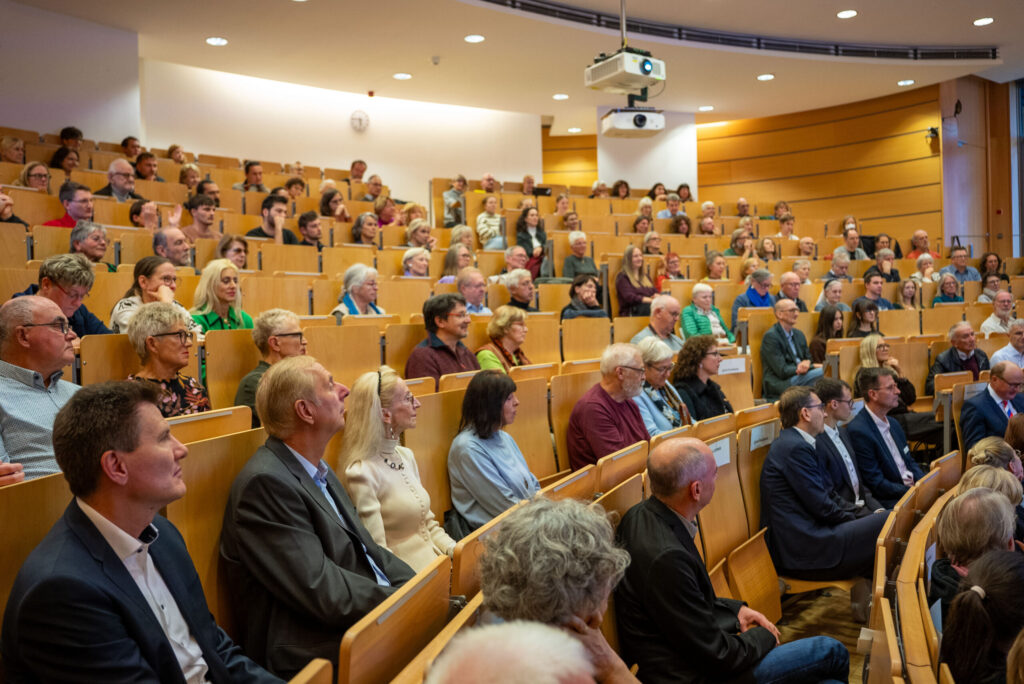
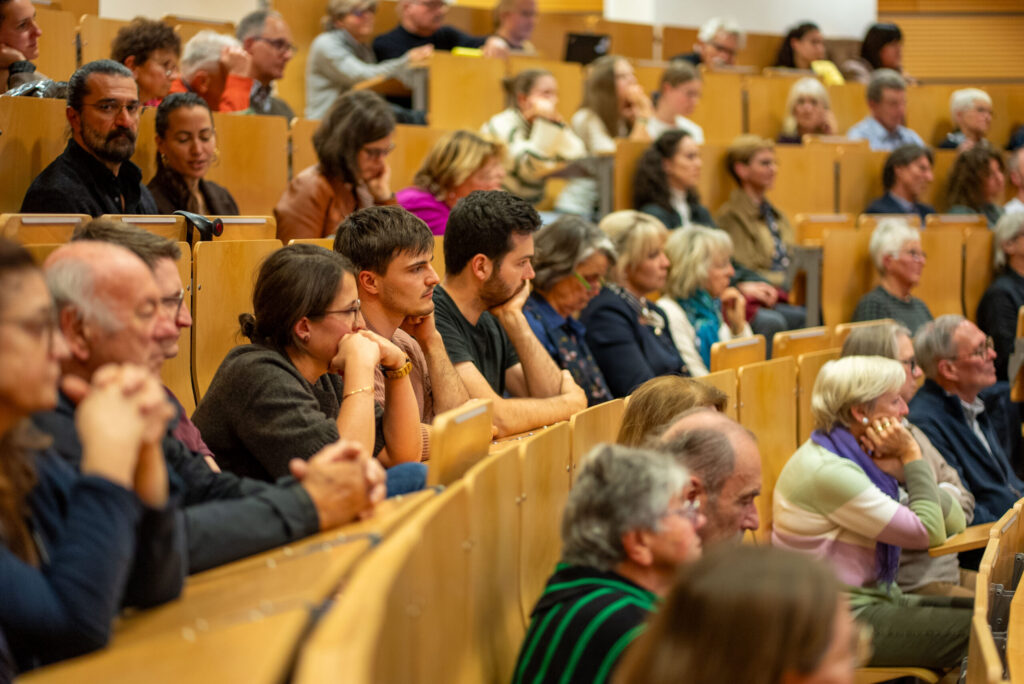
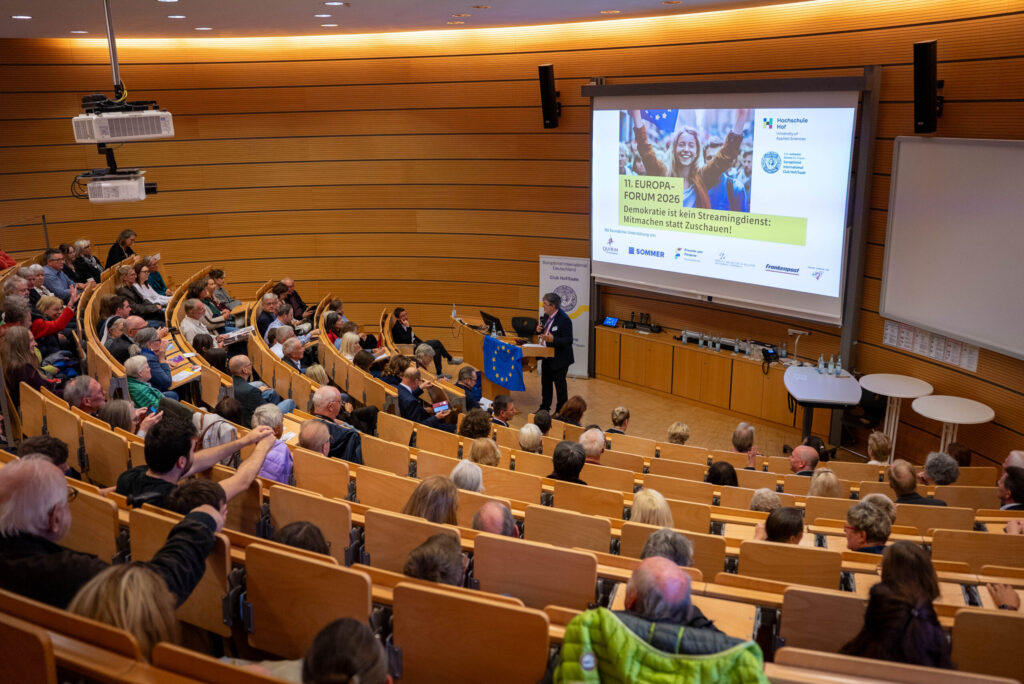
More than 180 guests gathered at the 11th Europe Forum at Hof University to discuss disinformation, political participation, and the question of how democracy can be defended in everyday life. Democracy doesn’t work like a streaming service. You can’t just subscribe to it, sit back, and trust that it will somehow keep going on its own. It thrives on people getting involved. But what happens when more and more people live in their own reality, distrust political institutions, and withdraw from public discourse?
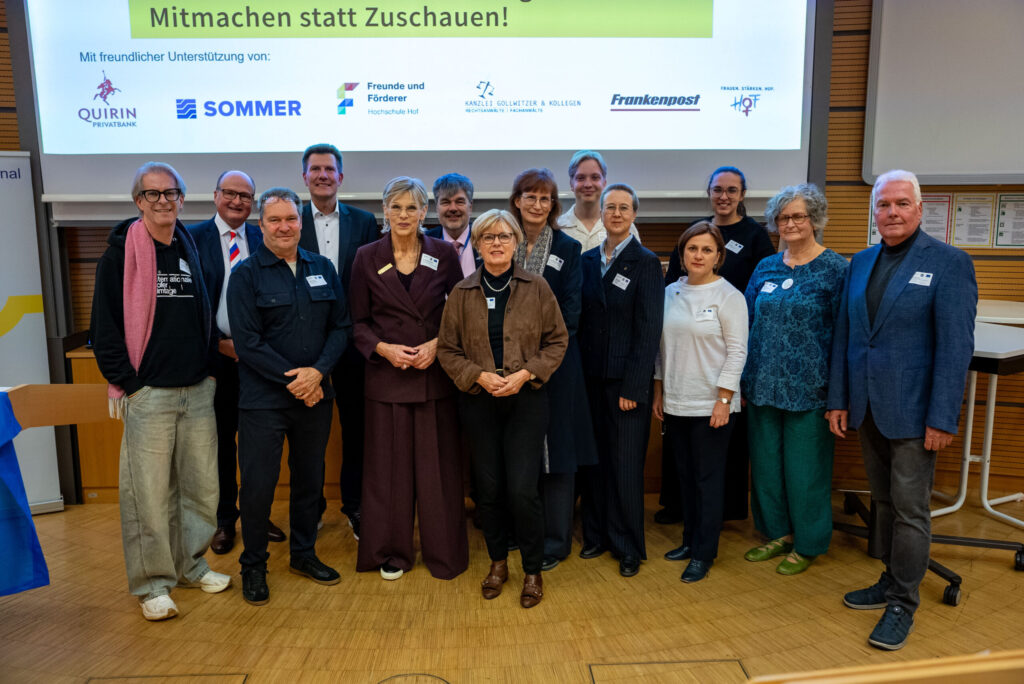
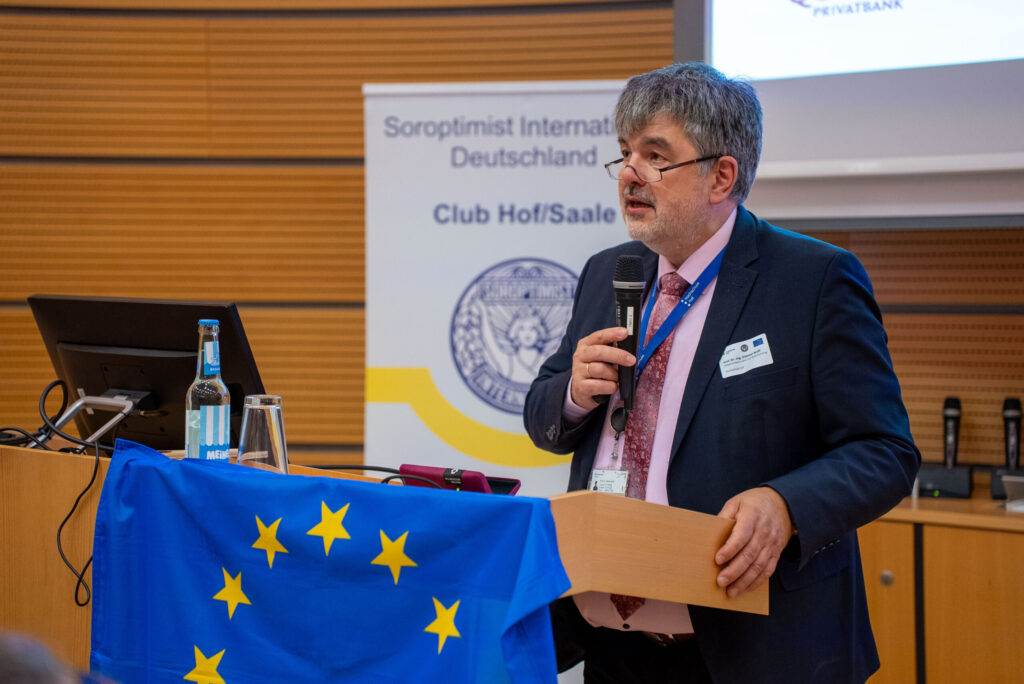
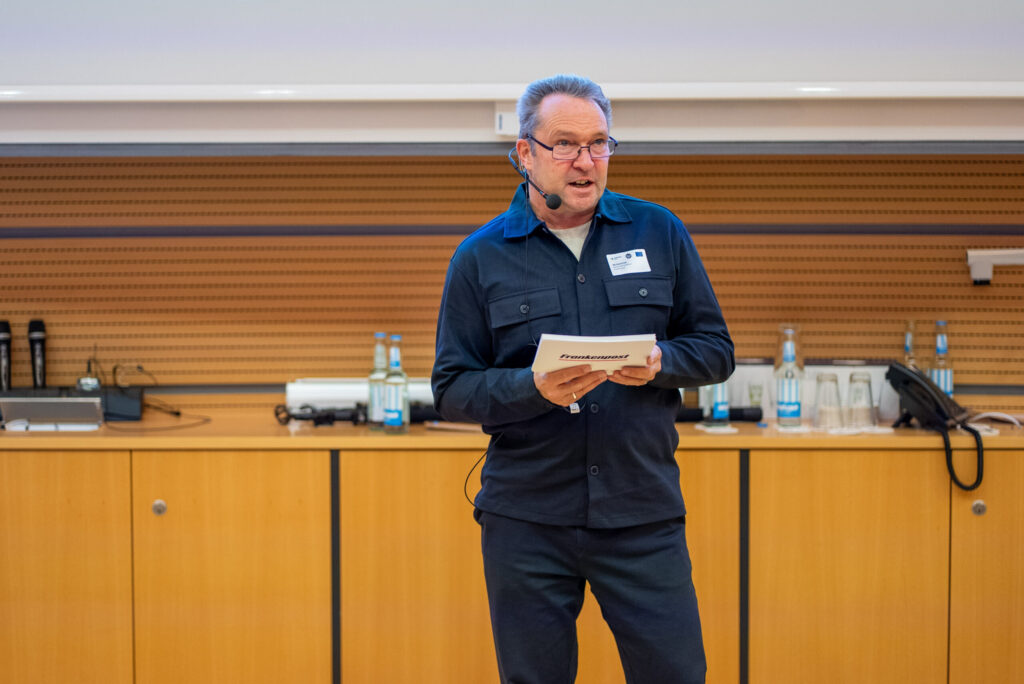
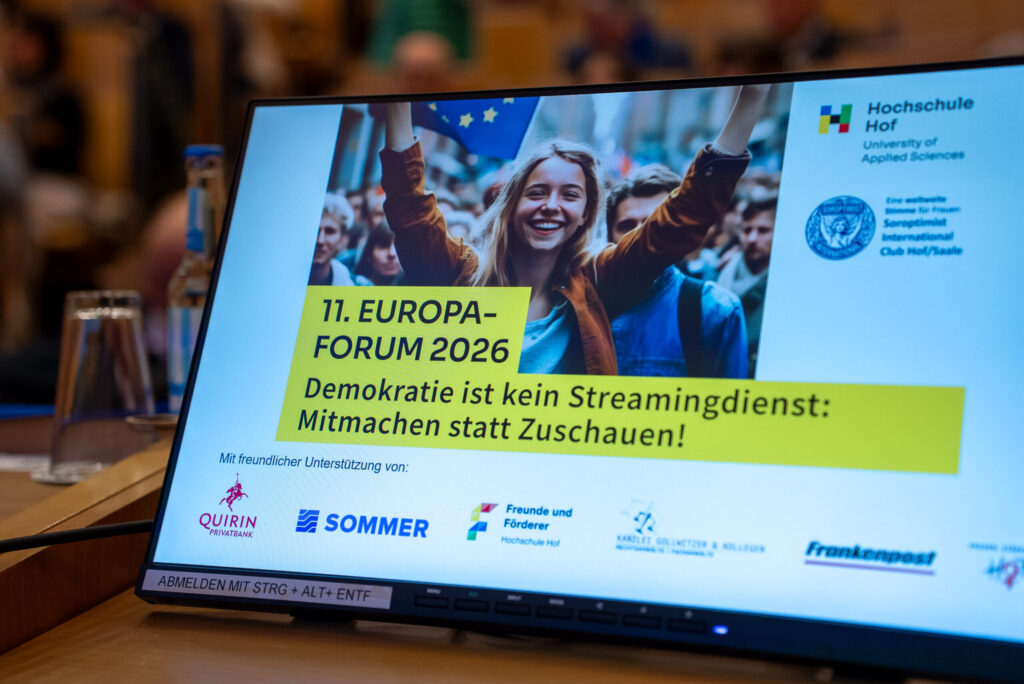
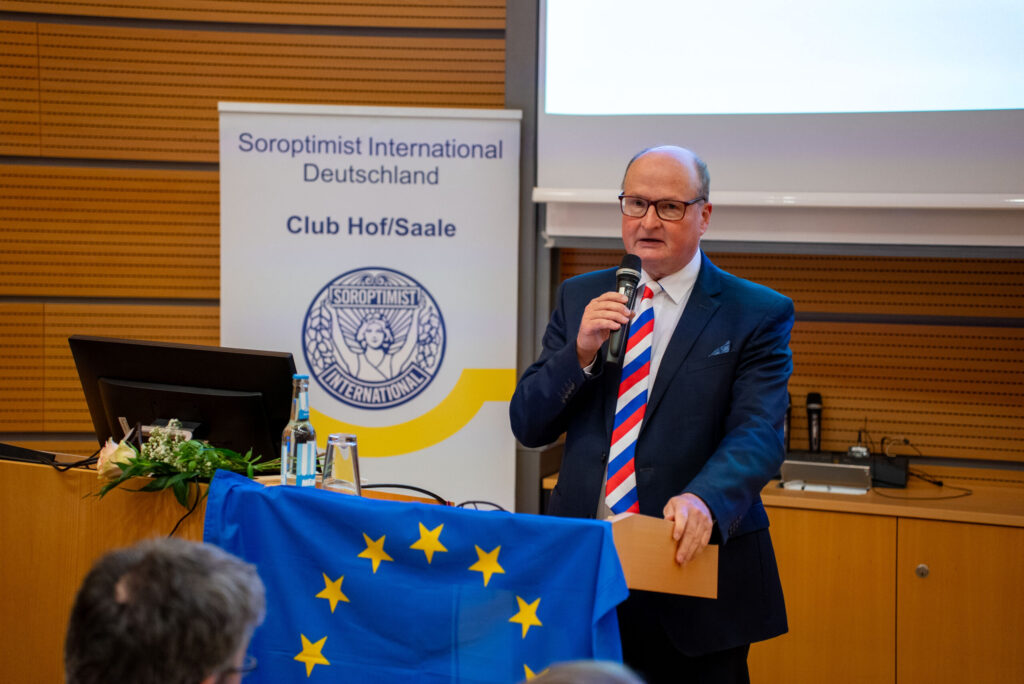
“You’re not just watching—you’re getting involved!” said Dietmar Wolff, Vice President for Academic Affairs and professor at Hof University of Applied Sciences, in his welcoming remarks. Even the decision to come to the Audimax this evening was a first step. Under the motto “Democracy is not a streaming service—Get involved instead of just watching!”, the university and the Soroptimist International Club Hof/Saale had invited experts from across Europe, academia, and civil society.
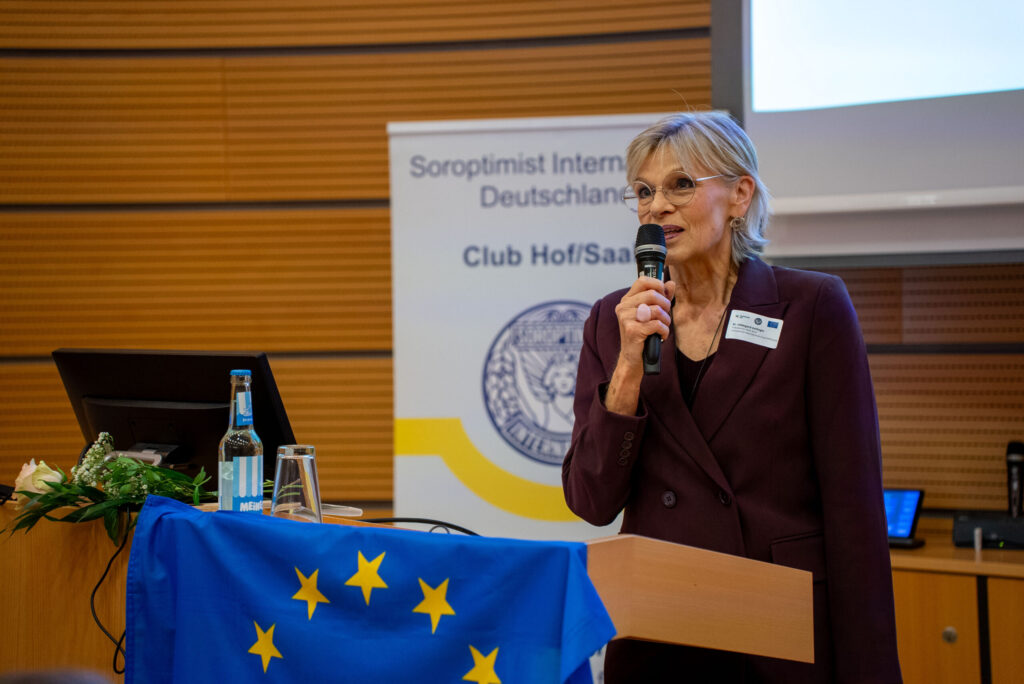
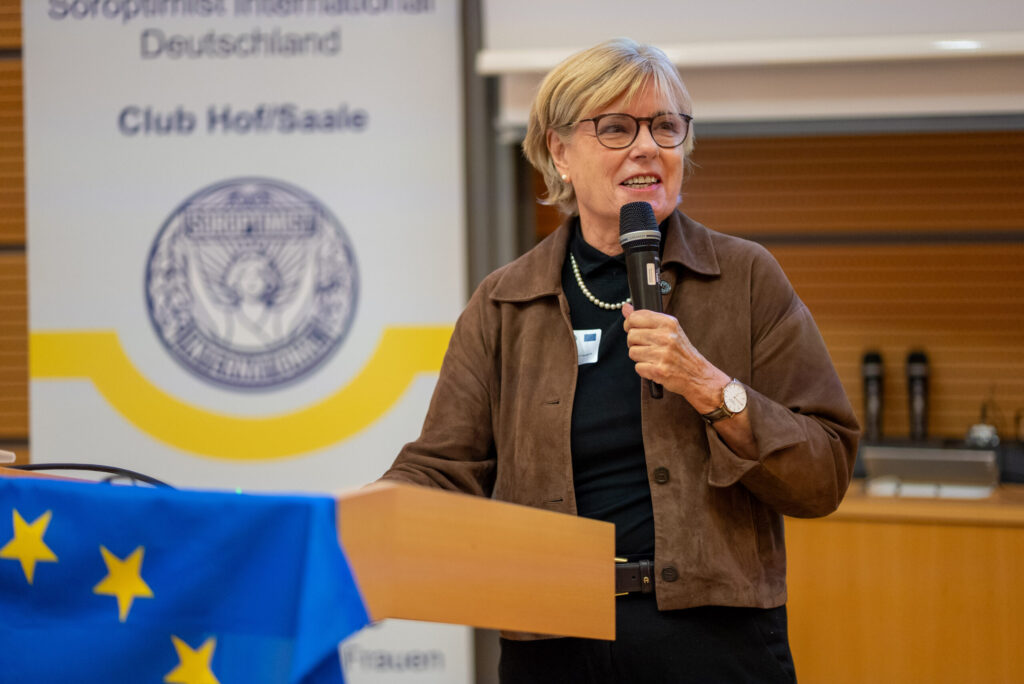
Hildegard Zeilinger, current president of the Hof Soroptimist Club, emphasized in her welcome remarks that her organization is committed to empowering women and increasing their visibility. In 2026, the Hof Club will celebrate its 20th anniversary. The Europe Forum aligns with the club’s goals: “Soroptimists love networking! We want to bring people together.” The evening deliberately brought together the European, national, and local levels and incorporated diverse perspectives. Together, they aim to advocate for women’s rights and, thereby, for democracy, the rule of law, and human dignity.
Democracy Must Be Defended
The fact that democracy is under pressure became clear in the keynote speeches, which offered various perspectives. Katja Reppel from the European Commission described a society in which social cohesion is becoming more fragile and different realities are emerging. Not everyone gets their information from the same media sources anymore—many people are trapped in their own information bubbles. Disinformation exacerbates this trend. At the same time, trust in the government is crumbling.
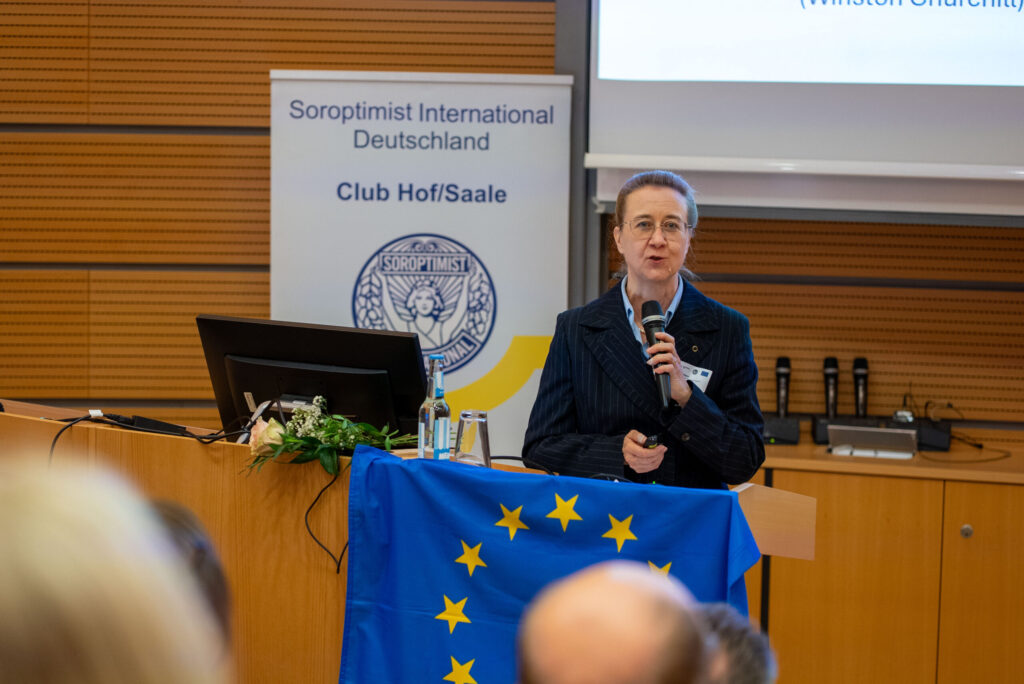
Reppel also referred to international developments and cited a study: Only 29 countries still have liberal democracies. At the same time, large segments of the population find the idea of a strongman at the helm quite acceptable. Democracy, therefore, is not an achievement on which one can rest. “Democracy must be defended every day,” was her message. The speaker encouraged people to get involved in politics—for example, in political parties and across national borders.
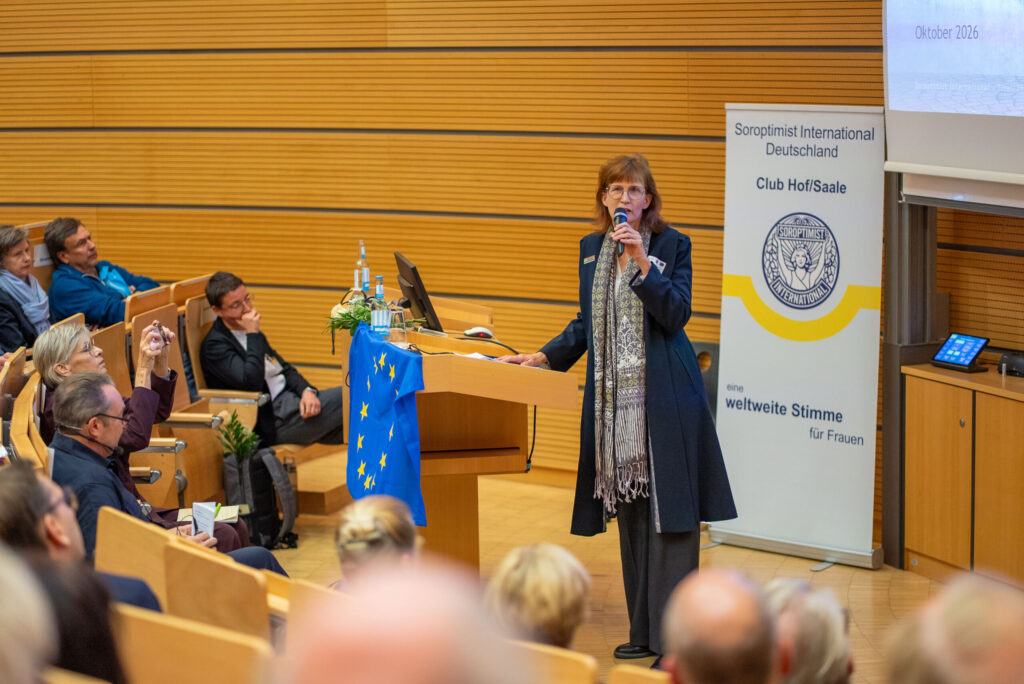
Inga-Lena Darkow, a professor specializing in artificial intelligence who also leads the AI working group at Soroptimist International Europe, demonstrated just how closely democracy and the digital public sphere are now intertwined. As convenient as it may be to receive a truth presorted according to our preferences via social media, it is problematic for democracy when there are no longer any differing opinions. “Can we still trust what we see?” asks Darkow. We are increasingly confronted with deepfakes and disinformation, which are amplified by AI. This leads to a loss of trust that is detrimental to democracy. It is becoming increasingly difficult to make sense of the news, and artificial intelligence, too, must be subject to critical scrutiny. Civil society must get involved to regulate AI.
The consequences of digital attacks were also addressed. Women who are politically active, in particular, are frequently confronted with hostility and misogyny online. If those affected withdraw from public debates as a result, democracy loses important voices. Therefore, a culture is needed in which people can express dissent and ask questions without being intimidated. Female role models must become more visible, and democratic voices must not be left solely to the loudest voices.
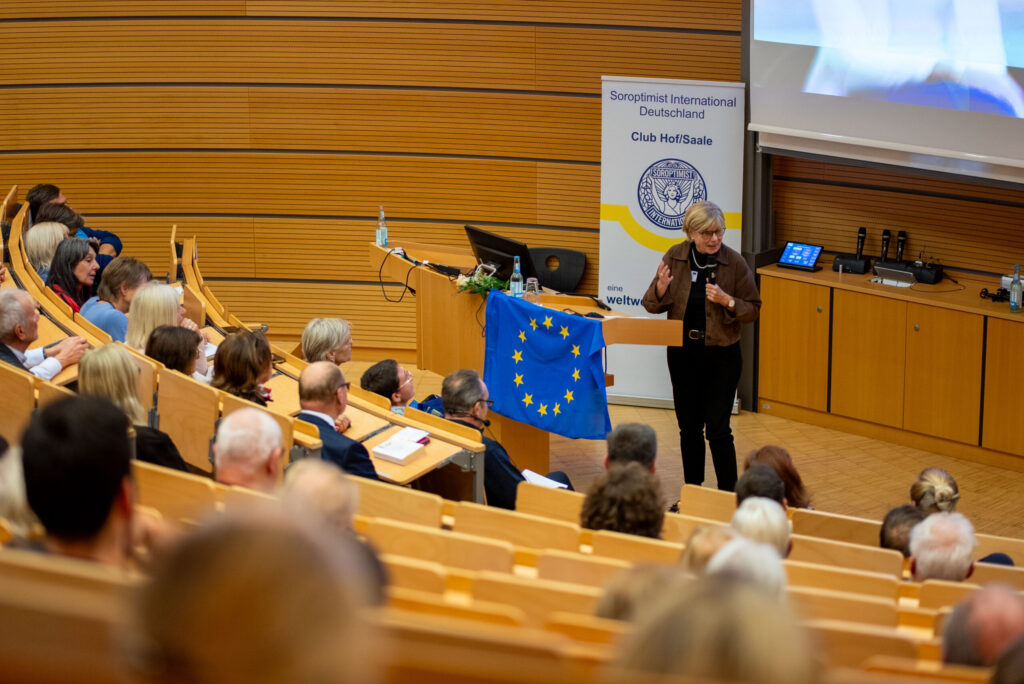
Helga Lukoschat, head of the AI Working Group at Soroptimist International Europe, focused on how democracy can be strengthened at the local level. “Local politics is not the basement, but the foundation of democracy,” she said. Many women find their way into politics through their civic engagement. Clubs, initiatives, and social networks are thus not only places of community but often also starting points for political responsibility. This idea aligned with the evening’s central message: Democracy thrives when people get involved—and when that engagement can lead to concrete participation in shaping society.
The discussion also highlighted that democratic participation is a matter of gender equality. Women make up a good half of the population but remain underrepresented in political office. EU representative Reppel also pointed out the economic potential of equal participation: if women were not pushed out of the labor market, economic output could be significantly higher. Pastor Nicola Aller, associate dean and public relations officer for the Evangelical Lutheran Deanery of Hof, suggested during the panel discussion following the presentation that the focus should instead be on social capital—that is, on people.
Democracy Begins on One’s Own Doorstep
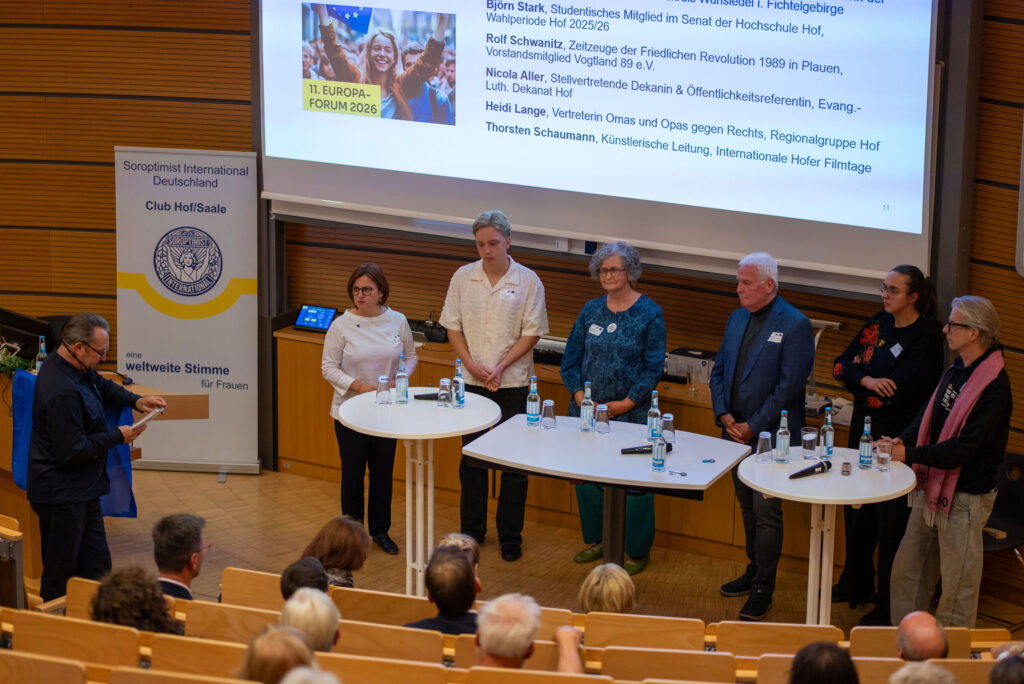
During the panel discussion, the focus shifted from Europe to the region. Also participating were Hanna Vinichuk, the city of Hof’s equal opportunity officer; Björn Stark, a student at Hof University of Applied Sciences; Heidi Lange from “Grandmas and Grandpas Against the Right”; and Thorsten Schaumann, artistic director of the International Hof Film Festival. The experiences of Rolf Schwanitz, who has lived through two political systems as a politician in Germany, were also discussed.
Vinichuk, who was born in Ukraine and has lived in Germany for 30 years, emphasized how much she values the freedom in this country. She noted that those who know the differences from personal experience are particularly able to appreciate democratic rights.
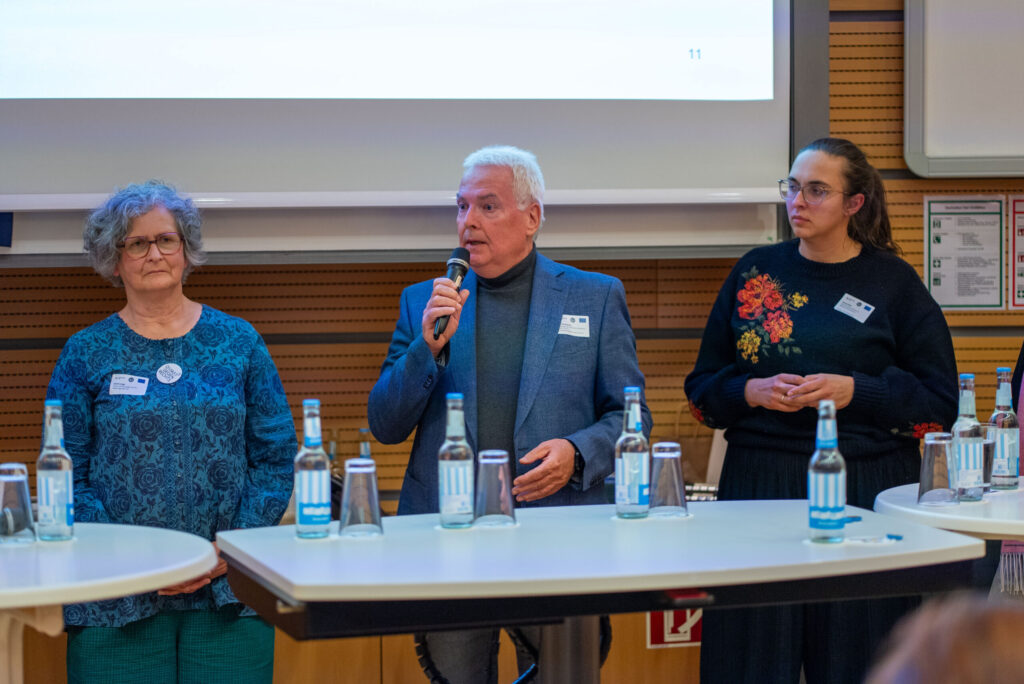
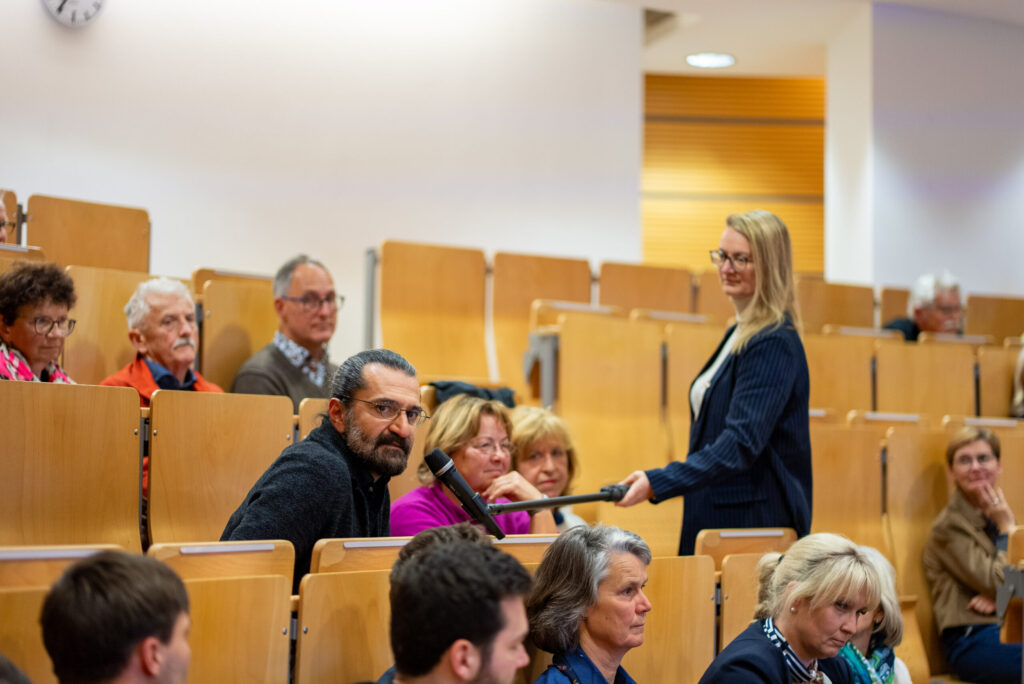
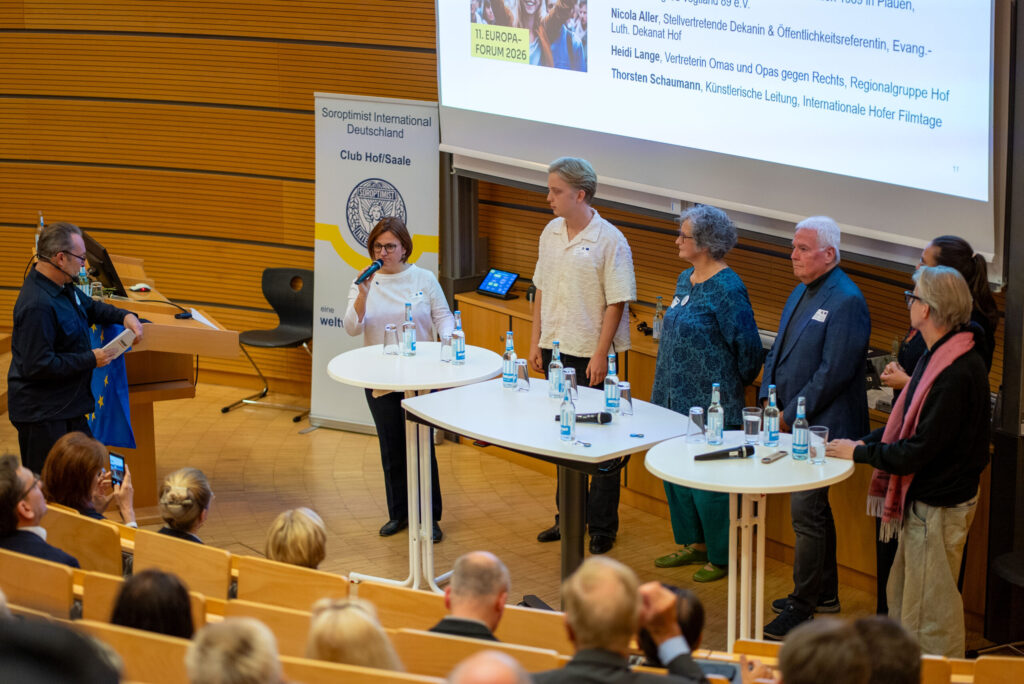

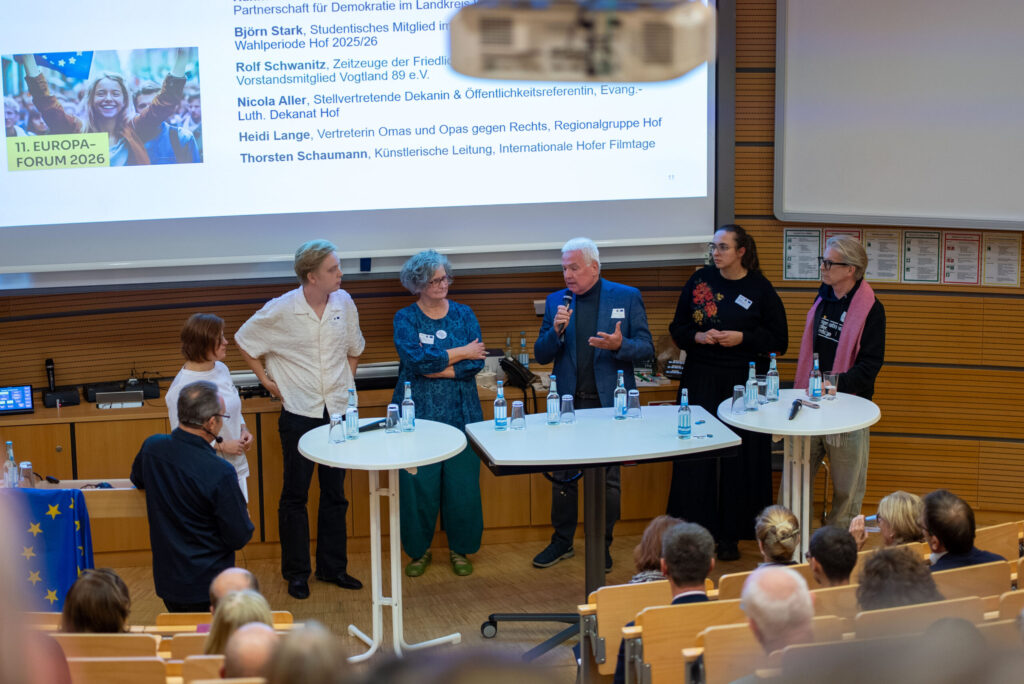
The importance of historical memory also became clear. Germany’s history of democracy is relatively young, Schwanitz noted during the discussion. The experiences of the generation that lived through dictatorship and the upheaval of 1989 are gradually being lost. At the same time, she noted, it is important not to view young people merely as a target audience for political education, but to let them have their say. Heidi Lange added that at their events, it is not only older people who demonstrate for democracy, but many younger people are also participating.
Take Advantage of Opportunities to Get Involved
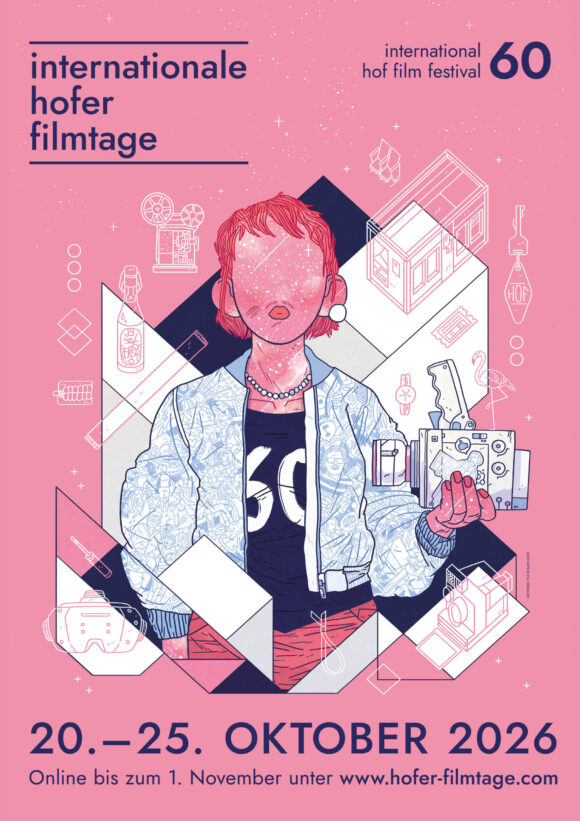
Björn Stark, a former student member of the university senate, offered a simple recommendation: People should seize opportunities to get involved and say “yes” when a chance to participate arises. This can start in everyday university life, at cultural events, or in the neighborhood. Director Schaumann also cited the Hof International Film Festival as an example of a place of diversity: “It’s a microcosm of democracy! Young and old, people from all over the world come together here.” His appeal: Don’t just talk about threats, but ask yourself, “What are we going to do?”
However, the discussion also revealed that getting involved isn’t equally easy for everyone. Time is a scarce resource, especially for single parents and people who shoulder a lot of responsibility alongside their jobs. Anyone who wants to strengthen democratic participation must therefore not only appeal to people’s personal willingness but also create suitable opportunities and conditions. Political parties and institutions must become more open and reach out to more people than just those who are already active.
There was agreement that democracy does not begin solely in parliaments and political bodies. It also takes shape within families, in conversations among neighbors, at the regulars’ table, and in interactions with people who hold different opinions. At the same time, it was critically noted that some difficult issues of everyday political life had not been explicitly addressed that evening.
A Clear Commitment—and a Task
An internal survey of students at Hof University, led by Peter Schäfer, professor and co-founder of the Europa-Forum, revealed—based on the information shared that evening—that approximately 85 to 90 percent of the students surveyed support democracy. At the same time, many apparently see room for improvement in how democracy is actually implemented in Germany. This is not a contradiction: Those who affirm fundamental democratic values need not be satisfied with current political practices.
This is precisely where the challenge for democratic institutions lies. Criticism should not automatically be interpreted as a rejection of democracy. It can also be an attempt to improve it. This requires open debates, transparent decisions, and the experience of actually being able to make a difference with one’s own voice.
A Space for Democratic Discourse and a Call for Engagement
At the 11th EUROPA FORUM, Hof University of Applied Sciences provided a space for discussion on democracy and civic participation. It brought together diverse social groups and highlighted just how varied democratic engagement in the region already is. The crucial question, however, remains how to reach those who have not yet felt engaged. Hildegard Zeilinger emphasized that education is the key factor in developing an awareness of the value of democracy and civil liberties, and she referred to the anniversary project of the Hof Soroptimists: Through an interactive play by Franziska Fröhlich, children ages 4 to 9 can experience democracy firsthand. Interested individuals can donate to the project, and kindergartens and elementary schools can apply for funding.