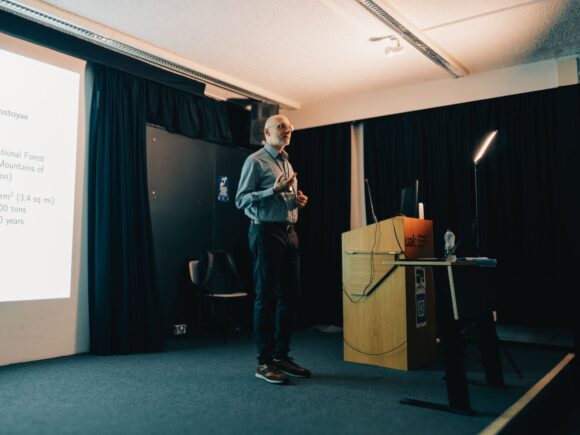


Prof. Dr. Stefan Wengler, professor of marketing and sales management at Hof University of Applied Sciences, has assumed the presidency of the Global Sales Science Institute (GSSI). For the term from 2026 to 2028, he will lead the international network of sales researchers from around the world and, together with a ten-member board, will be responsible for the strategic development of the organization.

The Global Sales Science Institute was founded in 2007 and is considered the world’s leading network for sales research. The association’s goal is to promote excellent research, innovative teaching, and international exchange between academia and business practice. The community spans from North and South America through Europe to Asia and Oceania. At the most recent annual conference in Ancona, Italy, approximately 260 researchers and business executives gathered. The next conference will take place in June 2027 in Casablanca, Morocco, and will also mark the GSSI’s 20th anniversary.
Six Years of Leadership on the International Board
The presidency is preceded by a two-year term as President-Elect, followed by two years as Past President. In total, Prof. Dr. Wengler will serve on the leadership of the international association for a period of six years. He succeeds Prof. Dr. Pia Hautamäki of Tampere University (Finland). Prof. Dr. Karen Peesker of Toronto Metropolitan University (Canada) has already been elected as the future president.
The new president’s key responsibilities include organizing and strategically developing the international annual conferences, as well as promoting the next generation of scholars. In recent years, the GSSI has continuously expanded its international doctoral programs and supports young researchers in networking globally and developing joint research projects. At the same time, international research collaborations and knowledge transfer to businesses are becoming increasingly important. Another key focus area is the impact of artificial intelligence on sales, sales management, and university teaching.
“My goal is to bring our community even closer together and to initiate joint global research projects on issues that are truly relevant to practice—such as how artificial intelligence is changing sales and teaching. It is just as important to me that our research findings find their way into business practice much more quickly.”
Prof. Dr. Stefan Wengler.
International Connections Strengthen Hof University of Applied Sciences
Hof University of Applied Sciences also benefits from his international engagement. As early as 2022, it hosted the GSSI’s annual conference, thereby establishing itself worldwide as a high-performing center of scholarship. This international visibility opens up new opportunities for research collaborations, strategic university partnerships, and joint degree programs. At the same time, additional opportunities arise to invite renowned scholars to Hof as visiting lecturers.
Students and the regional economy are also set to benefit from these international connections. The latest research findings and global developments can be directly incorporated into teaching while being further developed in collaboration with local businesses.
“Hof University of Applied Sciences is by no means an unknown entity in our international network. The connections formed here create new opportunities for international collaborations, academic exchange, and innovative course offerings. This benefits our students as well as businesses in the region.”
Prof. Dr. Stefan Wengler.
Closer Integration of Research, Teaching, and Practice
During his presidency, Prof. Dr. Stefan Wengler aims to further strengthen the international sales science community, launch new global research initiatives, and sustainably intensify the exchange between academia and industry. A particular priority for him is to align research even more closely with practice-relevant questions and to transfer new findings more quickly to companies and universities. At the same time, the international network is to continue growing and, in particular, offer young researchers additional opportunities for collaboration.