

What is currently considered a problem in ponds could become a valuable raw material for agriculture in the future: In the cross-border research project “Teichkreis,” Dr. Harvey Harbach and his team from the Resource-Efficient Food Production Research Group at Hof University of Applied Sciences, in collaboration with a Czech partner, are investigating whether excess nutrients from fish ponds can be selectively captured and subsequently used as fertilizer on agricultural land. The focus is on natural materials such as zeolite, bentonite, expanded clay, and biochar. The goal is to create the shortest possible regional cycle between pond and field.
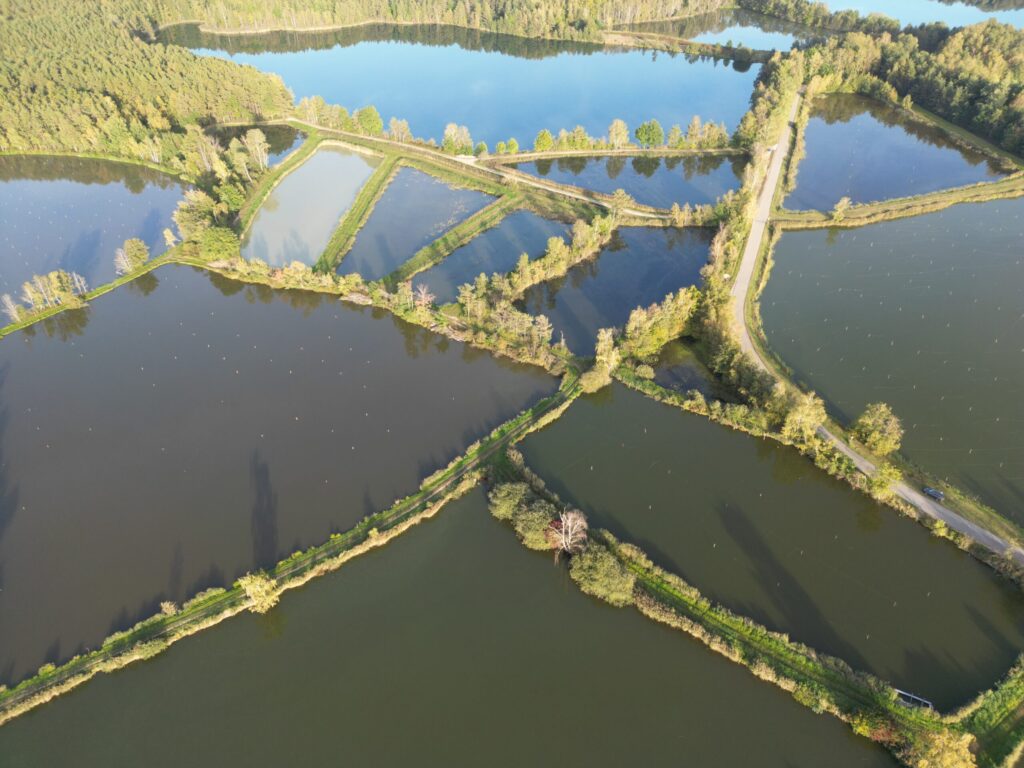
Co-funded by the European Union as part of the INTERREG Bavaria–Czech Republic program, the project addresses a trend that is increasingly concerning pond farmers on both sides of the border: rising water temperatures, nutrient surpluses, and the associated problems for water quality are clashing with a traditional form of management that is itself under economic pressure.
A centuries-old system is under pressure
Ponds in Bavaria and Bohemia are far more than just fish farms. Over the centuries, pond farmers have created a cultural landscape that is of great economic and ecological importance today. In Germany, carp are raised in ponds covering approximately 23,000 hectares. In the Czech Republic, there are even more than 24,000 ponds and smaller water reservoirs with a total area of approximately 53,000 hectares.
At the same time, these bodies of water serve as important habitats. Ponds are considered biodiversity hotspots and provide suitable living conditions for numerous rare and endangered species. Many pond landscapes in Bavaria and the Czech Republic are also located within Natura 2000 protected areas.
However, traditional pond farming is under considerable pressure. The number of aquaculture operations in Germany declined from 3,285 to 1,978 between 2015 and 2024—a drop of about 40 percent. For carp farms, the decline amounts to 39 percent. Rising costs, pressure from predators such as otters, cormorants, and herons, as well as the effects of climate change, are exacerbating the situation. If these operations are abandoned, there is a risk not only of losing a production system but also the associated cultural landscape.
Heat and Nutrients Are Becoming a Problem
One of the biggest challenges is the summer oxygen shortage. Carp ponds are very shallow, with an average water depth of about one meter. Rising temperatures further exacerbate the situation: While freshwater can absorb about 9.07 milligrams of oxygen per liter at 20 degrees Celsius, this figure drops to just 7.54 milligrams at 30 degrees—a decline of more than 16 percent.
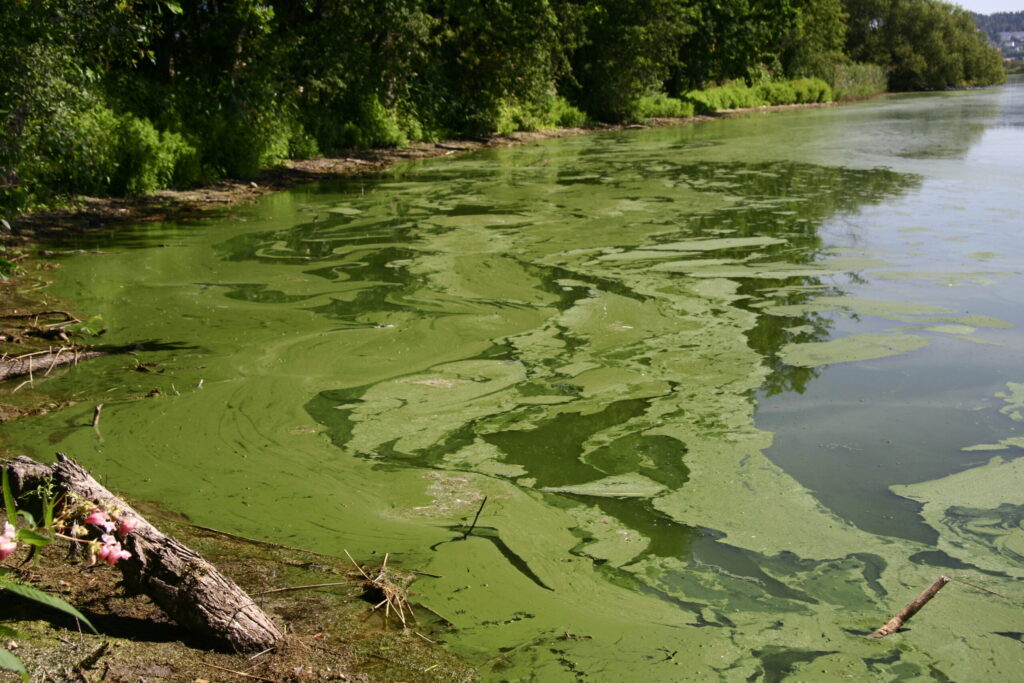
At the same time, high nutrient concentrations can promote algal blooms. When the algae consume oxygen after sunset and additional oxygen is needed in the sediment, the oxygen available to the fish becomes scarce. There is also another effect: under oxygen-deprived conditions, phosphorus stored in the sediment can be released back into the water. This, in turn, promotes algae growth—a cycle that can feed on itself.
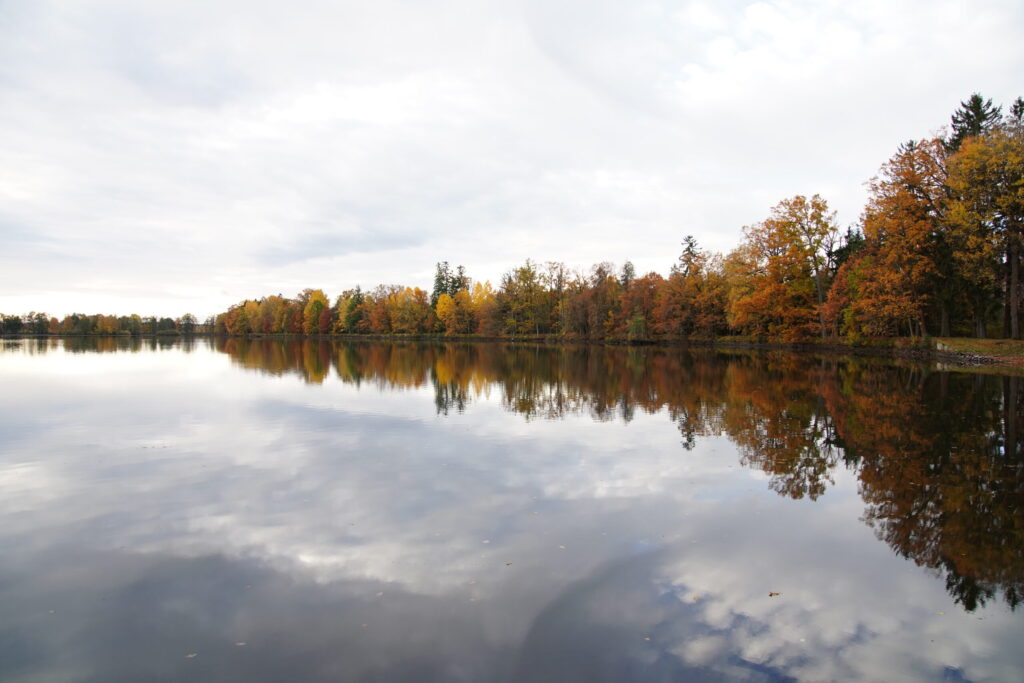
Even a traditional measure is becoming increasingly ineffective under the conditions of climate change. In a process known as “wintering,” ponds are drained in the winter so that the sediment can mineralize and freeze. Rising winter temperatures and less reliable frost periods are making this natural form of pond restoration more difficult. At the same time, droughts and periods of low water are expected to occur more frequently and with greater intensity in Bavaria.
Excess nutrients are to be turned into a raw material
This is exactly where “Teichkreis” comes in. Instead of viewing excess nutrients merely as a burden, the project takes a circular approach: ammonium and phosphorus are to be specifically bound and then made available for potential agricultural use.
To this end, the research team is investigating four natural sorbent materials: zeolite, bentonite, expanded clay, and biochar. They differ, among other things, in terms of their surface area, their ion-exchange capacity, and their pore structure. Therefore, it is not only crucial whether a material can bind nutrients under ideal laboratory conditions, but also whether it functions under the changing conditions of a biologically active fish pond.
It is explicitly not the goal to remove nutrients from the water throughout the entire pond season. Nutrients are important for the pond’s natural productivity and, consequently, for fish production. Rather, the materials should be used especially when nutrients might otherwise be lost from the system—for example, when draining ponds, during fish harvesting, after heavy rain with overflow, or during desludging.
From the Lab to the Real Pond
Before the method can be applied in practice, it undergoes several stages of research. First, the four materials are tested in standardized laboratory experiments to determine how effectively they can bind ammonium and phosphorus. At the same time, their ecotoxicological safety is assessed, particularly with regard to potential effects on carp. To ensure that the laboratory tests reflect realistic conditions, water quality data were also collected from ponds in the Upper Palatinate and Bohemia. The studies take into account, among other things, typical values for ammonium, phosphate, and pH.
The most successful materials are then tested in flow-through column experiments. These experiments better simulate the hydraulic conditions of a real pond than static laboratory tests. Among other things, the research team can investigate how quickly the materials reach their binding capacity and how long they remain effective. Only then does the decisive step follow: The most effective materials will be tested under real-world conditions at the Wöllershof model fish farming operation in the Upper Palatinate district. There, their performance will be evaluated under the actual biological, hydrological, and seasonal conditions of fish farming.
It remains to be seen whether the fertilizer actually works
A key strength of the project is that it scientifically tests its own assumptions. It remains to be seen whether the nutrient-rich materials, after use, can actually be applied to agricultural land.
The study will also examine in what form and in what quantities such use would be practical, as well as what specific agronomic benefits it would provide. The goal, therefore, is not to make hasty promises, but to produce reliable and practical results.
Dr. Harvey Harbach
Ultimately, the goal is to develop concrete recommendations that pond operators can use to assess whether sorption-based nutrient management is suitable for their operations and under what conditions it could be effectively implemented.

Science and practice have been working together from the start
The project is scientifically and organizationally led by Hof University of Applied Sciences. Dr. Harvey Harbach from the Research Group on Resource-Efficient Food Production in Integrated Aquaculture (ReLe) at the Institute for Sustainable Water Systems (inwa) is in charge. The project has particularly close ties to the field. On the Bavarian side, the Upper Palatinate Pond Cooperative (TEGO), the Upper Palatinate Fish Producers’ Association, the Bavarian State Fisheries Association, and the Upper Palatinate District Fisheries Advisory Service are involved. On the Czech side, the Faculty of Fisheries and Water Protection at the University of South Bohemia in České Budějovice is participating. Among other things, it conducts pond sampling as well as water and sediment analyses and investigates the effects of sorption materials on fish. This ensures that the industry is not merely a recipient of future research results. Pond farmers can contribute their experiences and requirements even during the project’s duration. Conversely, the scientific findings are directly incorporated into existing advisory structures and networks within the pond farming sector.
About 150 pond farmers have already been informed
The level of interest in this topic became apparent in the spring of 2026. The project was presented at the general assembly of the Upper Palatinate Pond Cooperative on March 2 in Wernberg-Köblitz and at the annual general meeting of the Upper Palatinate Fish Producers’ Association on March 10 in Schwandorf. A total of about 150 pond farmers attended the two events. It became clear that pond farmers perceive nutrient enrichment and summer oxygen depletion as concrete operational challenges. The approach of binding nutrients using relatively simple materials and without additional chemicals—and potentially deriving a usable product for agriculture from this process—generated significant interest. At the same time, the practitioners raised important questions—for example, regarding handling, required quantities, costs, and the legal requirements for subsequent application on agricultural land. It is precisely these questions that will be incorporated into further investigations, particularly in the upcoming field phase.
An Old Cycle—Reimagined
The “Teichkreis” project aims to rethink the traditional connection between ponds and agricultural land under today’s conditions. Nitrogen and phosphorus are to be captured where they might otherwise become a problem and then, if possible, returned to the regional material cycle as a usable raw material.Sorption-based nutrient recovery is explicitly not intended as a substitute for good pond management, nor as a solution to all of the industry’s challenges. Rather, it is intended to be an additional, scientifically sound tool that can be integrated into the existing management cycle. In this way, a byproduct that has been largely underutilized until now could become a valuable component of a regional cycle: nutrients from the pond are not lost but could instead be used in the future where they are needed—in the field.