

A zoo and amusement park in just one day—and built entirely out of LEGO bricks and drawing paper: In late September 2026, business administration students at Hof University transformed Seminar Room A105 into a construction site of a very special kind. In a hands-on workshop, they learned how agile project management works, what kinds of decisions need to be made as a team, and why it pays to respond flexibly to new requirements.
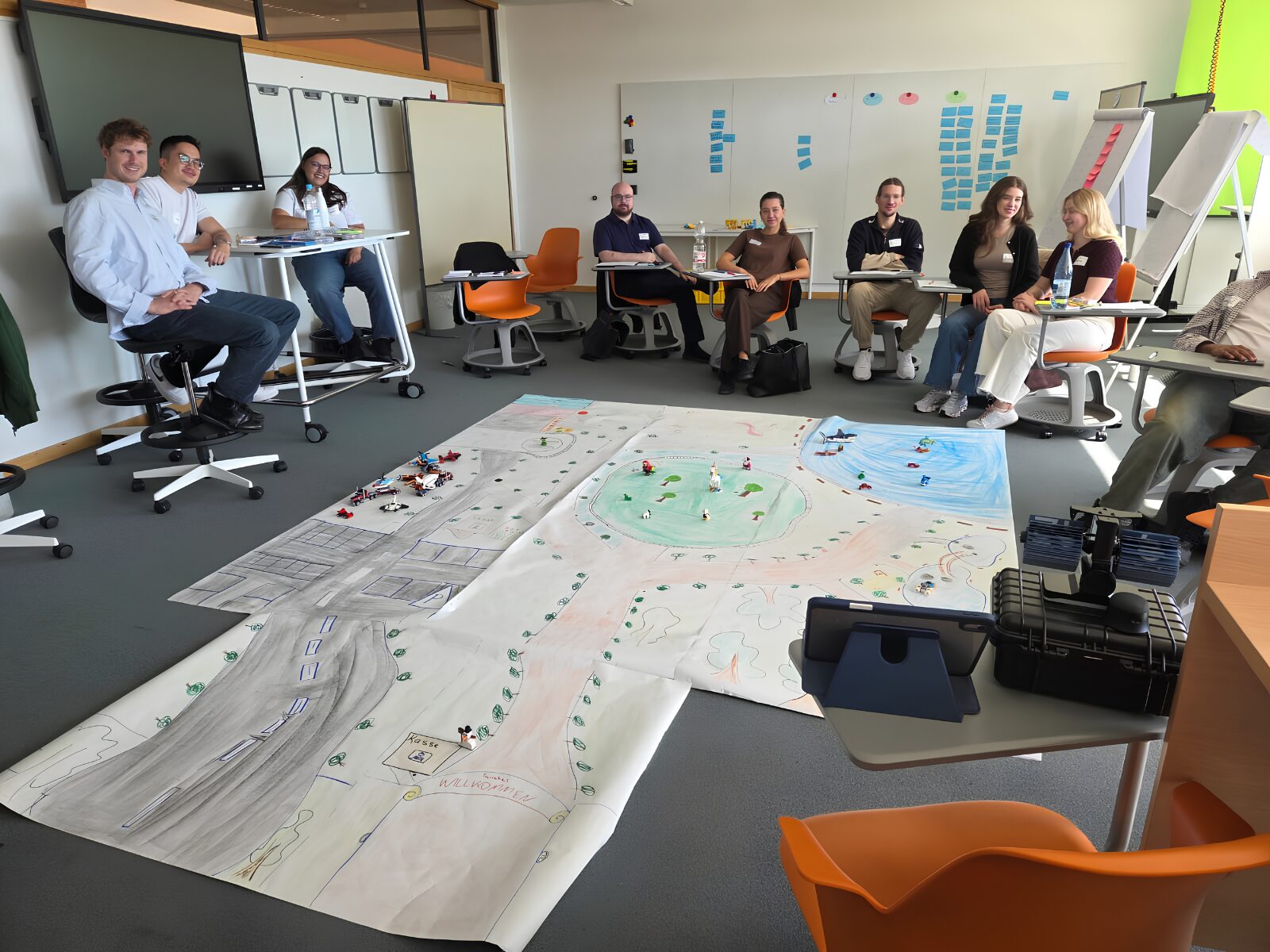
on the floor of room A105. Photo: Hof University of Applied Sciences;
The assignment for the group was given by Jens Tesch, project manager and trainer at Thüga SmartService GmbH. With several decades of project experience, he brought the methods of agile project management directly into the lecture hall. The roles were clearly defined: The students took turns assuming the roles of Product Owner and Scrum Master, while Tesch, as the client, specified the requirements and evaluated the results.
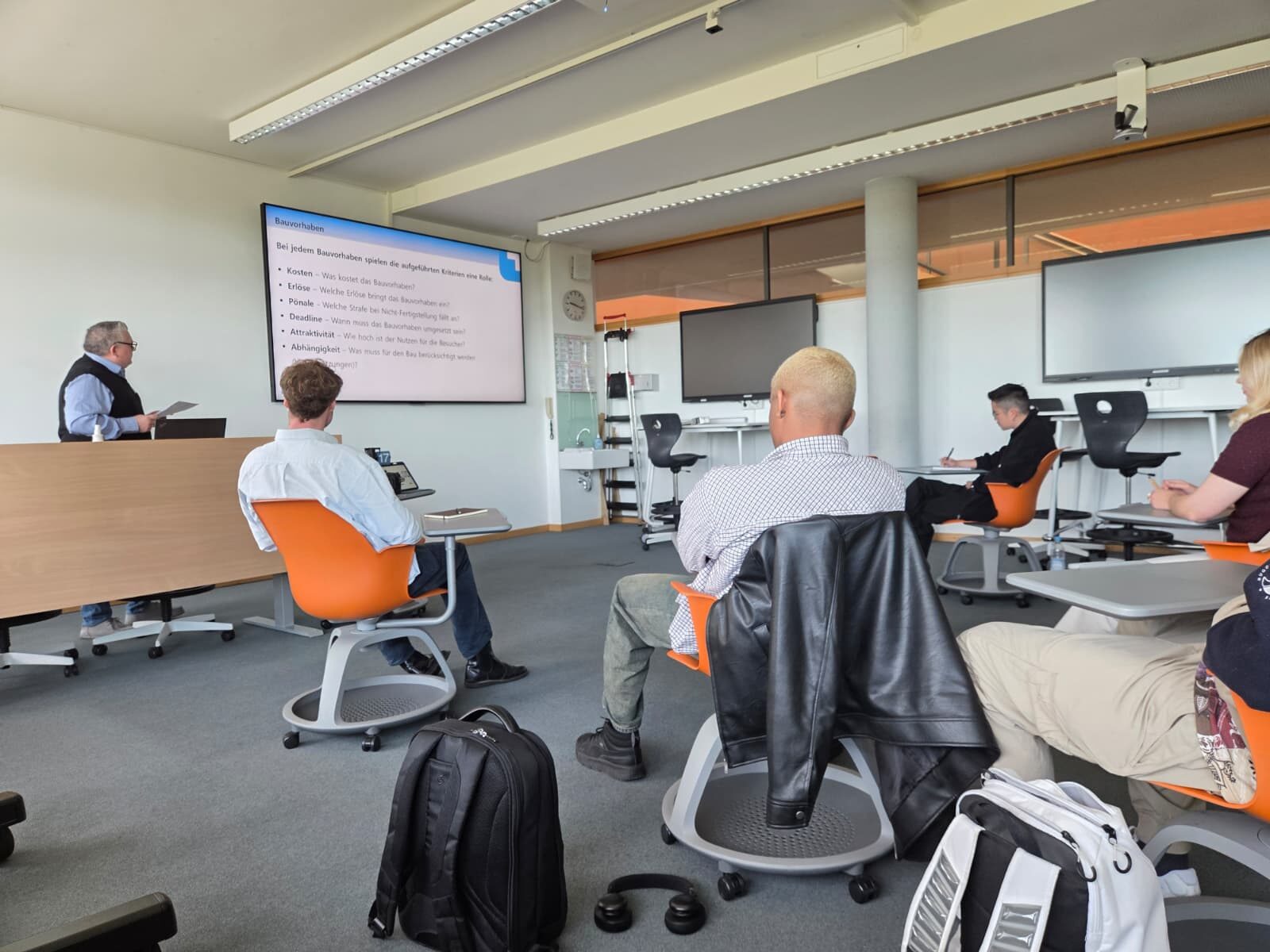
Image: Hof University of Applied Sciences;
At first, the task seemed manageable: a zoo and amusement park was to be built. But in addition to enclosures and water basins, a parking lot, a ticket booth, and a train track also had to be planned and built. One important rule applied: Each construction project had to be actually completed using LEGO bricks before it could be approved by the client.
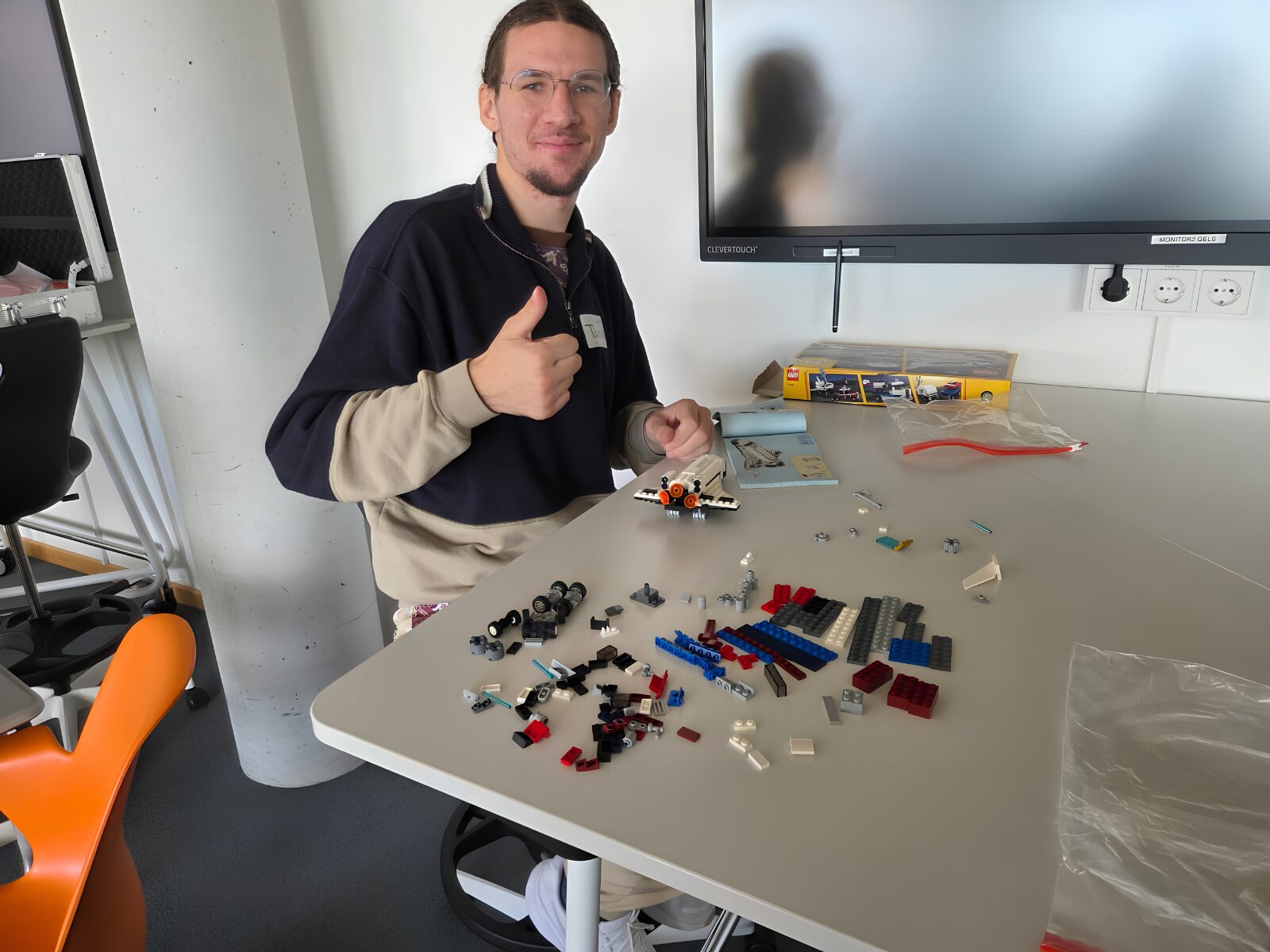
Image: Hof University of Applied Sciences;
Keeping an Eye on Costs, Time, and Visitor Appeal
Before construction began, planning was the first step. On a whiteboard, the students listed the individual construction projects and evaluated them based on various criteria: What are the costs? What revenue can be expected? By when must a construction project be completed? And how attractive will it be to future visitors?
These considerations gave rise to the so-called product backlog—a prioritized list of tasks the team wanted to implement. The students had to decide which projects were particularly important and how they could best utilize the available resources.
The team then worked in three so-called sprints. For each of these work phases, approximately 60 minutes were allocated for planning and implementation. At the end of each sprint, the Product Owner presented the current status of the work to the client during a review. The client’s feedback was directly incorporated into further planning.
The economic consequences of their decisions were also evident: completed construction projects generated revenue, while missed deadlines resulted in contractual penalties. The available budget was visible at all times. This made it immediately clear how closely scheduling, costs, priorities, and quality are interlinked.
Learning by Trial and Error
After three sprints, the result was an amusement park in which significantly more construction projects had been completed than the client had initially believed the team capable of achieving. The workshop concluded with an open Q&A session, during which the students could reflect on their experiences and ask questions about the practical application of agile methods.
Participants particularly appreciated the low barrier to entry and the fact that the entire workshop was conducted in person. Using paper, a whiteboard, and LEGO bricks, the work process remained visible to everyone. This allowed the students not only to understand their own tasks but also to recognize how individual decisions influence the overall project.
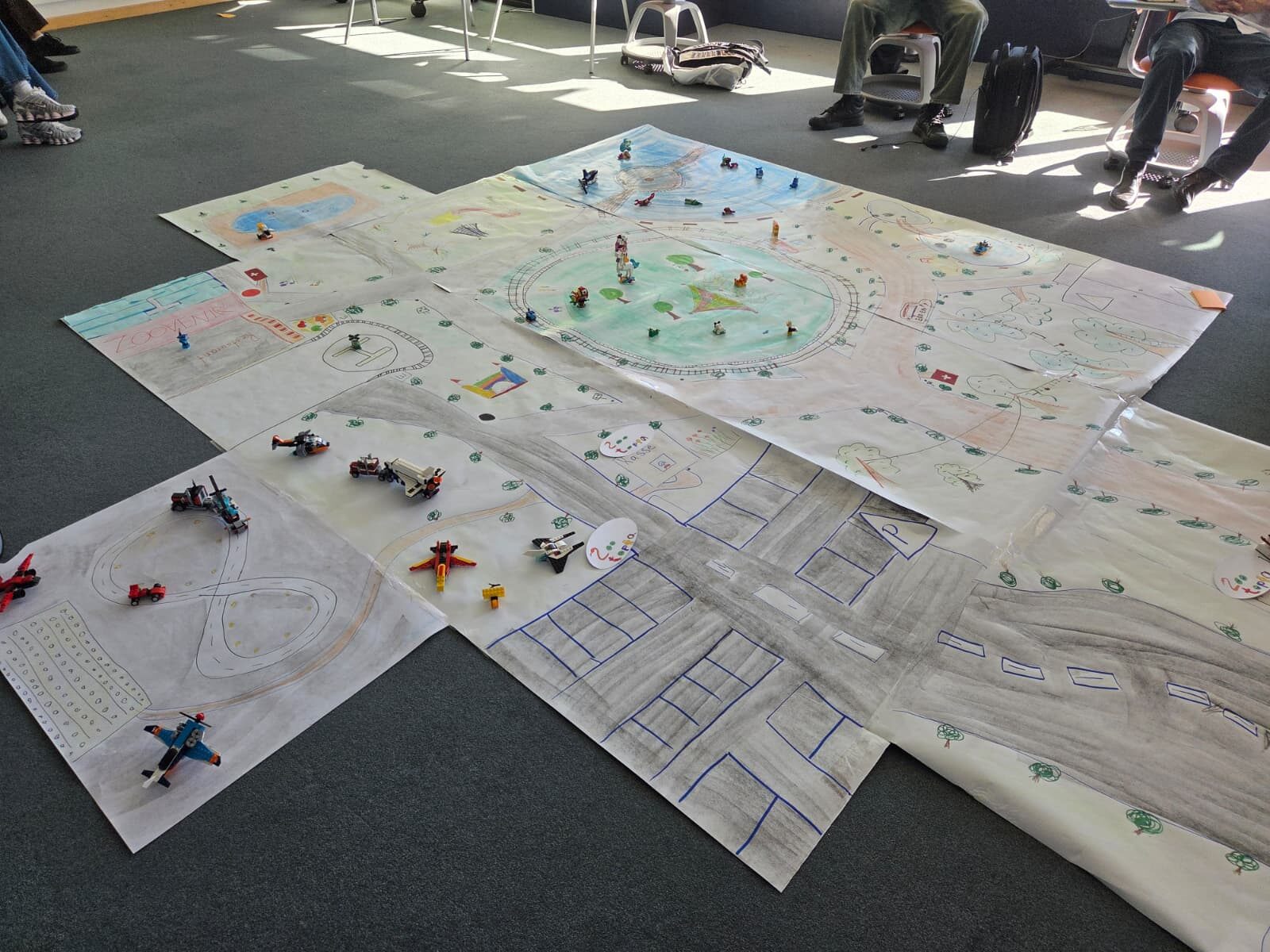
Image: Hof University of Applied Sciences;
University Education Meets Business Practice
The workshop was organized by Prof. Dr. Tina Wiegand, who teaches the introductory module on project management at Hof University of Applied Sciences. All participants had previously taken the module with her and subsequently expressed an interest in the field of project management. The workshop offered them the opportunity to put the material they had previously learned into practice and gain a realistic impression of the demands of everyday professional life.
The idea arose from the university’s regular collaboration with Thüga SmartService GmbH, a reliable partner for Hof University of Applied Sciences in projects, internships, and theses. With Jens Tesch, the company brought in an experienced professional who was able to clearly convey the processes and challenges of agile project work to the students.
Following this successful debut, the format will be retained and further developed in the coming semesters. In this way, Hof University combines foundational knowledge with practical experience—and demonstrates that the best way to understand project management is to try it out for yourself.