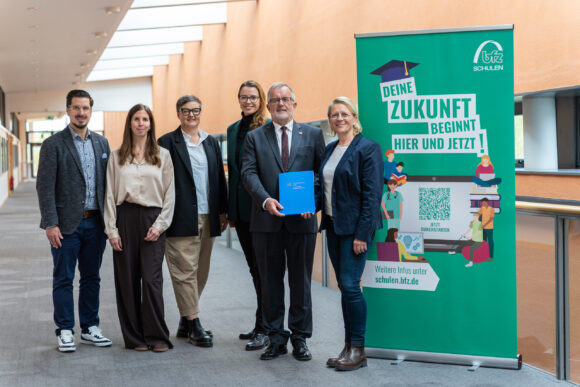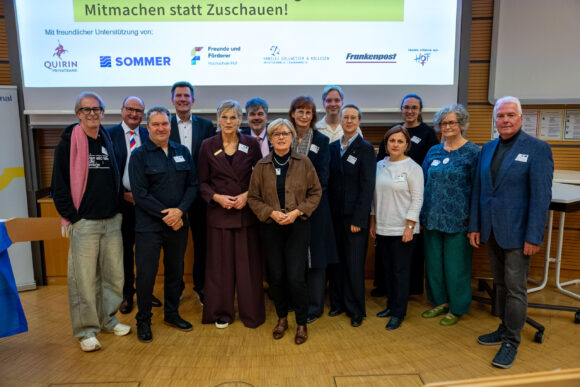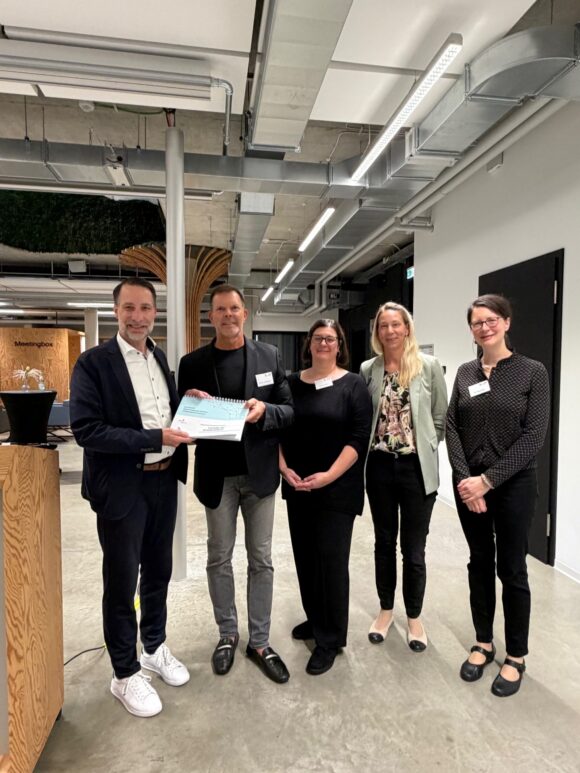


How can prospective students be better engaged? How can a culture of entrepreneurship be strengthened at a university? And how does a sports club attract new members when its most important event is canceled? Students at Hof University of Applied Sciences sought—and found—answers to these very practical questions as part of a special course format.
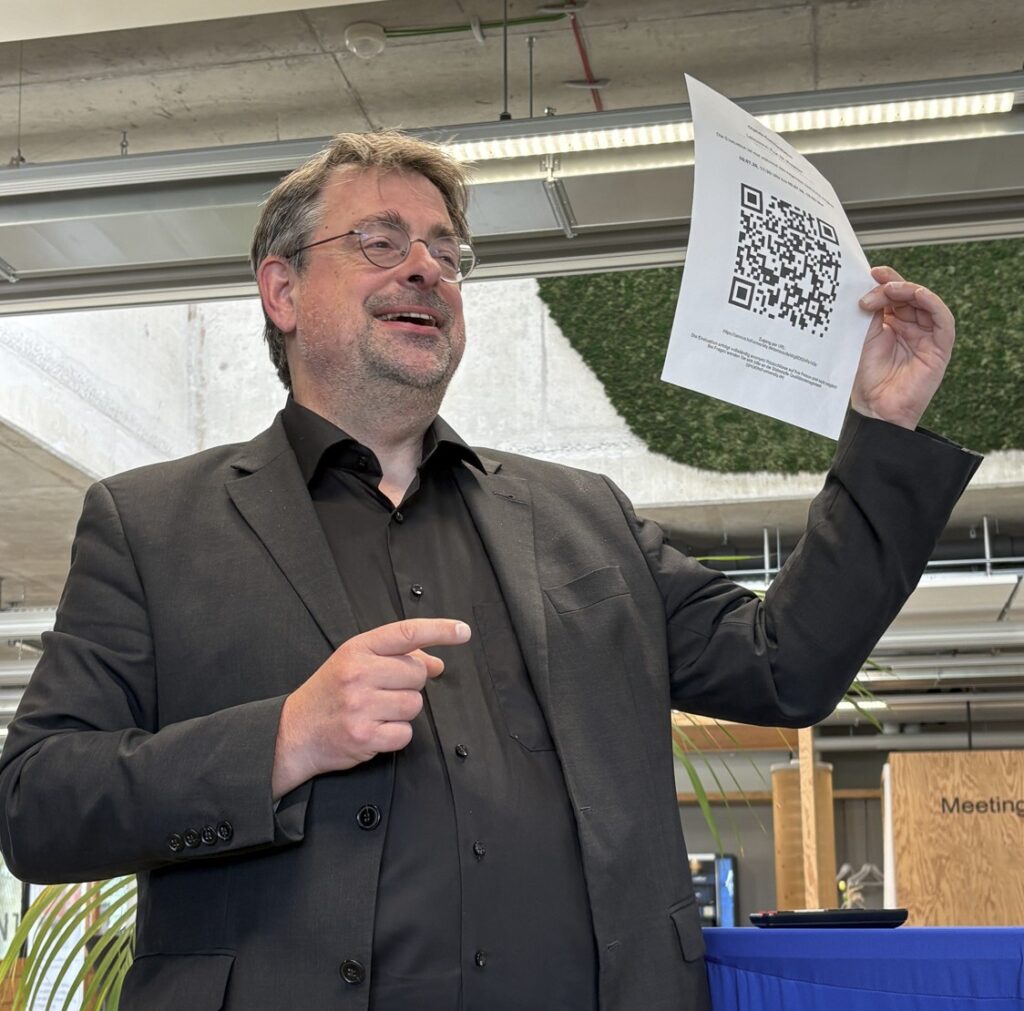
The concept, developed by Prof. Dr. Andreas Wagener in collaboration with Anne-Christine Habbel, Head of Research Marketing, has proven its worth over the years: Instead of fictional case studies, students tackle concrete challenges facing the university and the region—with the goal that their ideas can actually be implemented afterward.
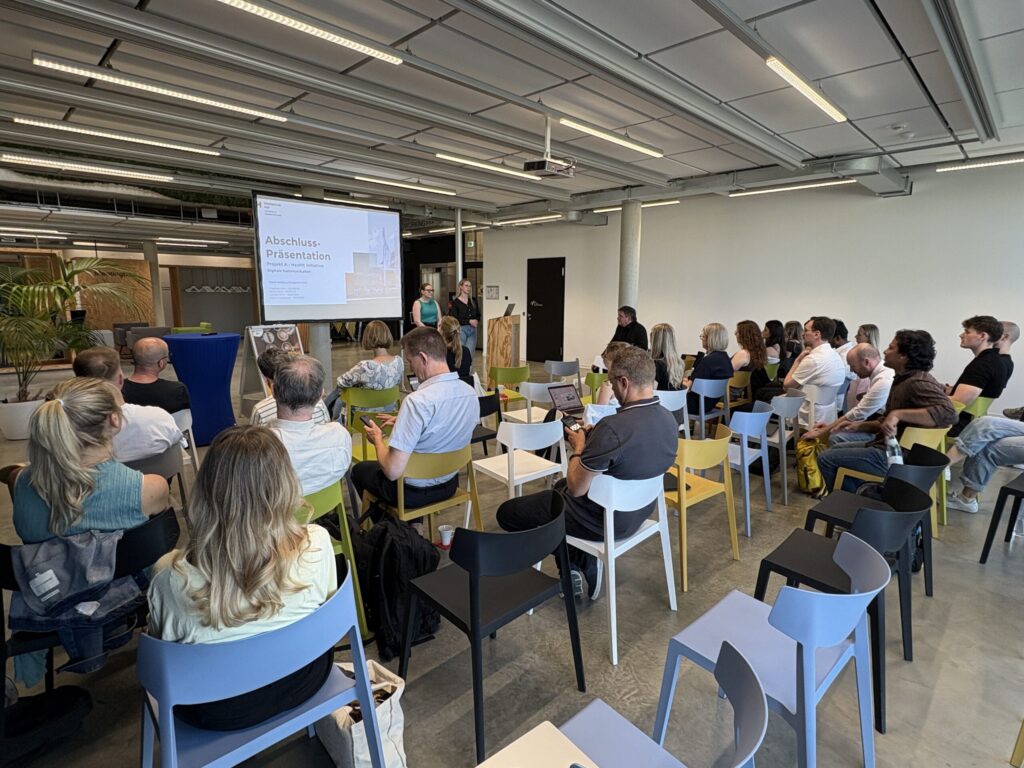
A total of five project groups presented their results. The topics ranged from university marketing and entrepreneurship to health communication and nonprofit marketing.
The group tasked with designing a new trade show concept for student recruitment developed a particularly creative approach. The goal was to make the university’s trade show presence more modern, interactive, and memorable. Among the ideas presented were a doormat featuring the university’s tile design, three-dimensional models of the university’s campuses, a puzzle cube, and a portable chess set. Particularly original was the idea for the card game “Uno Unfold,” which playfully incorporates the university’s new slogan, “Unfold your career.”
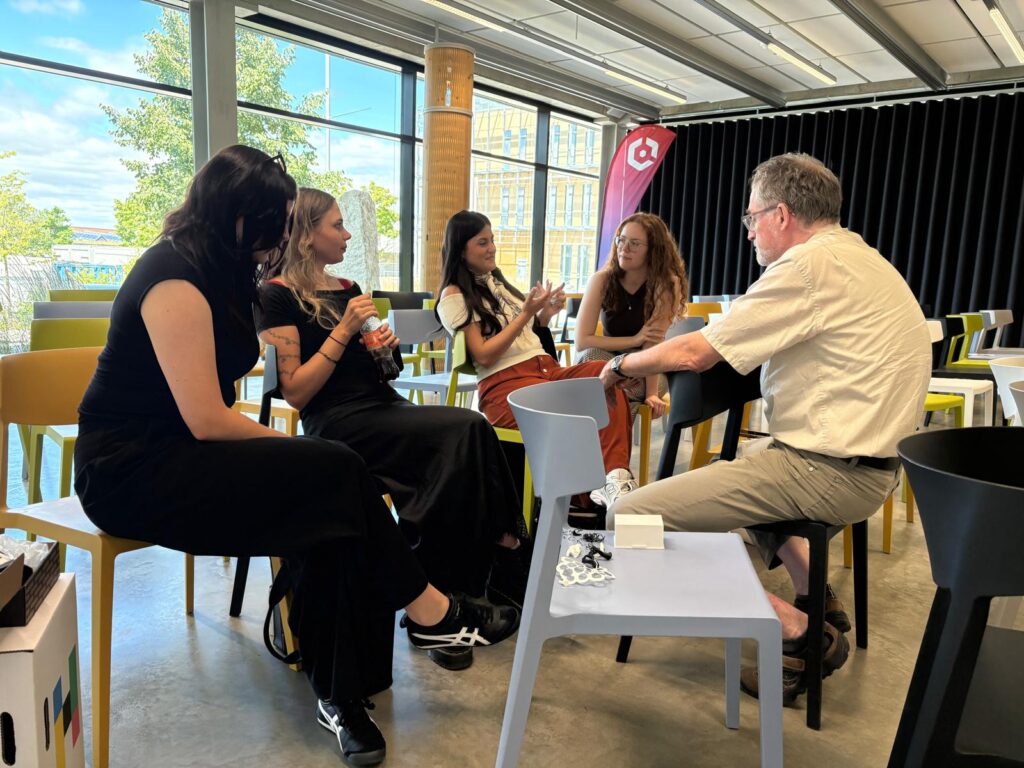
“For me, there were many new insights and ideas that will be incorporated into our trade show concept in the future,” says Melanie Fiedler-Zapf from Student Recruitment. Her colleague Galina Wolf is also enthusiastic: “These ideas really motivate us.” The project was additionally supported by Prof. Dr.-Ing. Marco Linß, who was also very pleased with the results presented.
Bringing Research to the Start-up Phase
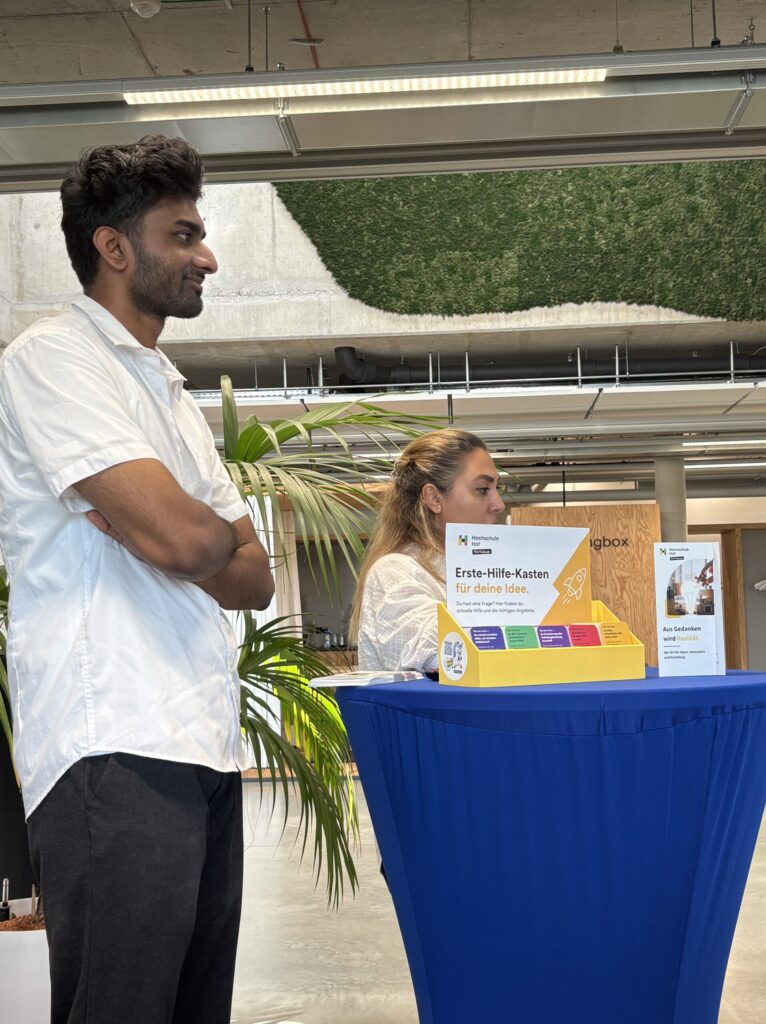
Another project group focused on a strategically important future topic for the university: entrepreneurship and startup initiatives. On behalf of Vice President Prof. Dr. Gerald Schmola, the students analyzed startup programs at other universities and conducted additional interviews with stakeholders at Hof University of Applied Sciences. This resulted in a ten-point recommendation program for the further development of the startup culture.
“We’ve already identified several points that we’d like to address right away,” says Anne Christine Habbel, who supervised the group. The proposals will now be reviewed step by step and integrated into existing structures.
New Participants for Dragon Boat Racing
The Hof Folding Boat Club also participated once again, this time seeking creative ways to recruit new members for its dragon boat division. Since low water levels in Lake Untreuse have prevented dragon boat regattas for the past two years—thereby eliminating an important platform for recruiting members—the students developed alternative communication strategies.
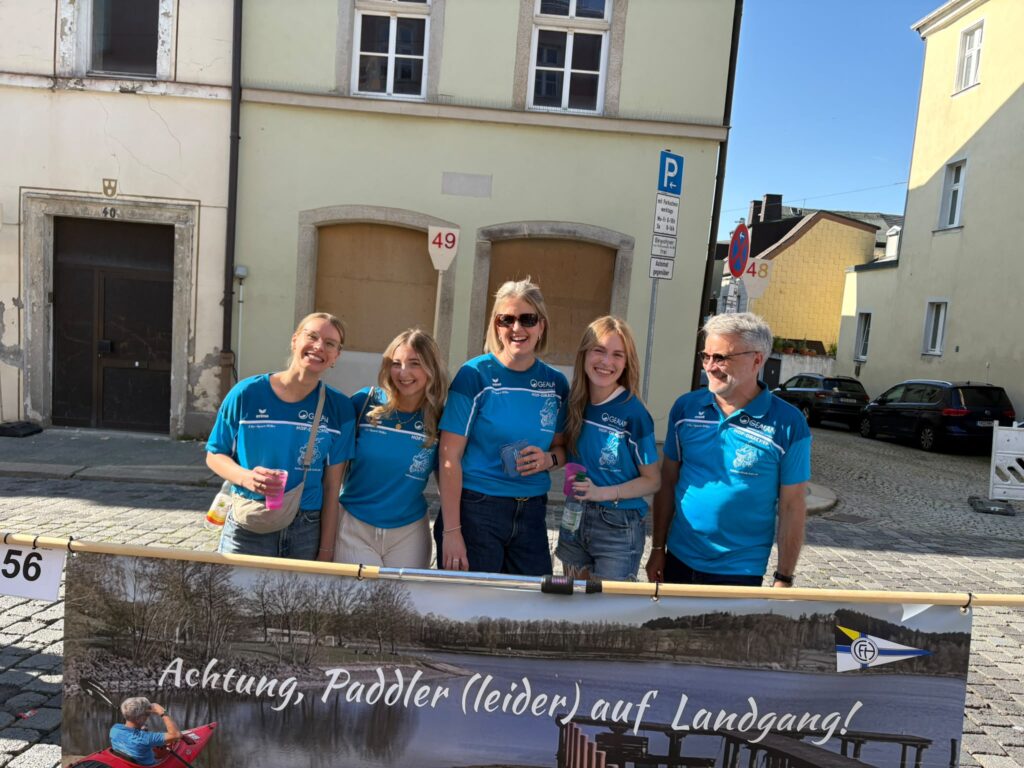
Dragon boat sports director Ralf Reusch mentored the group: “It was phenomenal how well and quickly the team familiarized itself with dragon boat racing and developed creative ideas. Their systematic approach and practical implementation were also remarkable.” Among the results are a new Instagram presence and a stronger showing at the Hof Folk Festival parade with eye-catching banners.
” Einstein1; Photo: Hof University of Applied Sciences;
StartUpLab Encourages Participation
Two university-internal initiatives were also the focus of other projects. For the StartUpLab, the students developed a refined corporate identity and a revamped public image with the goal of translating the program’s already high visibility into more concrete actions. “Awareness alone isn’t enough—the key is to motivate people to get involved. This is exactly where the project provided us with important impetus and helped us further develop our public image in a sustainable way,” explains Camilla Lenz from StartUpLab.
What does the Mental Health Café do?
A project group also explored unconventional ideas to raise awareness of the university’s Mental Health Café. As an eye-catching promotional campaign, the students tested various types of fruit with laser-engraved messages created in the university’s MakerSpace. After several rounds of testing, they recommended bananas and oranges in particular as suitable advertising mediums—a creative and accessible way to draw attention to the program.
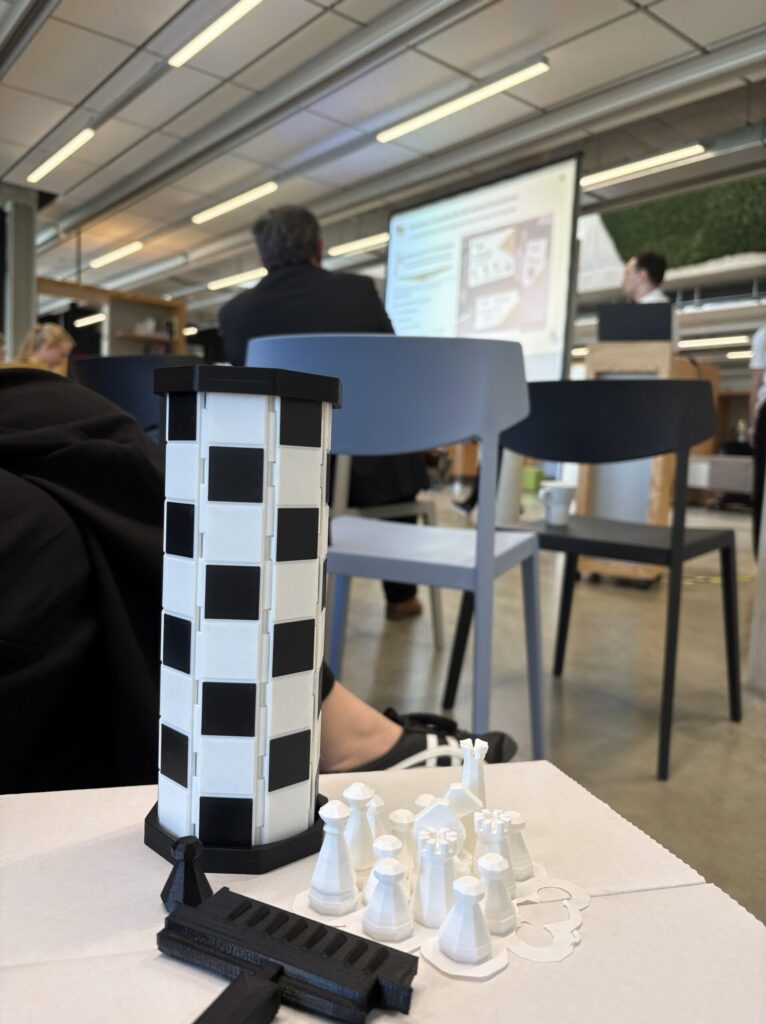
Image: Hof University of Applied Sciences;
For Prof. Dr. Andreas Wagener, the seminar demonstrates once again the added value that practice-oriented teaching can offer:
“Students take on responsibility, work like small agencies for real clients, and develop solutions that can have an impact far beyond the semester.”
Prof. Dr. Andreas Wagener
At the same time, the university and external partners benefit from an unobstructed view of their challenges—and from ideas that often find their way into practice.
Even after five joint sessions, the concept has long since become more than just a course: It has evolved into a permanent interface between the academic program, the university, and the region, where theory and practice come together in a productive way.