

How can agricultural use be combined with solar power generation—and which photovoltaic system makes the most sense for specific site conditions? A research project at the Institute for Hydrogen and Energy Technology (iwe) at Hof University of Applied Sciences is addressing this question. As part of the EnerKMU program, the research team has been investigating various concepts for so-called agri-photovoltaics (Agri-PV) since 2024.
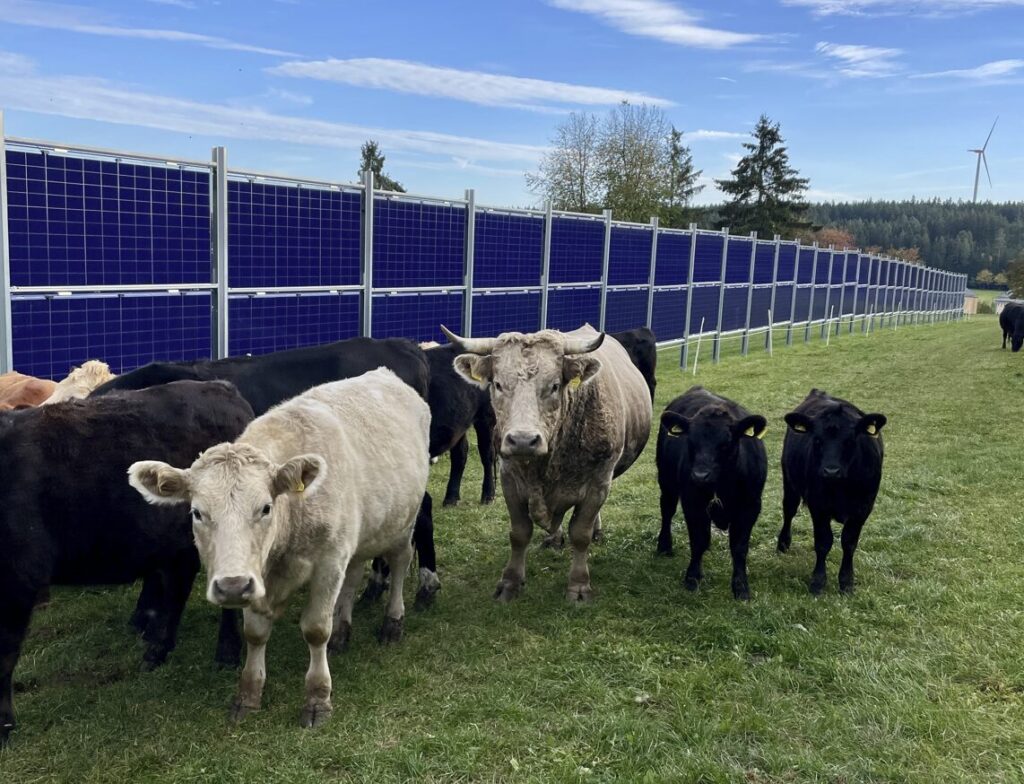
The study is focusing on a site in Konradsreuth near Hof. Until the project’s planned completion in June 2027, the research team will compare three different system concepts: a classic, south-facing ground-mounted system; a vertical bifacial east-west system; and a vertically tracking system. Bifacial modules can capture sunlight from both sides. In a tracking system, on the other hand, the orientation of the modules changes according to the sun’s position.
“Our research clearly shows that the highest energy yield does not automatically mean the best economic solution. What matters much more is when the electricity is generated and what its market value is at that time.”
Oliver Stark from the iwe at Hof University of Applied Sciences
Electricity Prices Influence the Assessment
A distinctive feature of the research project is therefore that it does not focus solely on the amount of electricity generated. The simulations also incorporate real-world electricity market prices as well as location-specific weather data. In addition, the research team is examining various battery storage concepts, including so-called green and gray storage systems. The results show a clear difference between the systems: While the vertically tracked concept achieved the highest specific energy yield, the vertical east-west system proved to be the most economically attractive. One reason for this lies in its characteristic generation profile: Instead of a particularly pronounced peak in electricity production at noon, the system generates more electricity during the morning and afternoon hours. These time windows can be more economically attractive on the electricity market.
“For the planning of future agri-PV systems, this means: We shouldn’t just ask how many kilowatt-hours a system produces. It’s just as important to consider at what times these kilowatt-hours are generated and how that affects profitability.”
Oliver Stark
Research directly informs the design of a new plant
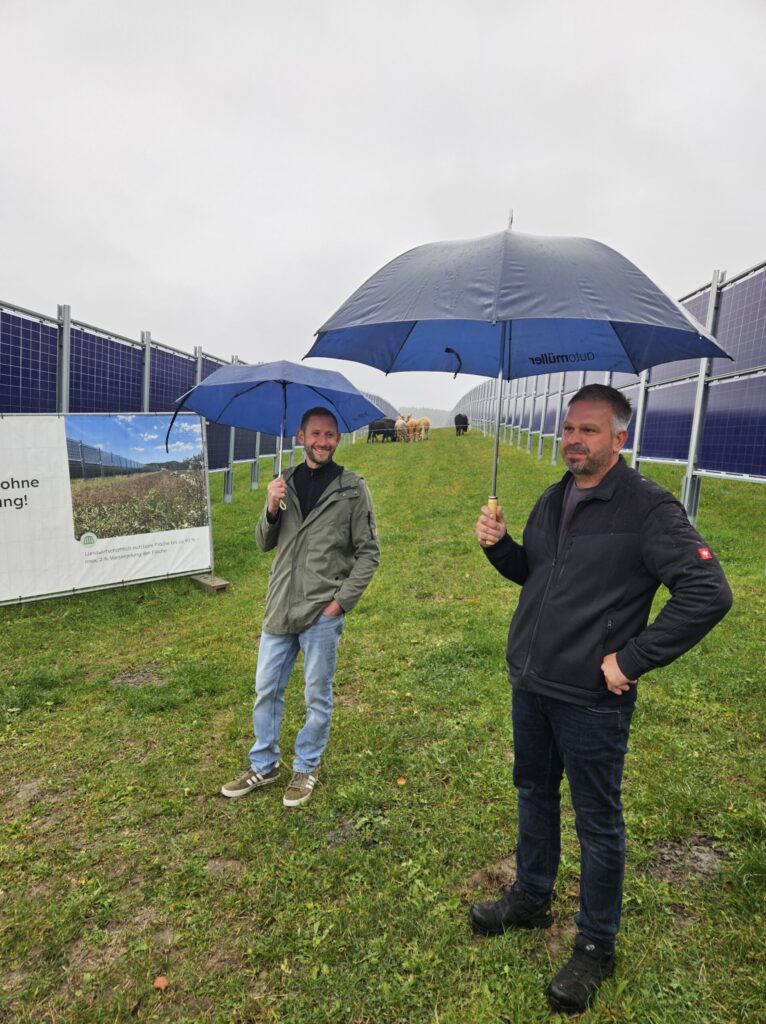
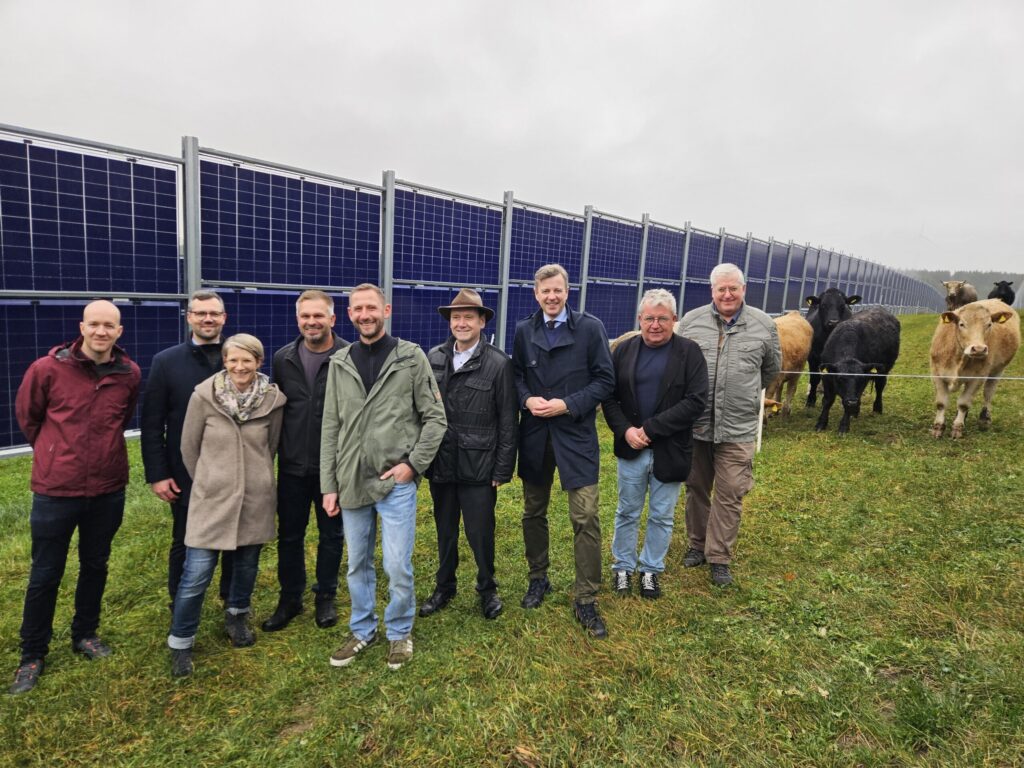
The project has direct practical relevance. The simulations serve as the basis for planning an agri-PV system with a capacity of 1 megawatt-peak (MWp) currently under construction at the study site. The unit MWp denotes the maximum electrical output of a photovoltaic system under standardized test conditions. The project partner is WiesenSonne Agri PV GmbH, based in Konradsreuth.
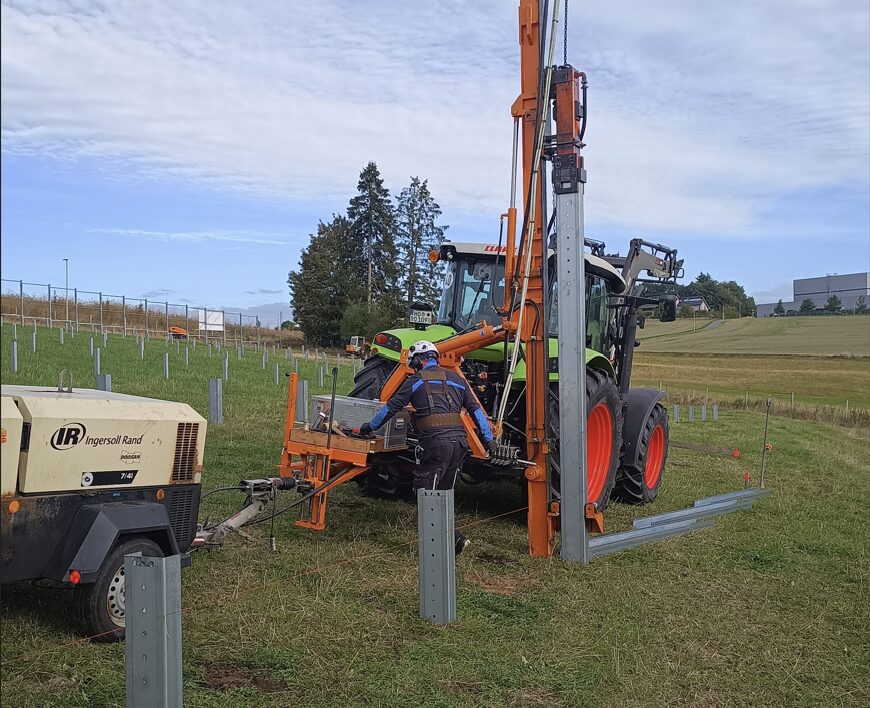
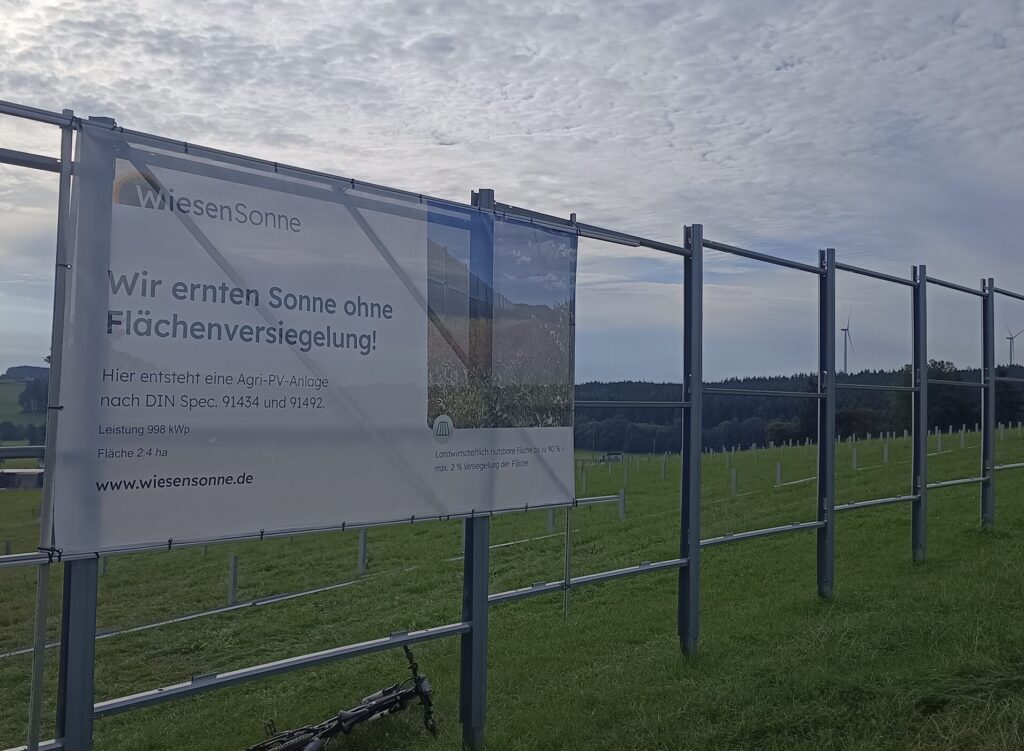
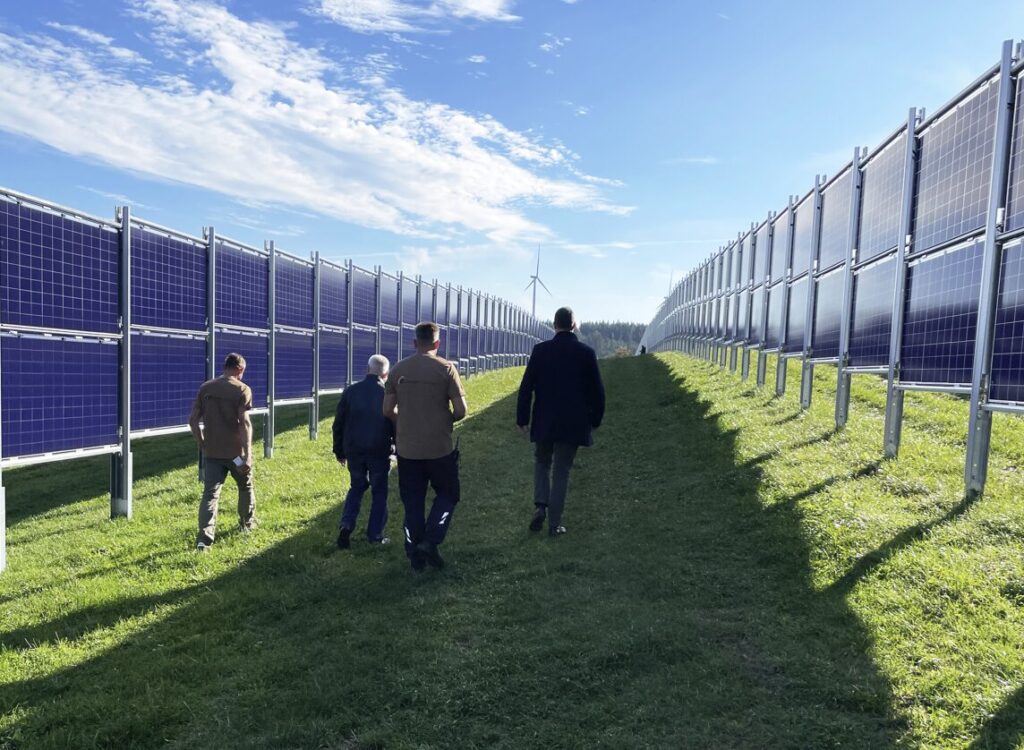
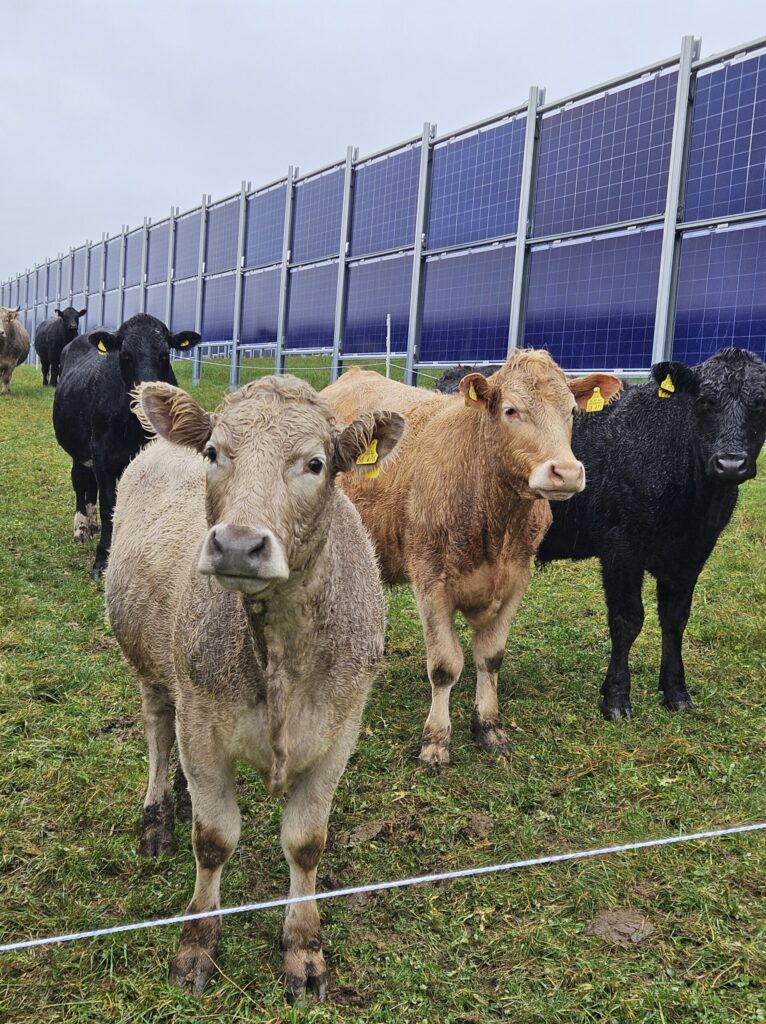
The vertical system selected in this way continues to allow for agricultural use of the land and is particularly well-suited for grazing. At the same time, there are no moving parts in the immediate grazing area, which simplifies farm management. For the project, the scientists also developed their own simulation methodology for evaluating vertical agri-PV systems. This allowed them to compare the different system designs under identical site conditions. In addition to technical metrics, the study specifically examined the impact of different electricity generation profiles on a system’s economic success.
Location Ultimately Determines the Optimal System
The project’s key finding is therefore also relevant for other agri-PV projects: A universally “best” system cannot be determined solely on the basis of energy yield. Weather conditions, land use, technical characteristics, electricity market prices, and potential storage concepts must all be considered together.
“For the planning of future systems, such a site-specific simulation can therefore help to establish a solid foundation for technical and economic decisions at an early stage.”
Rico Caspar and Sebastian Unglaub, Managing Directors of WiesenSonne Agri PV GmbH