

After two and a half years of intensive research and development, the project partners of the RecyTube research project gave a positive assessment of the project at the end of June at the Rohleder company in Konradsreuth. Funded by the Bavarian State Ministry of Economic Affairs, Regional Development, and Energy, the project aimed to transform textile production scraps into high-quality new materials and applications, thereby paving the way for a sustainable circular economy in the textile industry.
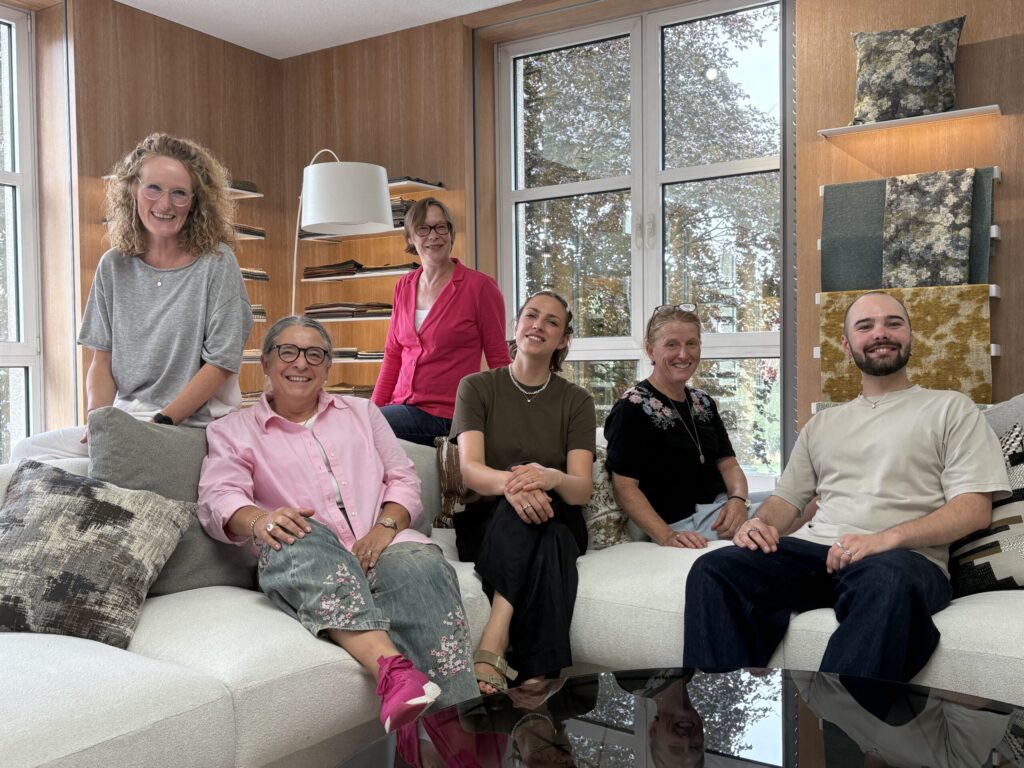
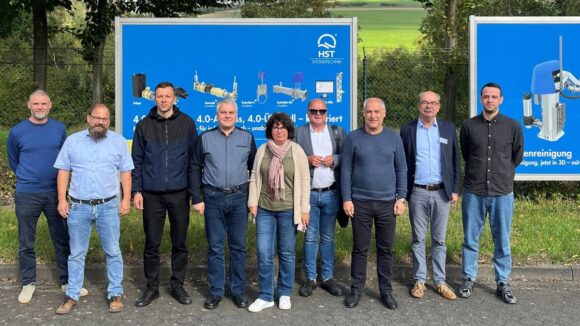
Representatives from Hof University of Applied Sciences, Rohleder, BWFprotec, and other project partners gathered for the official project conclusion on June 30, 2026. It became clear that although the project is now coming to an end, numerous developments and ideas will be pursued further in the coming months.
Waste Materials as Raw Materials of the Future
RecyTube focused on the question of how textile waste generated during the production of high-quality upholstery fabrics can be meaningfully reprocessed. In particular, weaving strips, yarn scraps, and production waste—which consist of mixed materials—have often been disposed of or merely used for energy recovery. The project, however, took the approach of viewing these materials as a valuable resource.
“It makes perfect sense to aim for fewer new fibers and more recycled fibers.”
Melanie Peter, Project Manager
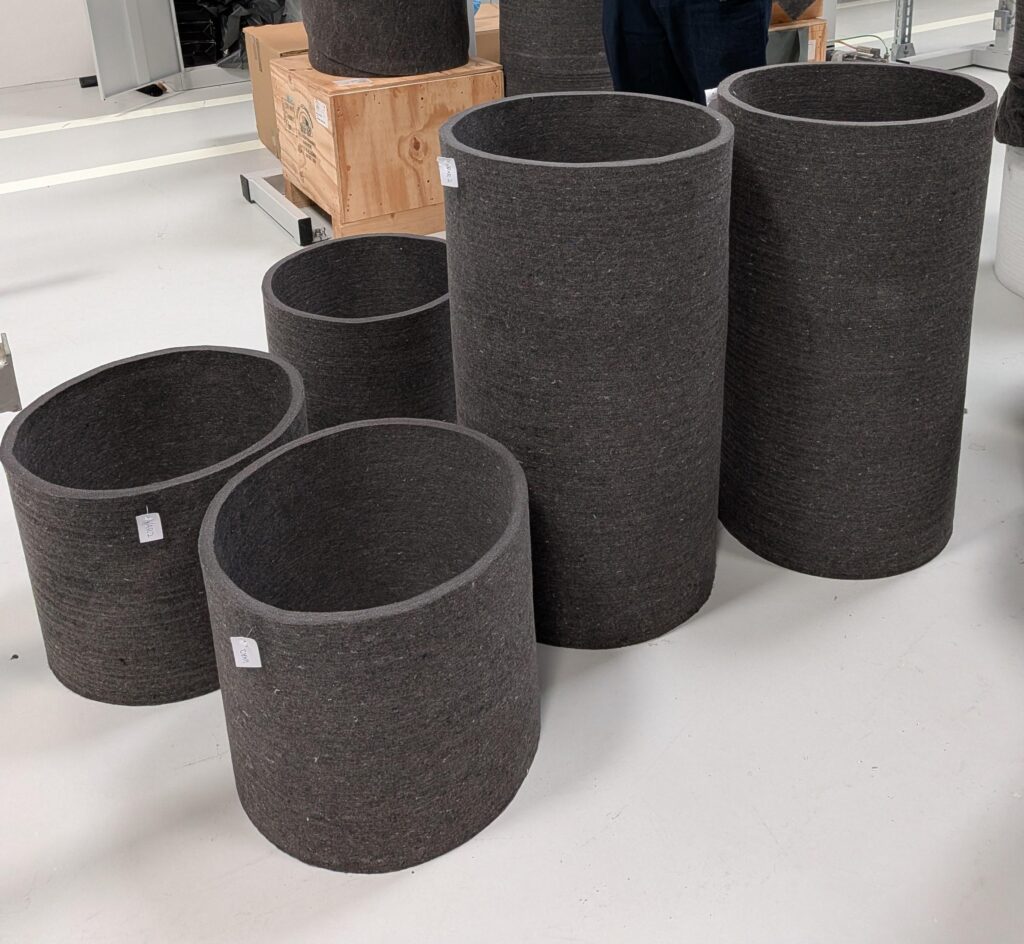
This idea has since become a fundamental part of Rohleder’s sustainability strategy. The first step of the project therefore involved the systematic collection and analysis of the yarn scraps generated. In doing so, the team focused in particular on longer fibers suitable for high-quality reprocessing. The results are impressive: As part of the RecyTube project, the team succeeded in producing materials with a recycled content of about two-thirds. The proportion of so-called “virgin materials” was only about 33 percent.
At the same time, the project partners pursued another important goal.
“Our goal is to avoid adding any additives or other substances to the mixtures. This is intended to create a material cycle that is as clean and traceable as possible in the long term.”
Leni Rohleder, Sustainability Manager at Rohleder
Research Bridging the Gap Between the Lab and Industrial Application
The scientific work was largely supported by Hof University of Applied Sciences. The goal was to develop processes for mechanically processing textile waste and making it reusable. While chemical recycling processes are generally considered promising, they are often associated with high costs and are unsuitable for the existing material mix.
Felix Hacker, a research assistant at the Institute for Materials Science (ifm), reported encouragingly stable results during the material development phase:
“The material looked very uniform during the initial sampling. We ran it through the carding machine twice.”
Felix Hacker, ifm
The results were so convincing that the selected process settings could largely be maintained thereafter. At the same time, the project highlighted the challenges facing many innovation initiatives. “Scalability in projects is a fundamental problem. Projects are either very small or very large—there’s often no middle ground where you can try things out,” explained Melanie Peter.
Design and function must go hand in hand
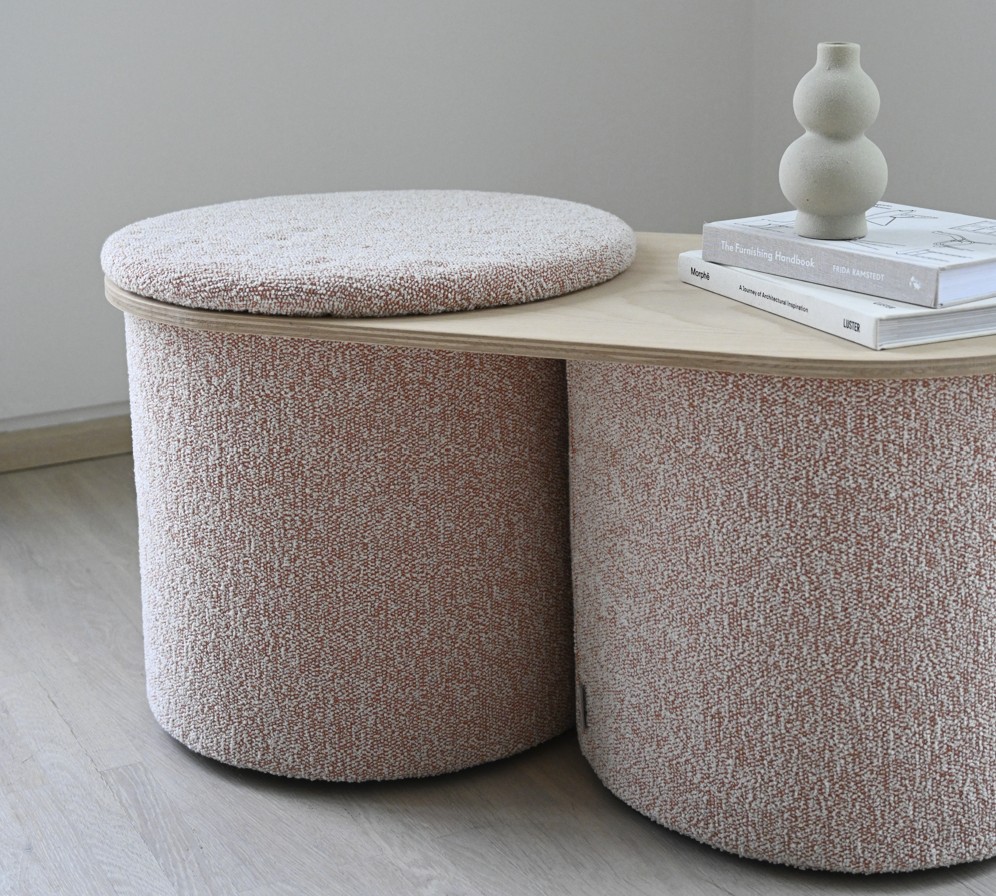
In addition to technical considerations, design also played an important role. For this reason, Paula Holzhauser, a young designer and graduate of the Burg Giebichenstein University of Art and Design Halle, was brought on board for the project. Together with the project partners, she developed concepts for seating objects based on the newly created materials. Developing a stool, in particular, proved to be a challenging task. The furniture must be sturdy, economically producible, and at the same time visually appealing. Added to this is the challenge of being able to manufacture the products in industrial quantities in the future.
Challenges Overcome
During the project, the participants also had to overcome unexpected hurdles. For example, a key local subcontractor dropped out at one point and had to be replaced. For Katja Rödel of BWFprotec, RecyTube ranks among the most extraordinary projects of recent years.
“The project makes perfect sense from start to finish. We’re almost at the limit of what’s even feasible.”
Katja Rödel, BWFprotec
The development within the company has been particularly noteworthy. While there were certainly reservations about the project at the beginning, acceptance has grown steadily as visible results have emerged. Today, the project is actively supported by the employees.
Development Continues
Even though the project is officially over, those involved see further potential. The stool that was developed is still in the optimization phase. “Currently, the cost structure for the stool still needs to be optimized,” acknowledged Alexandra Luft, scientific coordinator at ifm. However:
“Nevertheless, the technical foundations were laid during the final project phase to enable competitive industrialization of the design in the coming months.”
Initial presentations have already taken place at the Coburg Design Days. Further appearances, including at the international office furniture trade show Orgatec in Cologne, are planned.
For the project partners, it is therefore clear that RecyTube was far more than just a single research project. “We really enjoyed the project. We’d love to do it again,” said Melanie Peter. And there are already new ideas for the future: “We’ve worked together successfully. That’s why we’d like to talk to Rohleder right away about further project ideas,” said Alexandra Luft.
The conclusion is correspondingly positive: RecyTube has shown that textile production scraps can not only be recycled but also have the potential to become an important building block of future material cycles in the textile industry.