

Textiles have long been much more than just fabrics for clothing. They are used in aerospace and transportation just as much as in medicine, environmental technology, and recycling. It was precisely this wide range of applications that took center stage at this year’s PolitFashionNight on September 22, 2026, at the Bavarian Representative Office in Berlin. Under the title “HighTex from Bavaria,” the Federation of the German Textile and Fashion Industry, together with the Association of the Bavarian Textile and Apparel Industry, brought together representatives from research, business, politics, and fashion design. Hof University was represented on multiple occasions.
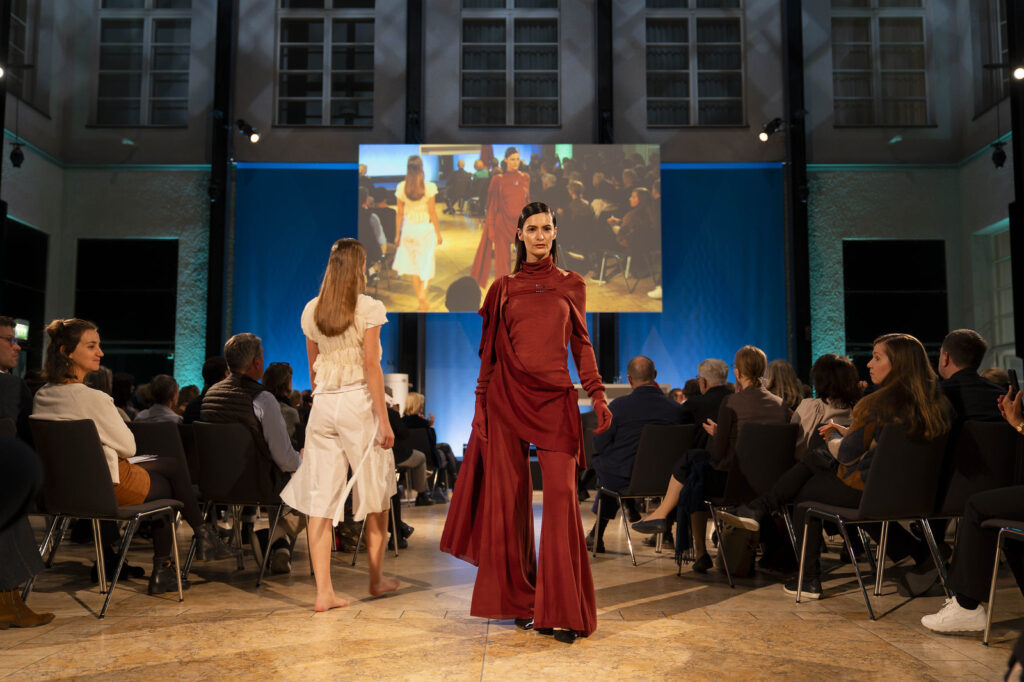
Prof. Dr. Frank Ficker contributed the perspective of textile research to a high-profile panel discussion, while Professor Martina Ziegenthaler took the stage with students from the Textile Design program to present a selection of designs.
Textile Research Is High-Tech
Following opening remarks by Dorothee Bär, Federal Minister for Research, Technology, and Space, Prof. Dr. Frank Ficker, Director of the Institute for Materials Science at Hof University of Applied Sciences (ifm), together with Dr. Philipp von Waldenfels, President of the Bavarian Textile and Apparel Association, and fashion designer Laura Theiss, about the importance of the interplay between research, education, and industry.
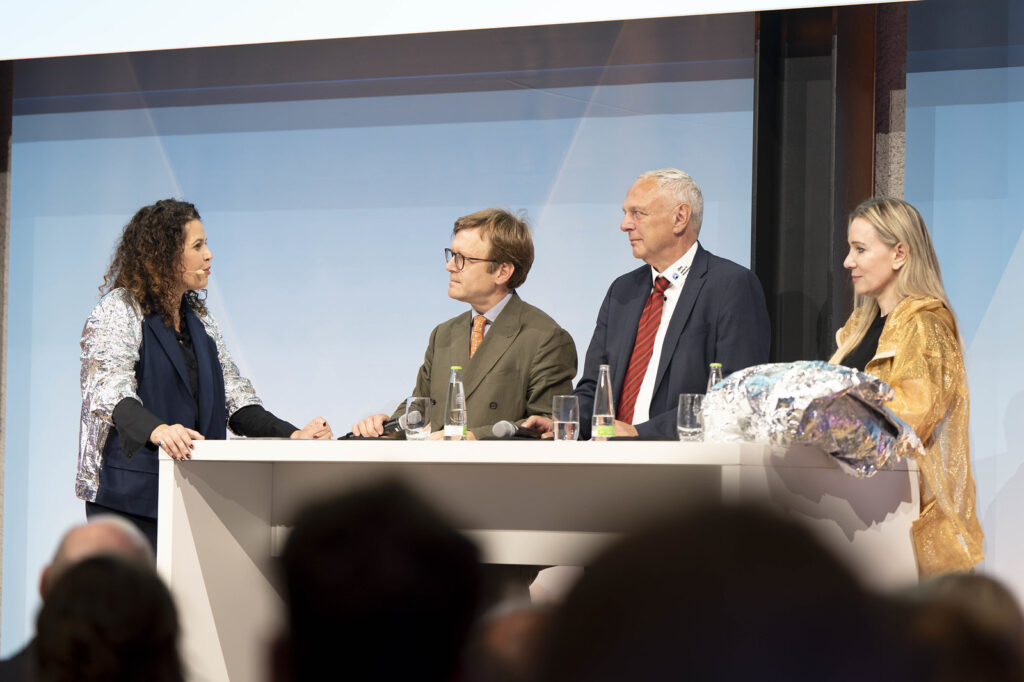
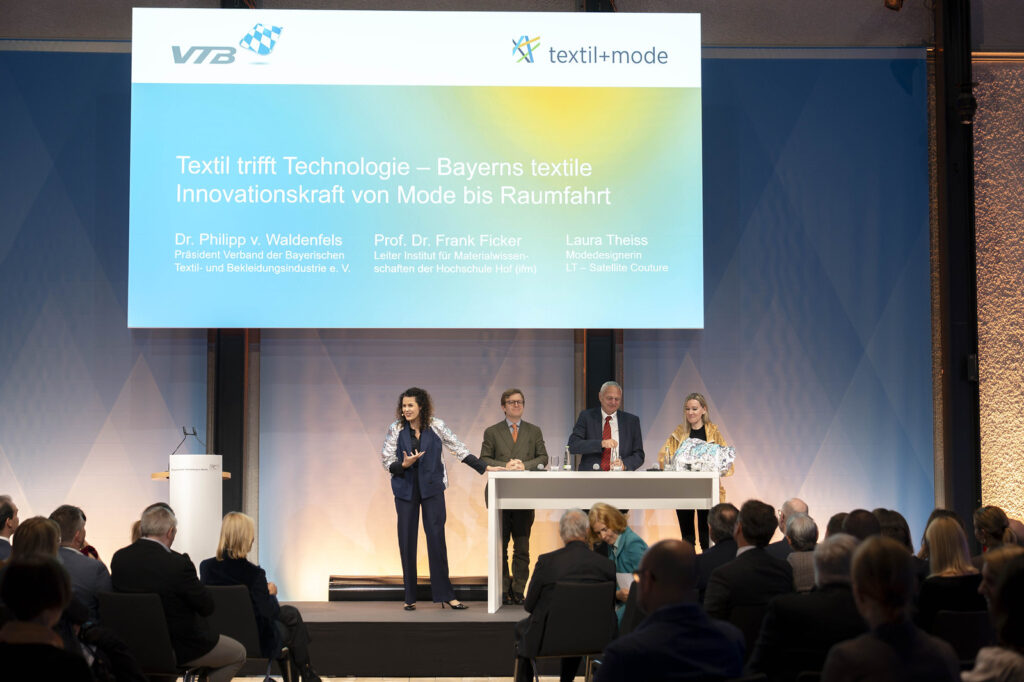
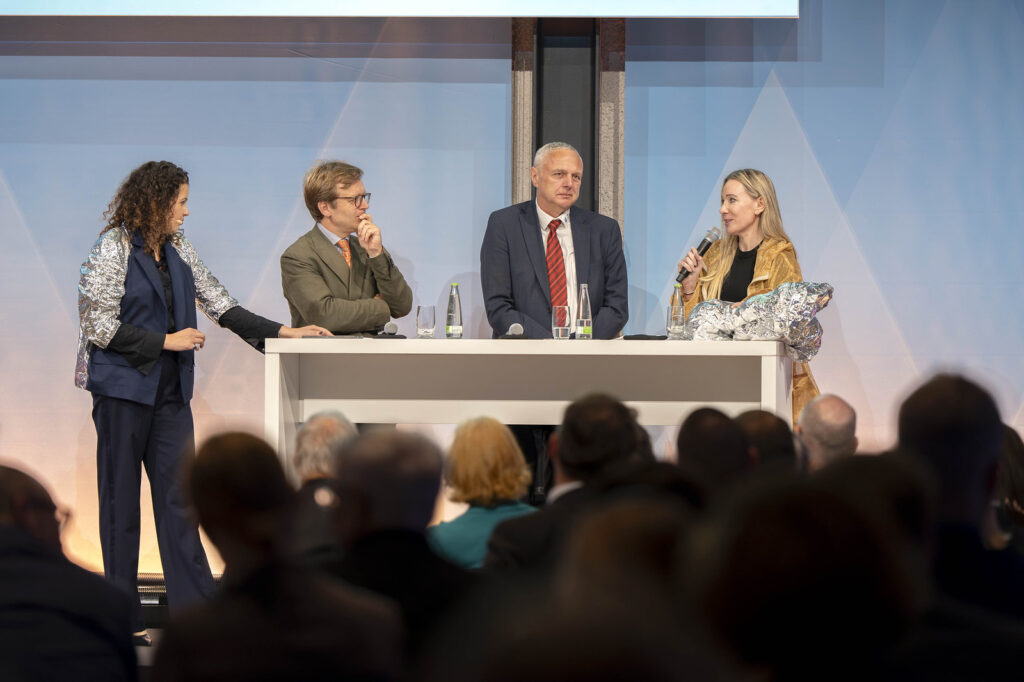
For Prof. Dr. Frank Ficker, the integration of these diverse perspectives is an essential component of successful innovation. Among other things, the Institute for Materials Science at Hof University of Applied Sciences (ifm) develops structures for aerospace applications, smart agricultural textiles, recycling concepts, and sustainable insulation materials made from regional sheep’s wool. The institute thus exemplifies a trend shaping the entire industry: textile materials are increasingly becoming high-tech materials for a wide variety of applications. “Innovation does not arise in isolation. It arises where people with different perspectives come together,” was the guiding principle of the event. The PolitFashionNight thus highlighted just how closely research, industrial application, and design are now intertwined.
From the Research Lab to the Runway
The second major contribution from Hof University of Applied Sciences demonstrated that textile innovation does not take place solely in the laboratory but also has an aesthetic and social dimension: A fashion show presented selected graduation collections from the Textile Design program at the Münchberg campus. The works on display combine creative design with material expertise, sustainability, and new textile technologies. The spectrum ranges from modular and transformable clothing concepts to consistent upcycling and bioactive knitwear with functional properties. This makes visible on the runway what is central to the textile design program at Hof University of Applied Sciences: the connection between design, materials, technology, and sustainable thinking.
Textile Design from Münchberg Takes the National Stage
The Textile Design program at the Münchberg campus combines traditional textile expertise with digital design techniques, modern production methods, and sustainable approaches. In the bachelor’s program, students explore topics such as materiality, color, form, textile technologies, digital design, construction, and recycling. Through project-based work, they regularly create collections and products that are also presented outside the university.
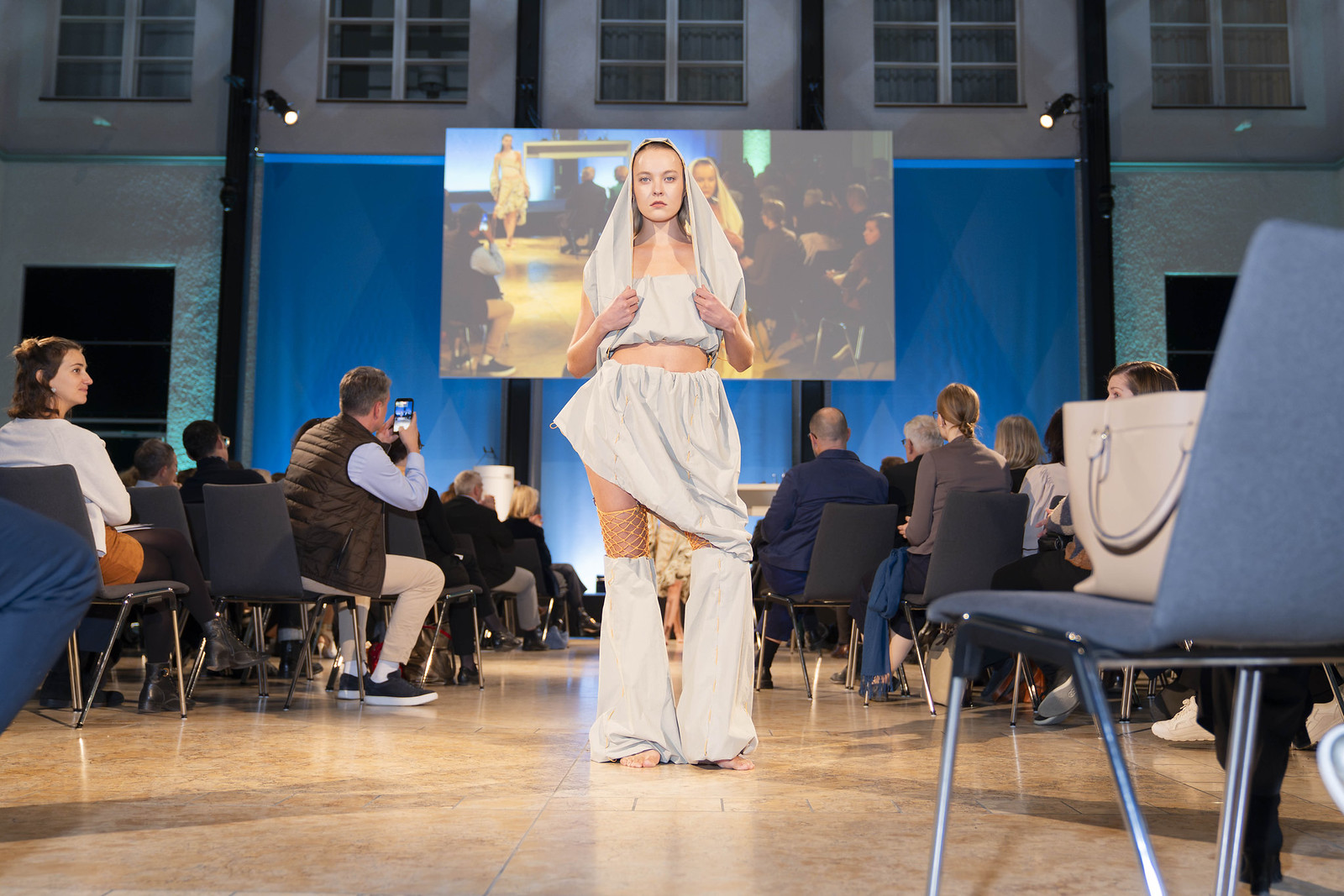
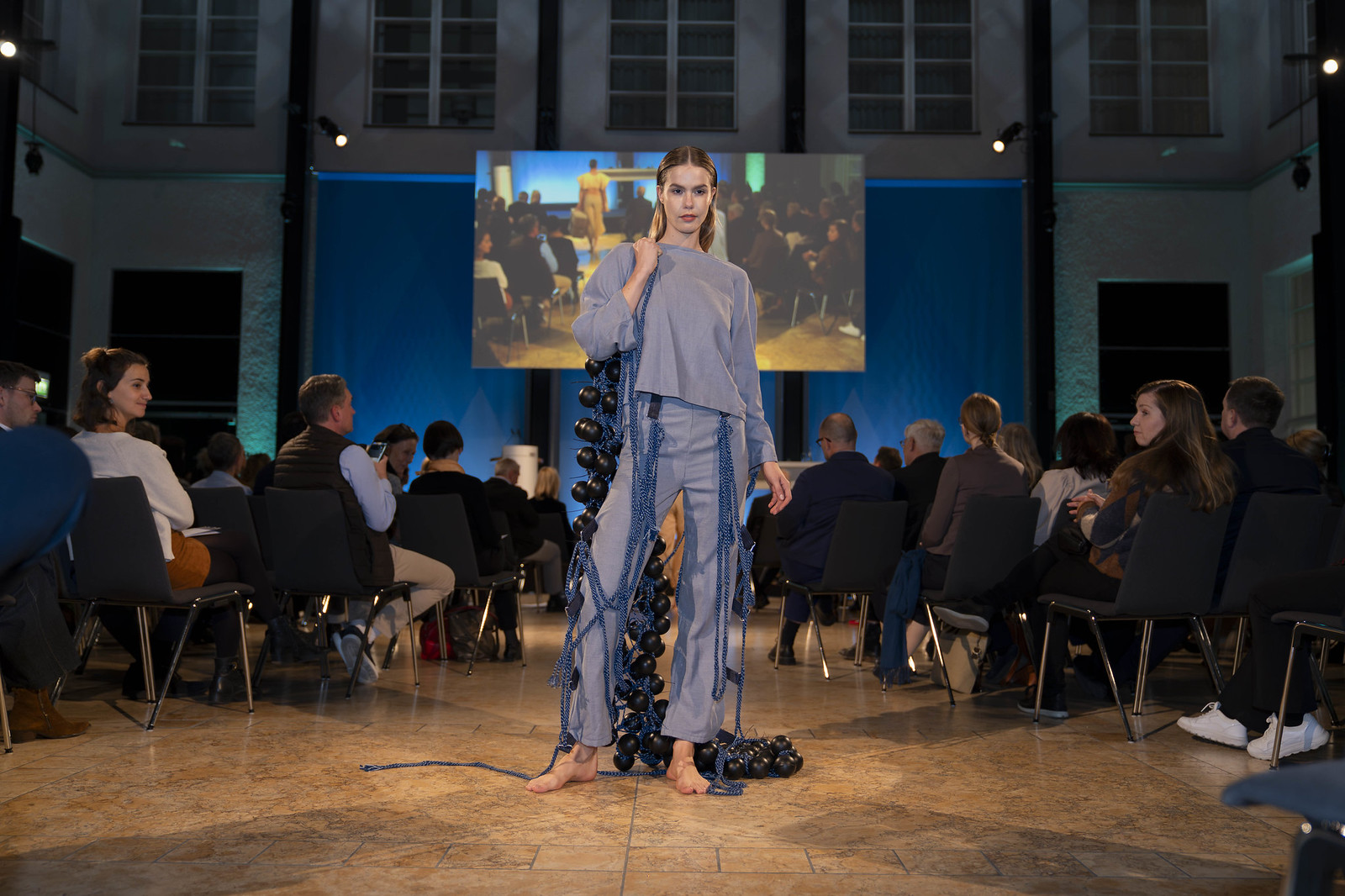
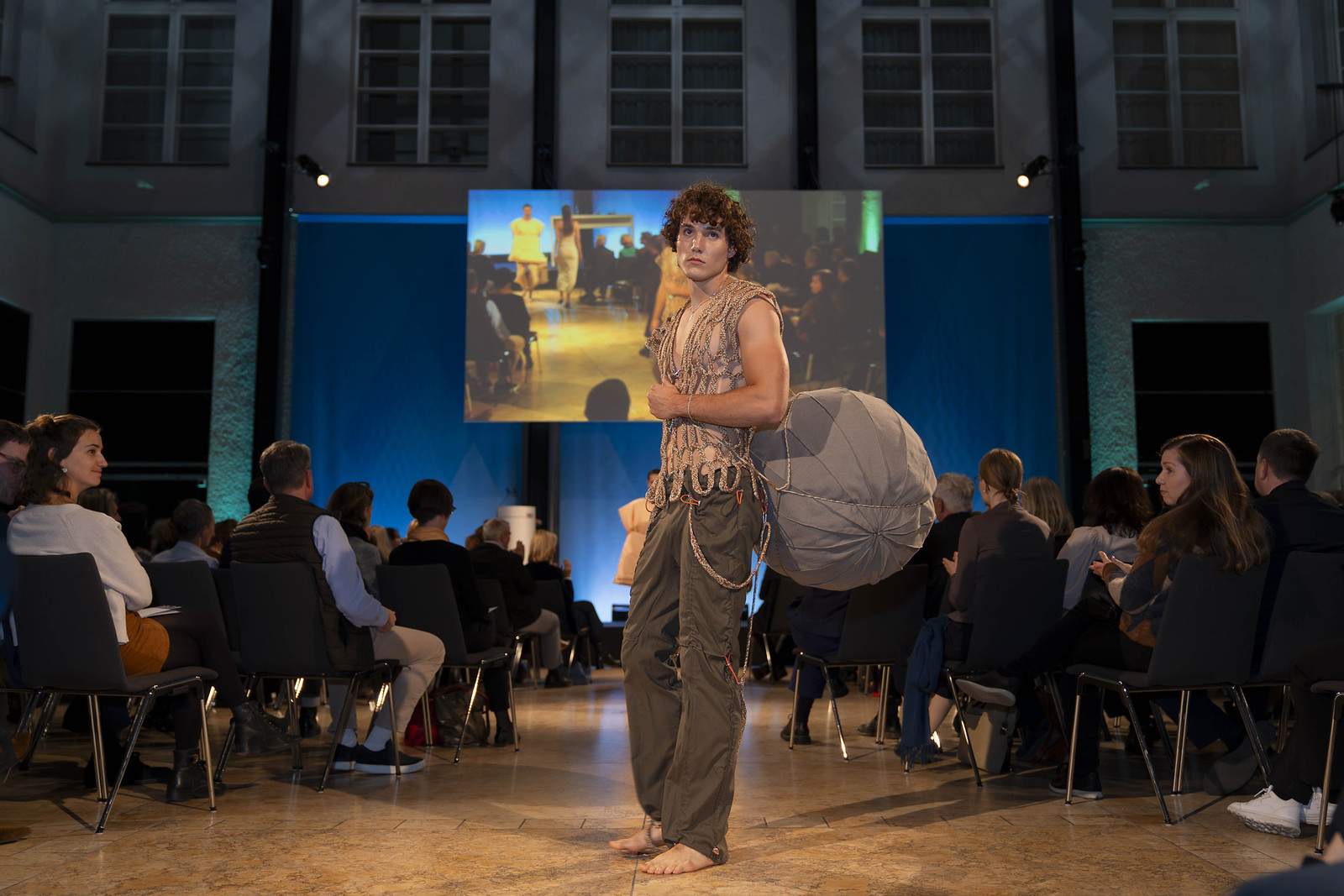
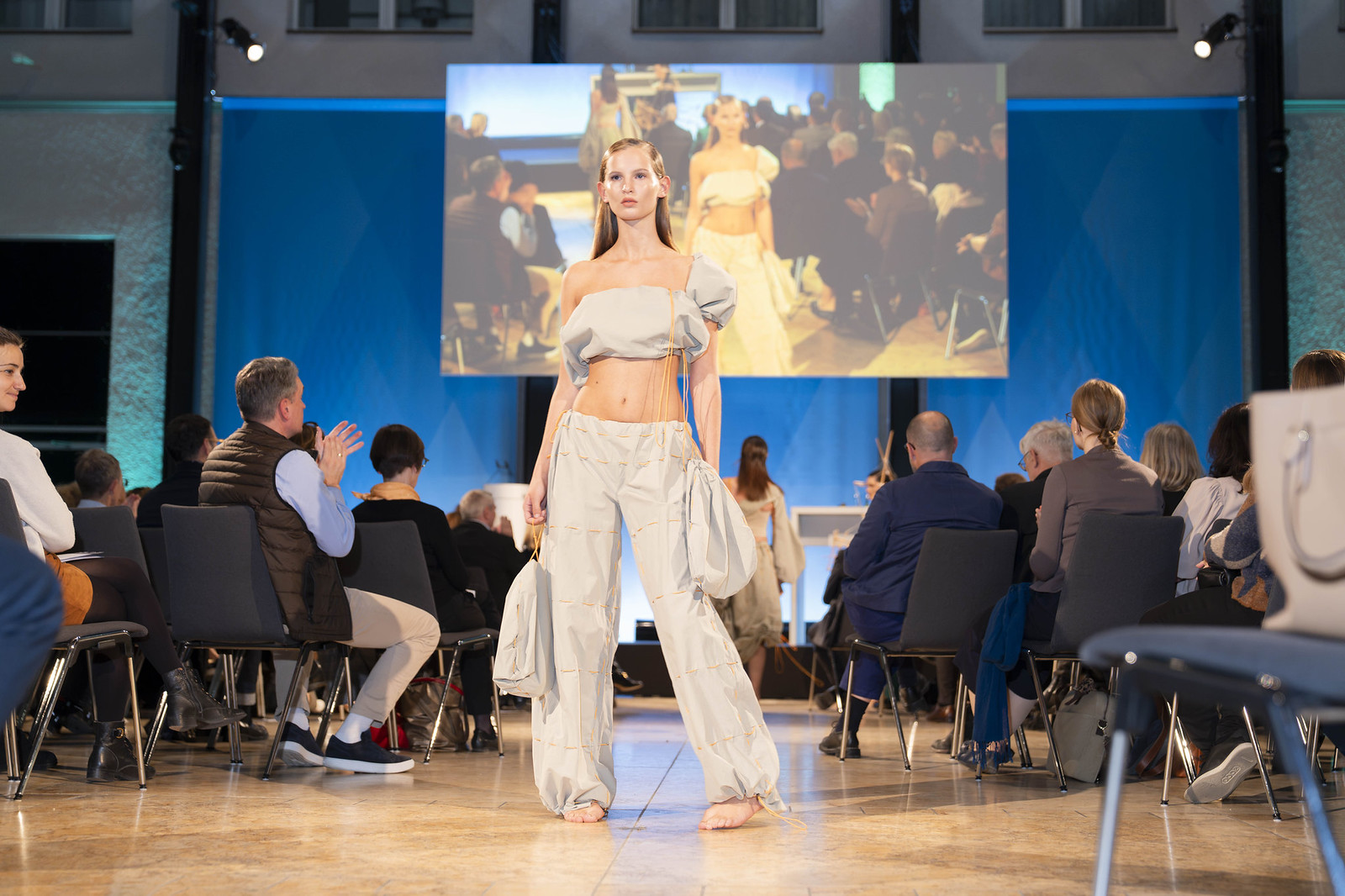
“PolitFashionNight” offered students a special platform: their work was showcased to an audience from the worlds of politics, business, research, and industry. Professor Martina Ziegenthaler, who heads the Fashion Design department within the Textile Design program, commented: “The invitation to Berlin was an excellent opportunity to present our students’ work to a national audience and to once again highlight Hof University of Applied Sciences as an innovative hub for textile design.”
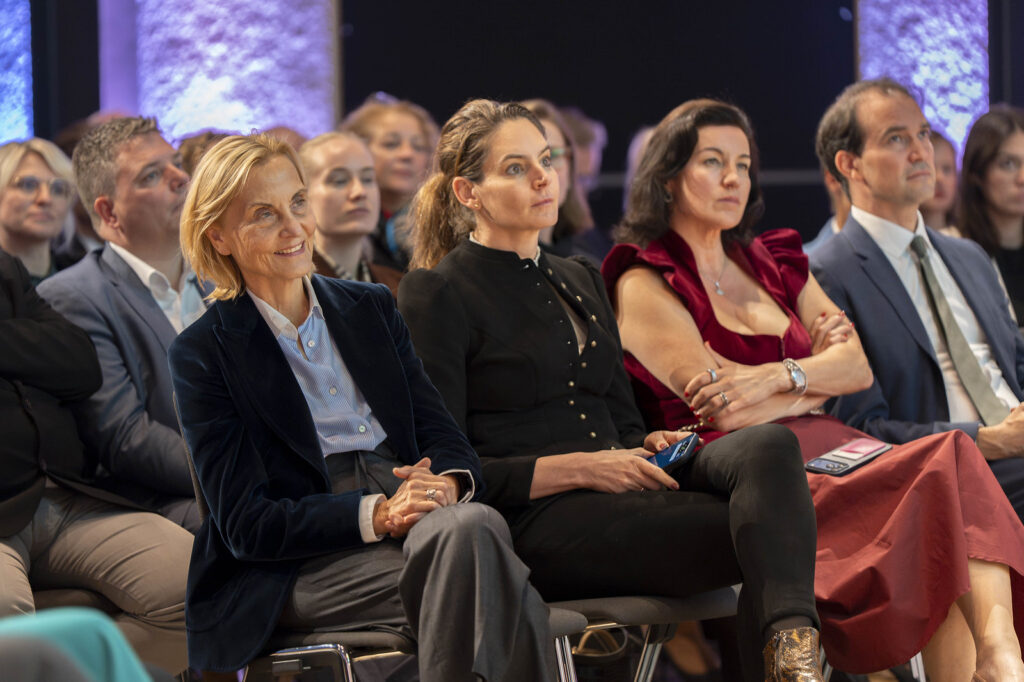
PolitFashionNight thus highlighted a trend that has also been evident on the Münchberg campus for years: The future of textiles is shaped where science, technology, design, and practice converge.