

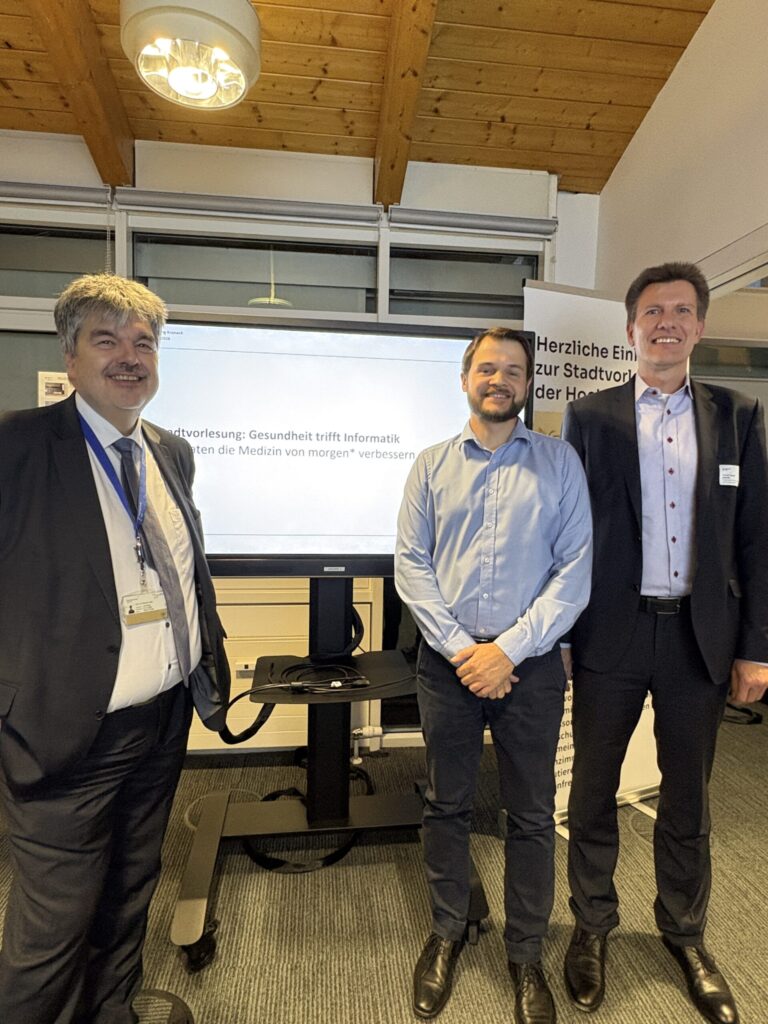
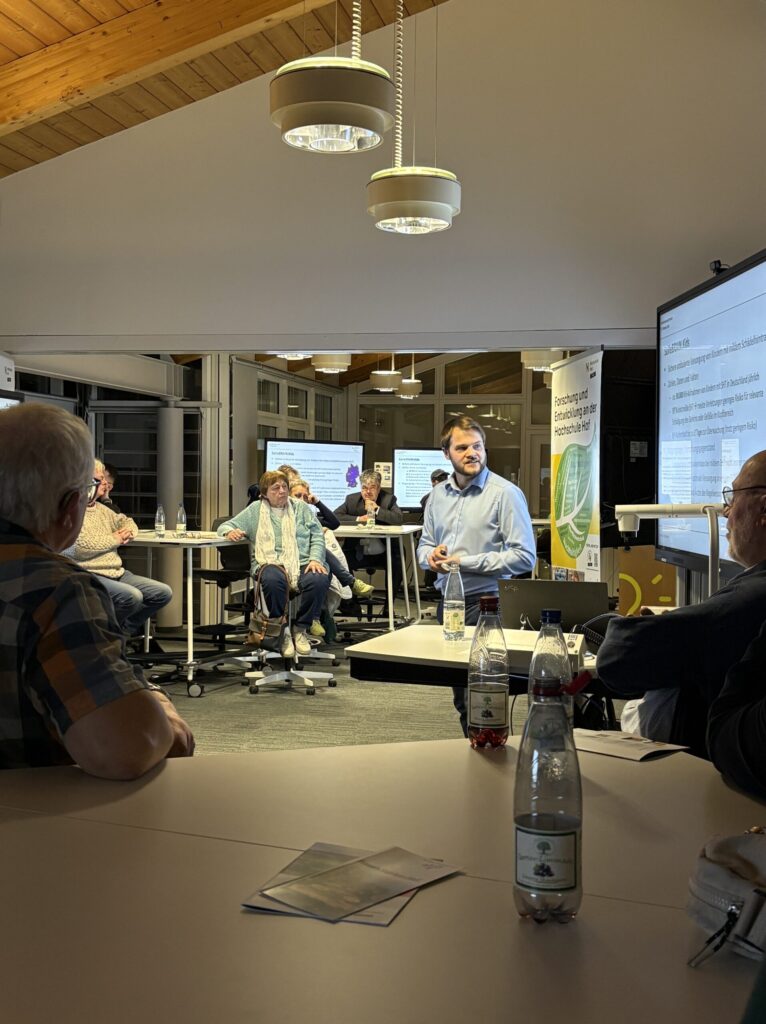
Public Lecture at the Lucas Cranach Campus with Dirk Reinel from Hof University of Applied Sciences: Can health data help us better understand diseases and treat patients more effectively? The latest public lecture at the Lucas Cranach Campus in Kronach demonstrated that this is no longer just a pipe dream. Under the title “Health Meets Computer Science: How Data Will Improve the Medicine of Tomorrow,” Dirk Reinel, a professor at the Institute for Information Systems (iisys), presented specific research projects from his research group.
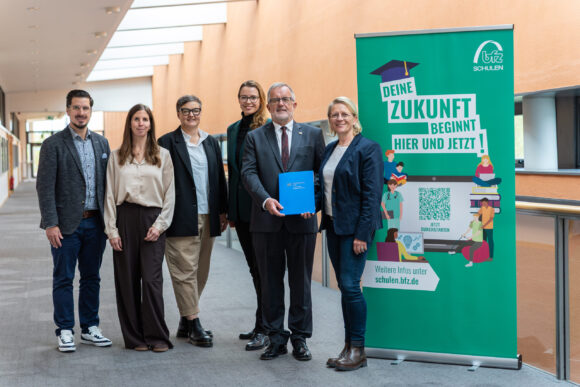
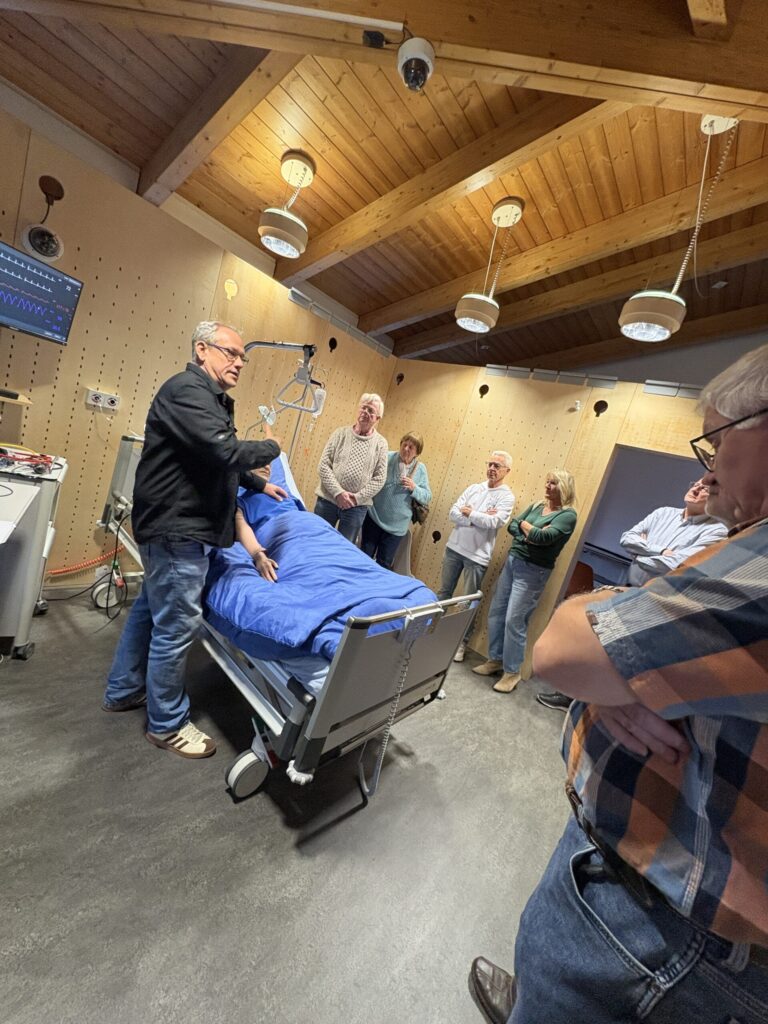
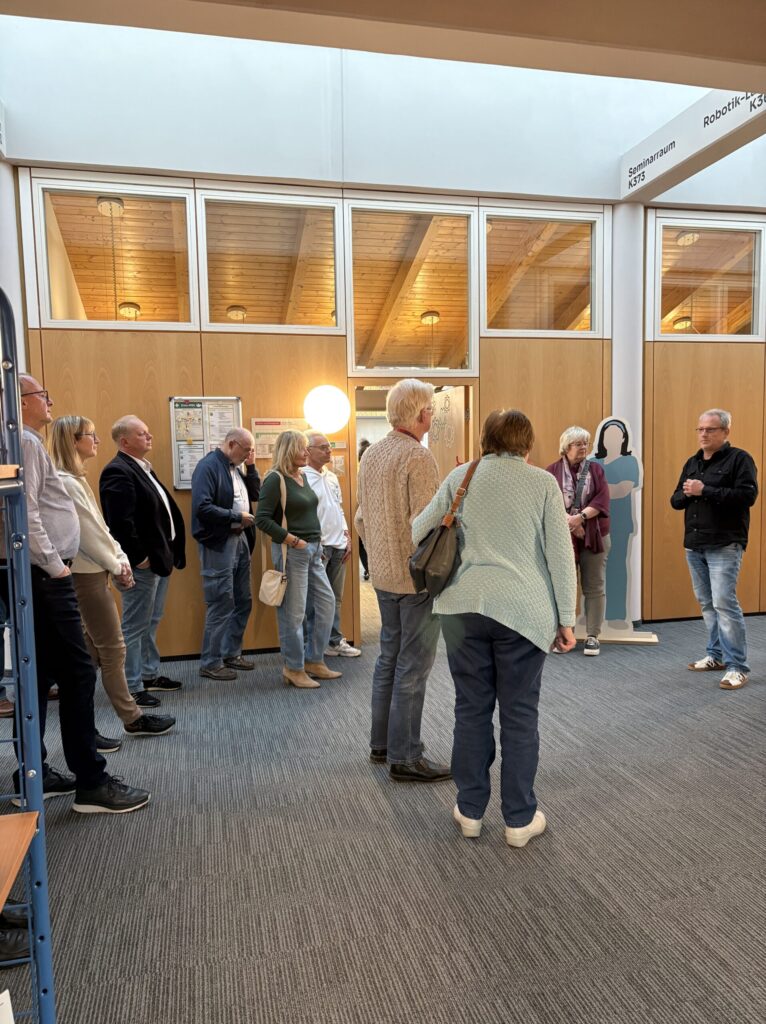
Two vice presidents from Hof University took the stage to welcome the audience: Gerald Schmola, responsible for research, development, and entrepreneurship, and Dietmar Wolff, vice president for teaching and continuing education, who is himself an active researcher in the field of digitalization in health and social services. Among the guests were representatives from politics and local government, as well as Hans Rebhan, who had played a key role in the development of the Lucas Cranach Campus. To kick things off, Holger Mück gave a tour of the campus’s simulation lab and explained, among other things, how the patient simulator works.
From Hospital Information Systems to the Operating Room
“Data is already improving health today—not just tomorrow,” Reinel made clear right from the start. Computer science has now found its way into nearly all areas of healthcare: from hospital information systems to algorithms for imaging procedures such as MRI and CT scans, all the way to the digital networking of medical facilities. Artificial intelligence and machine learning could, for example, help with the detection and delineation of tumors, as well as with bed planning or the preparation of medical reports. Even in the preparation and execution of surgeries, extended reality (xR) is opening up new possibilities, such as through digital projections that assist surgeons during a procedure.
Apps That Provide Concrete Help to Patients
Several projects highlighted the diversity of research at iisys. Among other things, the Analytical Information Systems (AIS) research group is developing digital applications for gait analysis in the muscle disorder FSHD (facio-scapulo-humeral muscular dystrophy), prevention programs for fetal alcohol spectrum disorders (FASD), and care for children following mild traumatic brain injuries. In the SaVeBRAIN.Kids project, for example, parents receive an app after their child is discharged from the hospital; the app supports them in monitoring their child at home with targeted questions and information. In appropriate cases, this can help avoid the need for another hospital stay. The project is being developed in collaboration with the University Hospital Essen.
The benefits of digital health data were particularly evident in the example of the nationwide headache registry of the German Migraine and Headache Society (DMKG). Migraine is a widespread condition: About ten percent of the population is affected, with women being affected significantly more often than men. Patients can use an app to document their symptoms and the progression of their condition. Doctors have access to this information in a consolidated form via a web-based physician portal and can use the time saved to focus more on one-on-one consultations. According to Reinel, approximately 8,000 patients are now actively using the app, and an additional 65,000 people are using the digital service as an app-only diary for their own records. Sixty headache centers have already joined the headache registry.
The collected data also enables scientific analyses, such as those regarding disease progression or the effectiveness of medications. However, this requires the responsible handling of sensitive information. Data protection and data security are top priorities, Reinel emphasized. The principle of “Privacy by Design”—incorporating data protection into the development process from the very beginning—is central to this effort.
Research Needs Strong Partners
Behind these applications lies intensive collaboration: with hospitals, LMU Munich, and other medical partners, as well as with students. Research is teamwork, Reinel emphasized.
“Excellent research is possible even at small universities.”
Prof. Dr. Dirk Reinel
The subsequent discussion focused, among other things, on how open doctors and society are to digital applications and how medical staff can be motivated to participate. Here, too, it became clear: Technology alone is not enough. Digital solutions must work in everyday medical practice and be accepted by the people who work with them.
The public lecture on the Lucas Cranach Campus thus highlighted how closely computer science and medicine now collaborate—and that research at Hof University has long been able to have a tangible impact on patient care.
The next City Lecture in Kronach: “Market Study of Bavarian Companies”
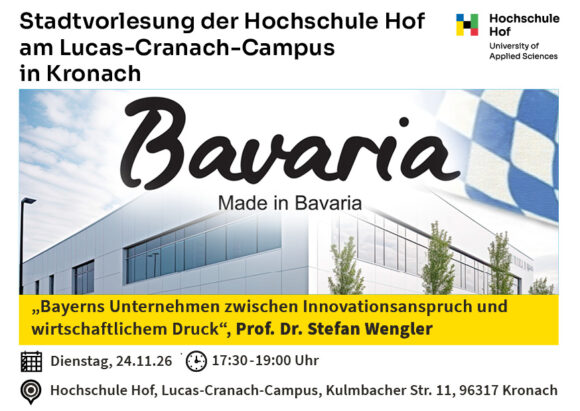
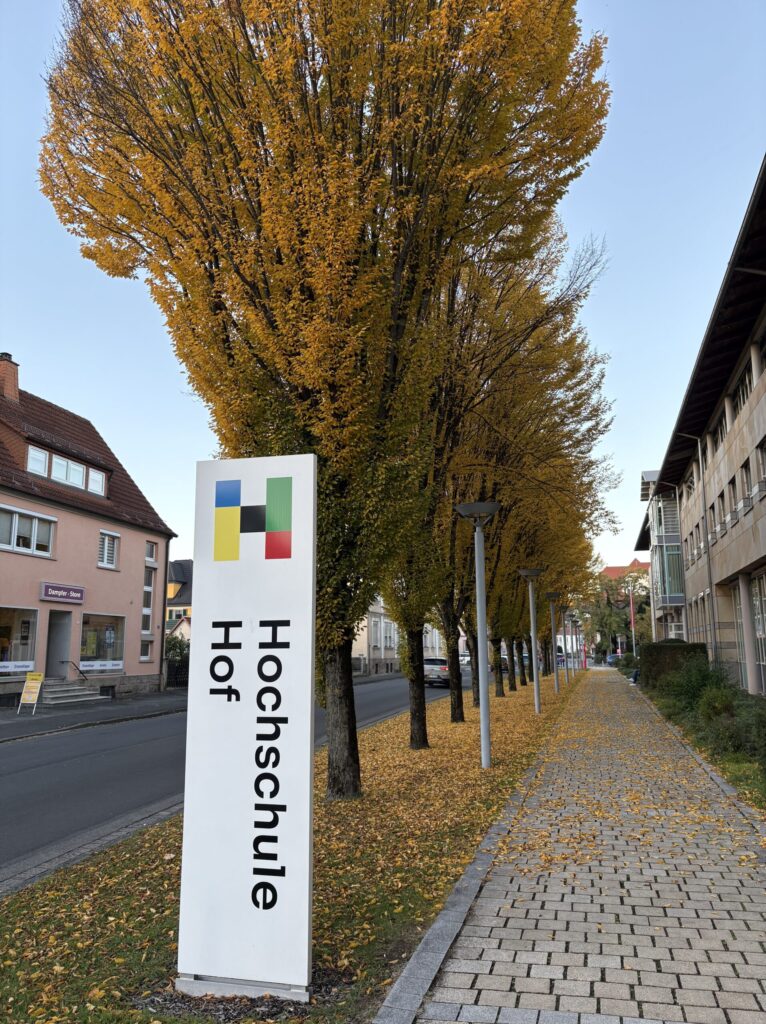
There’s also plenty to look forward to for the next public lecture: Hof University cordially invites you to “Bavarian Companies Between the Demand for Innovation and Economic Pressure.” Professor Stefan Wengler will present the key findings of the “Bayern Innovativ 2026” market study, which was conducted by the European Management Institute e.V. at Hof University of Applied Sciences on behalf of Bayern Innovativ. When? Tuesday, November 24, 2026, 5:30–7:00 p.m., also at the Lucas Cranach Campus in Kronach.
Registration is requested and is now open via this link.
Links to the Headache Registry:
- Headache Registry project website: https://www.kopfschmerzregister.de/
- DMKG app (general): https://www.kopfschmerzregister.de/dmkg-app/
- DMKG app (Android): https://play.google.com/store/apps/details?id=de.dmkg.kopfschmerzregister.android
- DMKG app (iOS): https://apps.apple.com/de/app/dmkg-app/id1496990724