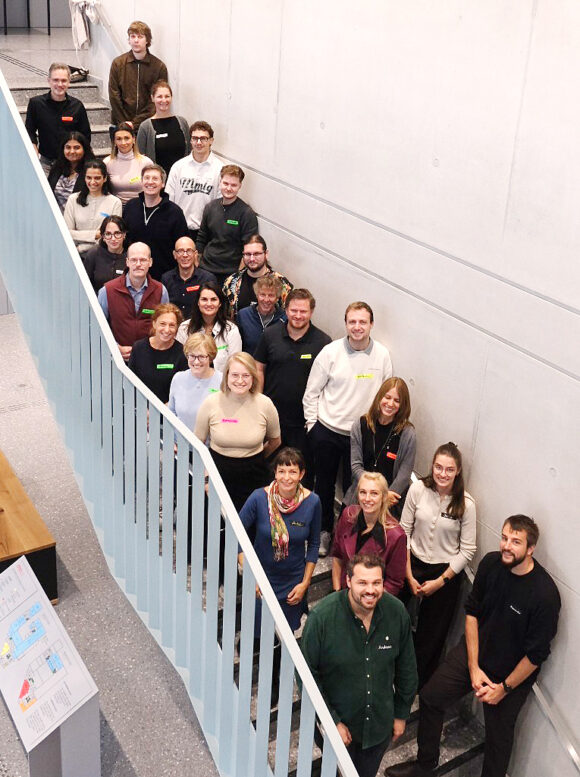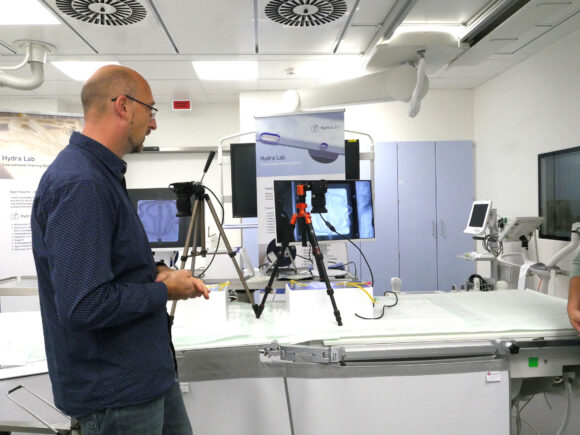


The opportunity to pursue a doctorate at Hof University is being taken advantage of more and more. More and more young researchers are choosing to pursue advanced qualifications and are using the REDIG Doctoral Center as a pathway to a doctoral degree. Katharina Schiller demonstrates that behind these rising numbers lie very personal success stories. She is the most recent example of doctoral graduates at Hof University of Applied Sciences.

Trends over the past few years show that doctoral studies at Hof University of Applied Sciences are becoming increasingly important. In 2026 alone, ten new doctoral projects have been initiated so far. By comparison: in 2025 there was one project, in 2024 there were seven, and in 2023 there were four. In total, Hof University now has 25 doctoral projects. Of these, 19 are collaborative doctoral projects conducted in partnership with a university. Six additional early-career researchers are currently pursuing their doctorates at the new REDIG Doctoral Center. Two additional applications for the summer semester of 2027 have already been submitted.
For Prof. Dr. Gerald Schmola, Vice President for Research, Development, and Entrepreneurship at Hof University of Applied Sciences, this development is a clear sign of the university’s research strength:
“The rising number of doctoral projects shows that Hof University of Applied Sciences is no longer perceived merely as a place for practice-oriented academic education. In recent years, we have also established ourselves as a high-performing research hub where young scholars can conduct challenging research and further their academic development.”
Prof. Dr. Gerald Schmola, Vice President for Research, Development, and Entrepreneurship

REDIG Doctoral Center Opens Up New Opportunities
The REDIG (Resource Efficiency and Digitalization) Doctoral Center, in which Hof University of Applied Sciences participates alongside OTH Amberg-Weiden and Ansbach University of Applied Sciences, plays a key role in this development. Starting in 2026, independent doctoral dissertations can be supervised there in selected research areas. This gives early-career researchers the opportunity for the first time to earn their doctoral degrees directly at a university of applied sciences without necessarily requiring a partner university as the institution authorized to grant doctoral degrees.
Hof University of Applied Sciences contributes to the joint doctoral center in particular with its expertise in the fields of digitalization, sustainable water and energy systems, and artificial intelligence. Nine professors from Hof have been appointed to the doctoral college. For the university, this means a further strengthening of its research activities and its appeal as an academic employer.
Katharina Schiller Researches the Illusion of Email Security
The successful doctoral dissertation of Dr. Katharina Schiller demonstrates just how diverse the research topics at Hof University are. She successfully defended her dissertation, titled “The Illusion of Security: Perception, Influence, and Usability of Email Security Interventions,” at FAU Erlangen-Nuremberg. Her work centered on a question of great practical significance in light of rising cybercrime and increasingly sophisticated phishing attacks: How secure are emails, really—and how do users perceive the various security measures?
“Email is a relatively old digital communication medium, yet it is still used everywhere, even though there are now more secure alternatives.”
Katharina Schiller
Over the years, numerous measures have been developed to make electronic communication more secure. In her dissertation, she examined various of these approaches, including phishing simulations, technical support systems, and email encryption. Her focus was less on the technical fundamentals and more on how people perceive such security measures and actually use them in everyday life.
A key finding of her research: Subjectively perceived security does not necessarily correspond to the actual level of protection. Some measures are overestimated by users, while others are underestimated.
“Security measures must therefore not only function technically but also be understandable and user-friendly. Only then will people use them correctly.”
Katharina Schiller
Furthermore, one should not rely on individual solutions but rather combine different security approaches.
Ph.D. Program Jointly Offered by Hof University of Applied Sciences and FAU
Katharina Schiller completed her doctoral studies as an external doctoral candidate at FAU Erlangen-Nuremberg. At the same time, she worked part-time as a staff member for the Information Security Officer (ISB) at Hof University of Applied Sciences. This combination enabled her to finance her doctoral studies while also providing relevant research connections: both in her academic work and in her role at the university, she focused intensively on email security and phishing.
The dissertation is based on several academic studies, the results of which had already been published at various conferences prior to the final defense. However, the path to this point also required a high degree of organization and perseverance. In particular, coordinating between the two universities sometimes involved a considerable time investment and numerous meetings. As a result, there wasn’t always as much time for the actual research work as she would have liked.
Participating in international academic conferences posed another challenge. High-profile events, in particular, often take place abroad, so financing the associated travel was not always easy. Nevertheless, these conferences were an important part of her academic work and provided an opportunity to present her own research findings internationally and discuss them with other scholars.
A Success for Research at Hof University of Applied Sciences
Prof. Dr. Florian Adamsky, who served as Katharina Schiller’s doctoral advisor, particularly highlights the combination of scientific rigor and practical relevance in her work:
Katharina Schiller has addressed a topic that is of great importance to companies, institutions, and ultimately to every user of digital communication. What is particularly valuable is that she does not focus solely on technical possibilities, but places people and their behavior at the center. Her findings show that IT security can only function sustainably when technical safeguards and actual human behavior are considered together.”
Prof. Dr. Florian Adamsky
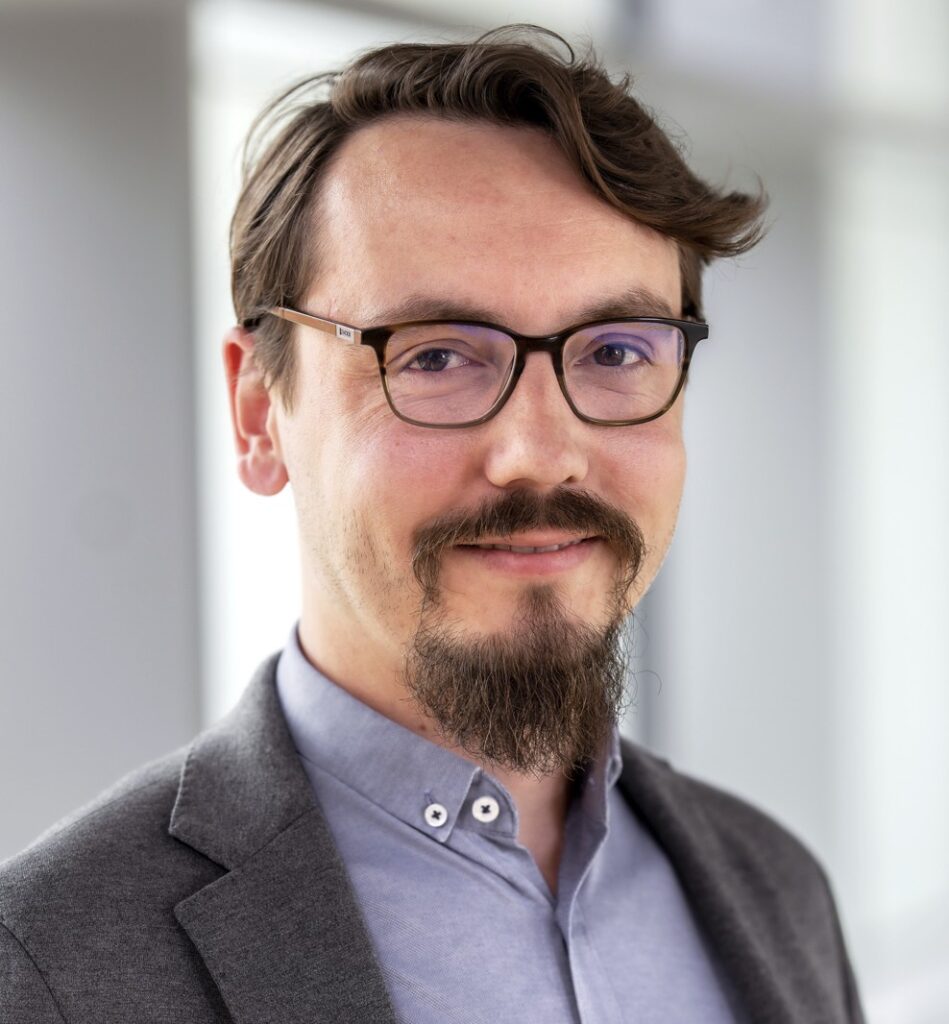
Katharina Schiller’s successful doctoral dissertation exemplifies the opportunities available to early-career researchers at Hof University of Applied Sciences: Whether through a partnership with a university or via the REDIG Doctoral Center, the university is increasingly becoming an attractive location for academic training and applied research. The rising numbers show that this path is being taken more and more frequently.