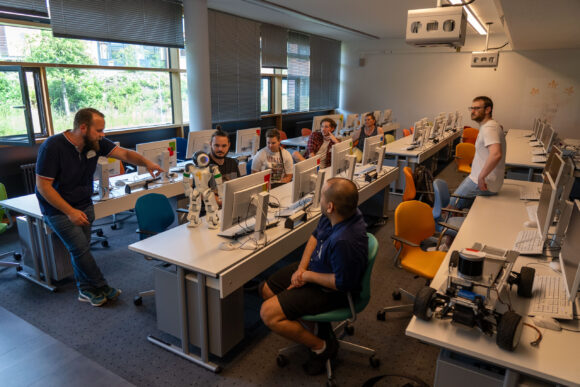


How can batteries be made more powerful, and what storage technologies will be needed in the future? A workshop at the Bavarian Center for Battery Technology (BayBatt) in Bayreuth addressed these questions. The event took place on October 6 as part of the EnerTECH project led by the Institute for Hydrogen and Energy Technology at Hof University of Applied Sciences (iwe) . Approximately 25 participants gained insights into current research approaches and modern battery storage technologies.
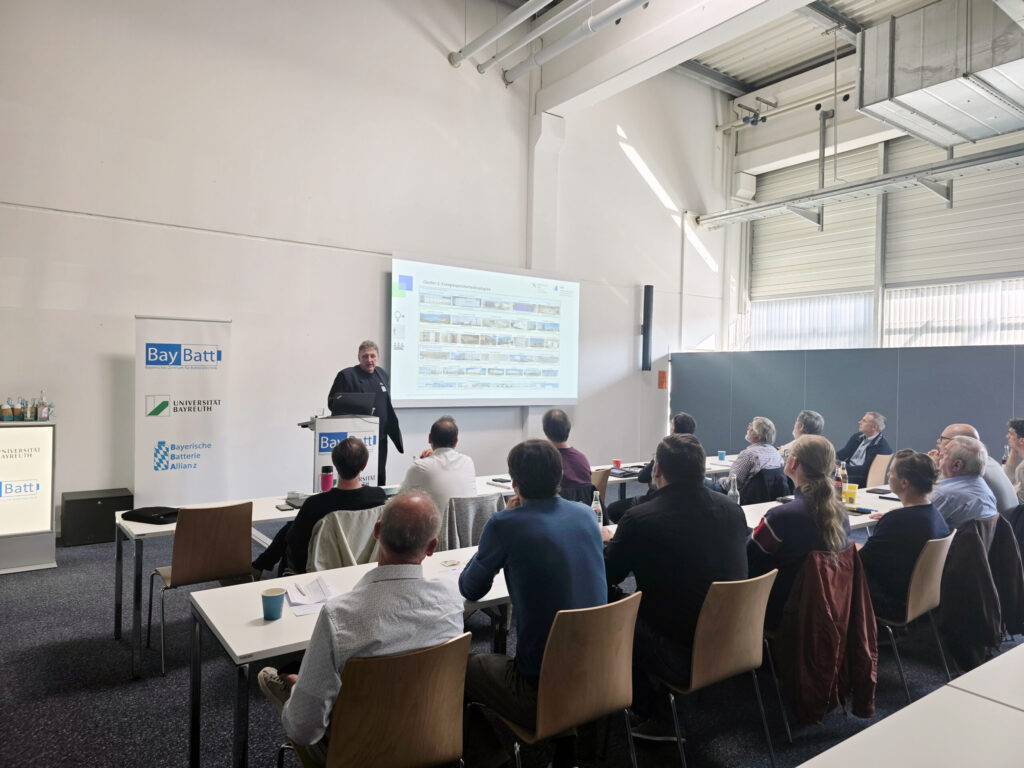
The free in-person workshop on Weiherstraße featured six expert presentations and a guided tour of the research center. Dr. Stefan Bayer from the iwe at Hof University of Applied Sciences opened the event and presented the EnerTECH project. Dr.-Ing. Tilo Held then provided insights into the work of BayBatt and the continuing education project “Knowledge Transfer & Continuing Education in the Field of Sustainable Battery Technology” (WiNBat).
Fascinating Technical Presentations
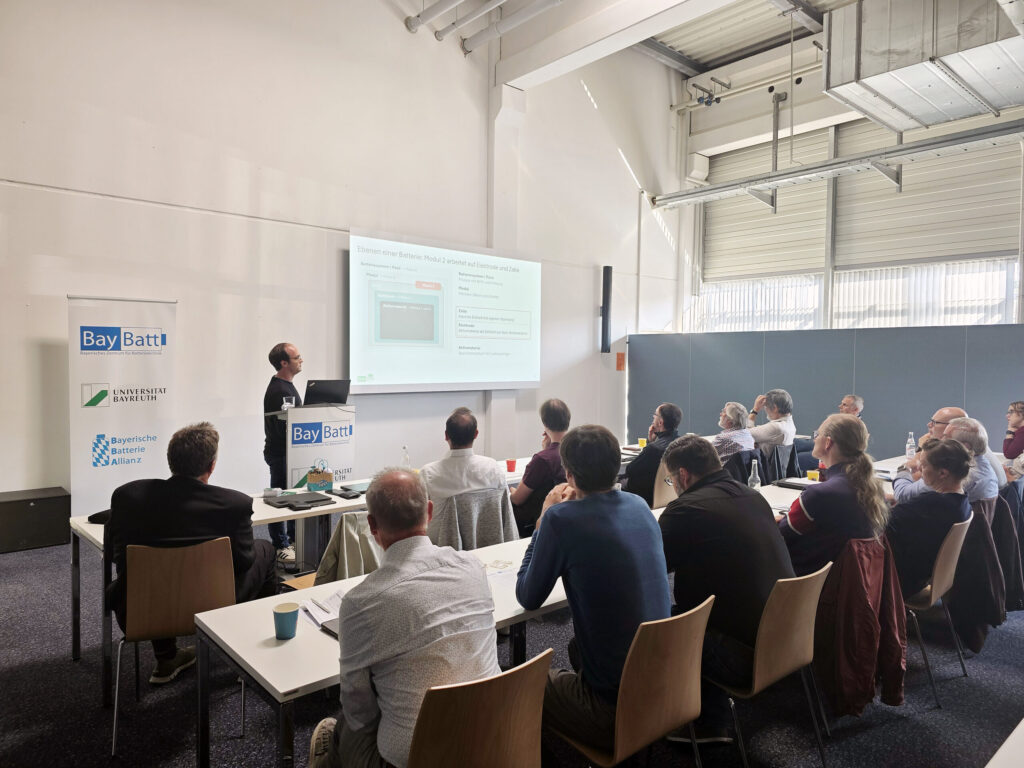
The program covered a wide range of topics, from the fundamentals to modern simulation methods and alternative energy storage technologies. Christian Planck explained the structure of lithium-ion batteries and described the functions of the individual cell components.
Prof. Dr. Conrad Wolf from Coburg University presented digital cell twins. These are computer-aided models of real battery cells that can be used to investigate their behavior under various conditions. Multiscale and multiphysics simulations take into account different orders of magnitude and physical processes. Such models can help us better understand batteries and drive their development in a more targeted manner.
Axel Kahl from Jena Flow Batteries GmbH focused on another technology: redox flow batteries. In these storage systems, energy is stored in liquid electrolytes that are pumped through an electrochemical cell. This principle opens up possibilities for stationary storage systems that can, for example, absorb renewable energy and release it again as needed.
Experiencing research where it happens
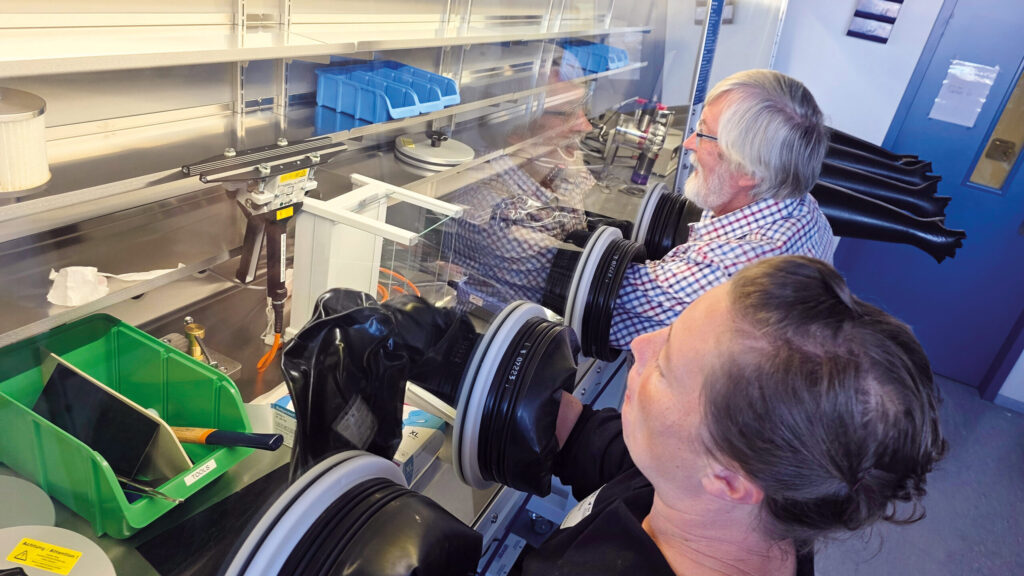
After lunch together, participants were able to learn more about BayBatt and its research work during a guided tour. The experience became particularly vivid during a look inside so-called gloveboxes. In these sealed work chambers, researchers can handle materials under a controlled protective atmosphere. This is important, for example, when working with sensitive battery materials that can react with moisture or oxygen.
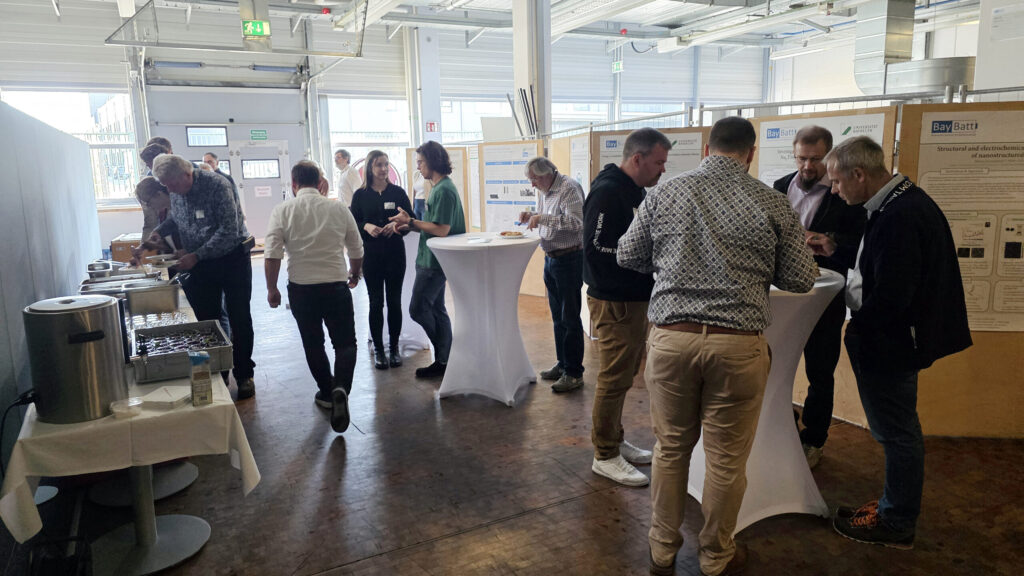
A panel discussion and the subsequent exchange over coffee rounded out the workshop. The combination of expert presentations, insights into the laboratories, and personal conversations made current research tangible and provided an opportunity to bring together different perspectives from science and practice.
EnerTECH: Knowledge for the Energy Technologies of Tomorrow
The workshop also represents an overarching goal:
New energy technologies can only realize their potential if companies and professionals understand these developments and can incorporate them into their work. High-performance energy storage systems are a key component of the energy transition—for example, to enable the flexible use of electricity from wind and solar power plants. This requires not only high-performance battery cells but also expertise in materials, simulation, storage operation, and battery management.”
Dr. Stefan Bayer (iwe)
The EnerTECH project supports knowledge transfer and the development of technical expertise in the field of future technologies. Continuing education opportunities, such as the workshop at BayBatt, help participants contextualize technological developments, learn about new approaches, and explore how these can be applied in their own professional practice.
Further information about the project, the continuing education opportunities, and upcoming events is available on the EnerTECH project website – Knowledge Transfer for Future Technologies.