

A 3D model floats out of the textbook, a virtual learning space is explored together, or a smartphone opens up a view of an augmented reality. The online course “Teaching and Learning with 360°, 3D Worlds, and Extended Reality” demonstrates how such possibilities can be effectively applied in education and teaching. This open educational resource was developed by Prof. Dr. Christian Purucker, Professor of Applied Psychology, Cognitive Psychology, and Human Factors at Hof University of Applied Sciences, in collaboration with Prof. Dr. Jochen Koubek, Jonas Glaser, and the team at the Center for University Teaching (ZHL) at the University of Bayreuth.
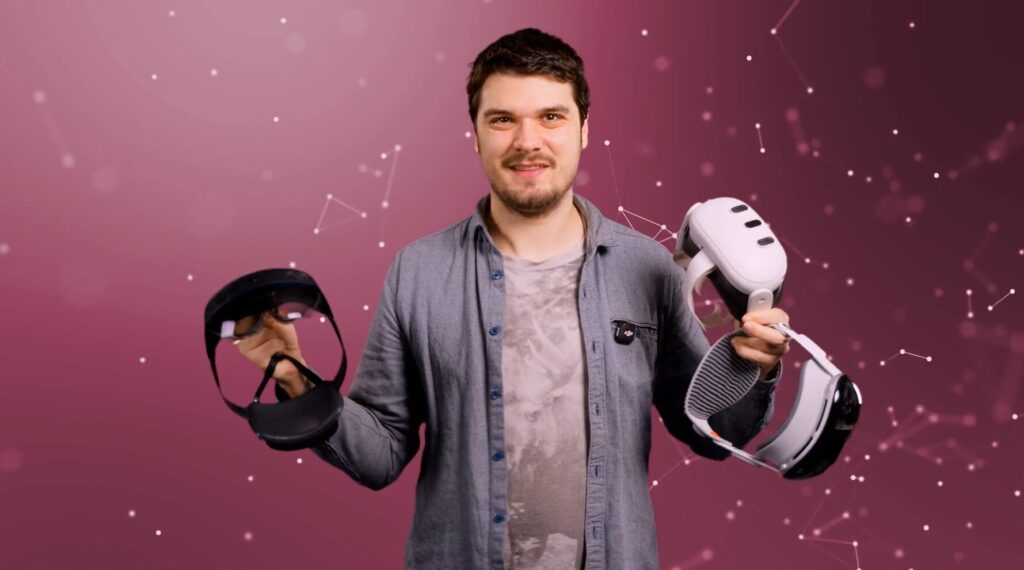
The approximately 16-hour, fully browser-based course is aimed at instructors, students, those interested in education, and the general public with an interest in technology. No programming knowledge or special XR hardware is required. The exercises can be completed using a standard computer or smartphone . The course is open to anyone interested.
From 360° Panoramas to Virtual Learning Spaces
The course begins by covering the basics of Extended Reality (XR), an umbrella term for technologies that blend real and virtual environments. Participants learn the differences between Augmented Reality (AR), Virtual Reality (VR), Mixed Reality (MR), and 360° media; the technical possibilities available; and when immersive media offer educational value.
“Extended Reality is not an end in itself and certainly not a substitute for good teaching. What matters is which learning objective I want to achieve—and whether an immersive medium actually offers added value in that context.”
Prof. Dr. Christian Purucker
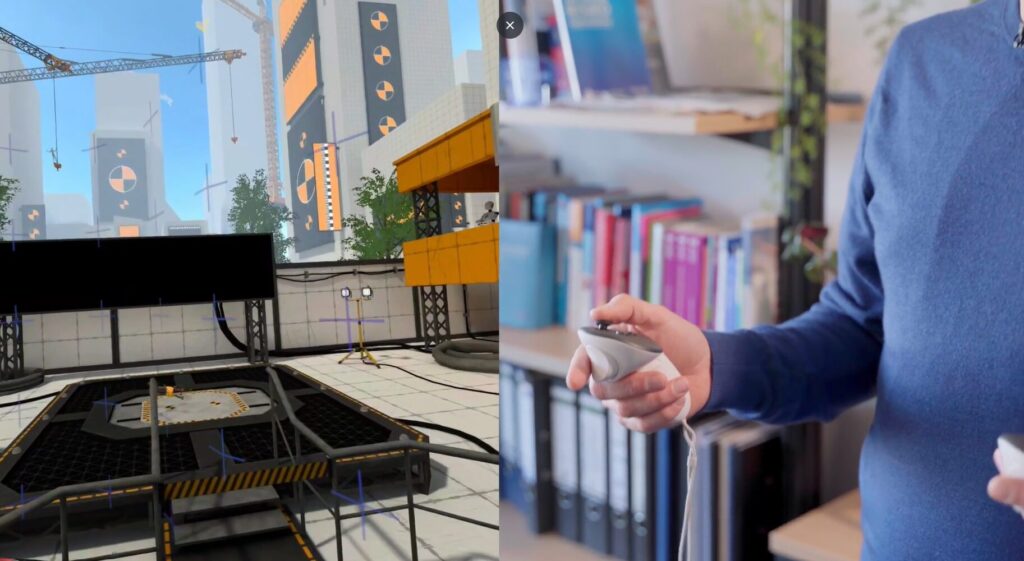
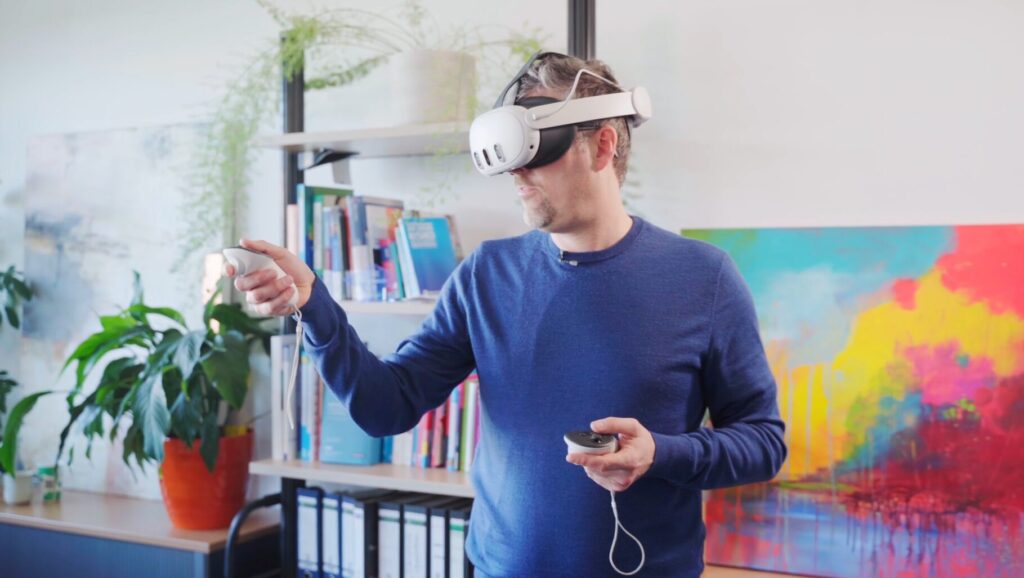
Next, the focus shifts to practical implementation: Participants create interactive 360° worlds, work with 3D models, and learn about 3D scanning as well as how to construct their own models. Using web-based tools, they also develop AR learning paths and their first walk-through VR scenes. The tasks build on one another—from simple 360° media to more complex applications. The common thread is the development of their own XR learning scenario, from the initial idea through instructional design to the final reflection.

Good teaching requires more than just modern technology
A key focus is on the question of how XR can be meaningfully integrated into learning processes. After all, modern technology alone does not improve learning outcomes. The participating experts combine perspectives from media studies and cognitive psychology to demonstrate how immersion in virtual worlds—and the feeling of actually being there—can influence perception, attention, and mental load.
“Our participants learn to systematically analyze learning objectives, justify the use of XR from a pedagogical perspective, and weigh the costs and benefits of various media.”
Prof. Dr. Christian Purucker
To this end, the course covers, among other topics, Cognitive Load Theory—which explains how the strain on working memory influences learning—as well as the DICE model. The course also addresses the transfer of what has been learned into practice, accessibility, data protection, and potential discomforts such as “cybersickness”—for example, dizziness or nausea when using virtual environments. “We wanted to develop a course that lowers the barrier to using XR as much as possible. You don’t need to know how to program or own a VR headset to start designing your own learning environments,” says Purucker. At the same time, the goal is to empower participants to make informed choices: Where can XR enrich learning—and when is another medium the better choice?
Interactive Learning Environment with Many Practical Examples
A comprehensive digital learning environment was developed for the OPEN-vhb platform. Interactive H5P elements—web-based building blocks for exercises and learning content—structure the course. These include videos with explanations and expert statements, screencast tutorials with screen recordings, and practical examples from Bavarian universities. Built-in comprehension questions allow for immediate self-assessment.
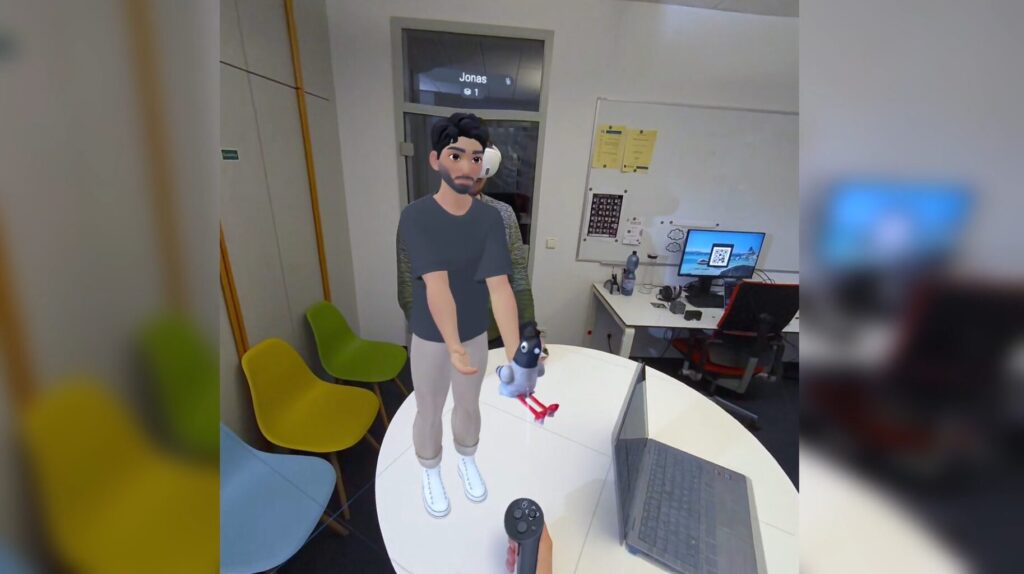
In addition, there are interactive 360° experiences, clickable image areas, self-tests, matching exercises, and digital flashcards. Each chapter combines learning objectives and theory with demonstrated applications, hands-on exercises, and an assessment of knowledge. Accessibility has, of course, also been taken into account: videos feature German subtitles, images include alternative text, and sources are cited. The core exercises do not require any special XR hardware or paid software.
“The course demonstrates how modern technologies can be integrated with a consistent pedagogical approach. What is particularly impressive is that participants don’t just talk about extended reality—they take an active role and develop their own learning applications. This results in a lasting gain in competence that goes beyond simply working with individual tools.”
Prof. Dr.-Ing. Dietmar Wolff, Vice President for Teaching at Hof University of Applied Sciences
Design Your Own Learning Worlds and Track Your Progress
The course focuses on practical successes early on: even a self-created 360° panorama, a first 3D scan, or a self-designed VR scene make the technology’s possibilities tangible. Ungraded self-tests provide immediate feedback and can be repeated as often as desired. To receive a certificate of participation, students must pass 80 percent of the learning progress assessments. Checklists and templates help students apply what they’ve learned outside the course. These include a checklist for the instructional design of XR applications and a template for creating their own learning scenario.
Before being made available, the entire course offering was reviewed in a two-step process. Four members of the project team tested the content both from a technical standpoint and from the perspective of students. The feedback led, among other things, to corrected subtitles, revised expert videos and quiz questions, updated recommendations for digital tools, and additional scientific evidence.
Joint Course Offering for the Digital Education World
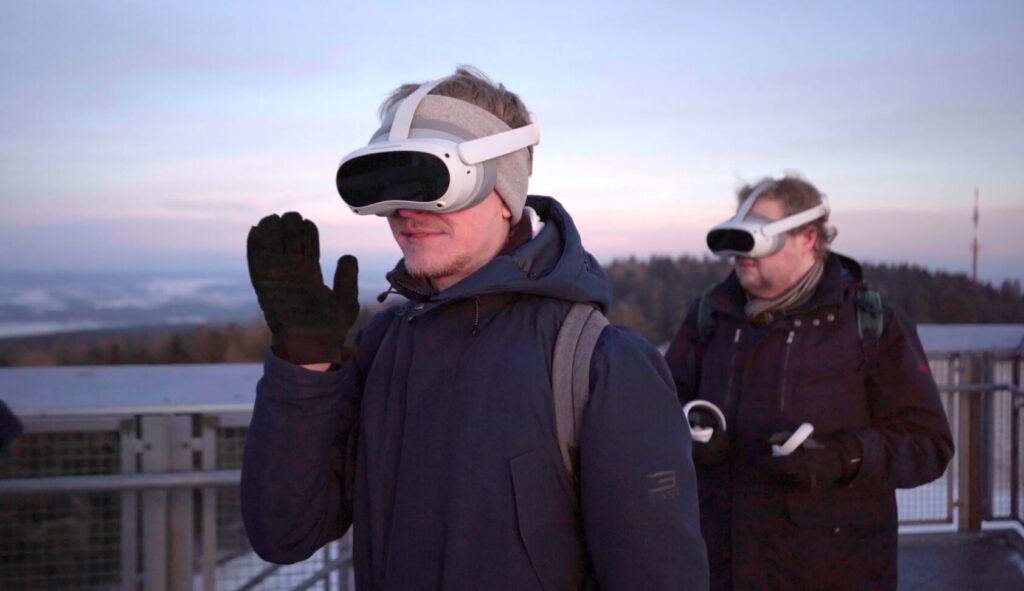
With this course, Hof University of Applied Sciences and the University of Bayreuth are combining their expertise in psychology, media didactics, and digital teaching. The result is a practice-oriented program that makes it easier for interested individuals to get started with extended reality while also conveying what matters most when using virtual learning environments: the combination of technical capabilities and well-thought-out pedagogy.
The course will be officially launched on December 10, 2026, as part of XR Day at the University of Bayreuth, an event focused entirely on the possibilities and applications of extended reality in education and teaching.