

One year after its launch, Einstein1 Managing Director Achim Hager takes stock: In this interview, he discusses the entrepreneurial spirit, networking, and the development of the Digital Startup Center in Hof. He looks back on defining moments, the growing number of events, and the center’s significance for Upper Franconia. At the same time, Hager explains what challenges remain and which projects he would like to launch in the coming year.

Photo: einstein1.net;
Mr. Hager, as you look back on your first year: What was the best moment for you at Einstein1?
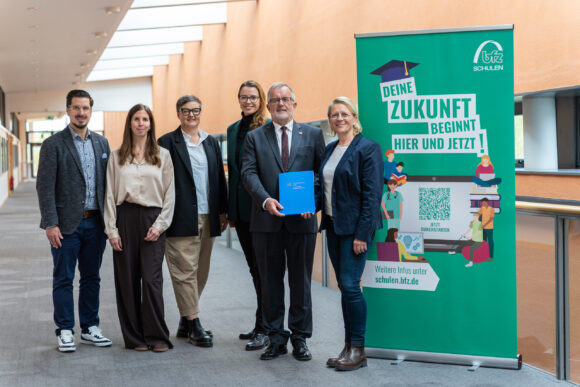
“There were many wonderful moments. One that was particularly special was certainly the most symbolic: when we unveiled our cornerstone together with the shareholders and several partners from Upper Franconia. It’s a symbol of stability and growth, and since then it has repeatedly served as a popular photo spot for our many visitors and participants here at Einstein1.”
You’ve repeatedly emphasized the importance of entrepreneurial spirit and networking: In your day-to-day work, where do you see that this place is truly alive?
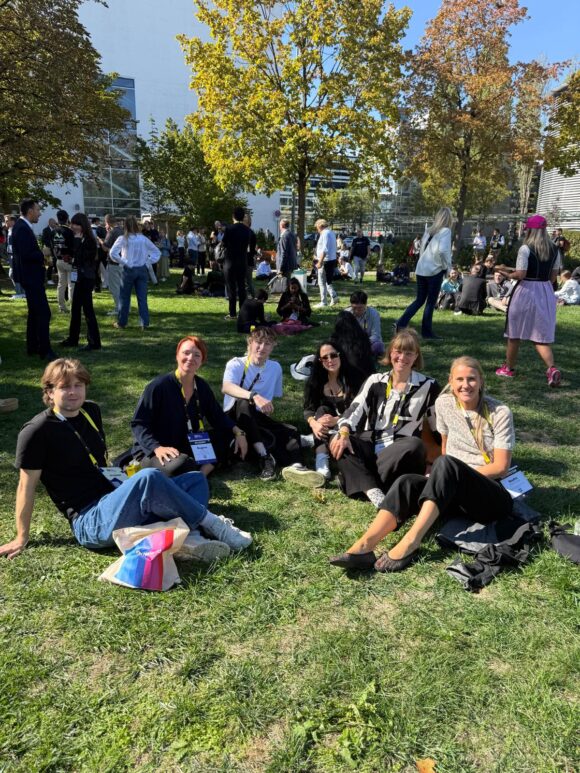
“The interaction between the founders, us, the university, and visitors is crucial for maintaining a certain underlying dynamic in a place like this. The fundamental problem here is that, compared to the large digital startup hubs, we only have space for 8 long-term tenants. This naturally results in far fewer daily interactions than elsewhere, where perhaps 20 or 50 startups—sometimes mixed with well-known companies—are based. My motto in life—and this applies here in particular—is: Chance needs opportunities. In that sense, it’s our essential task as a team to organize as many events as possible and attract participants who will foster connections within the space. We’ve been very, very successful at that.”
Was there a moment in the past twelve months when you thought: This is exactly why volunteering is worth it?
“There are moments like that all the time. I enjoy developing and nurturing talent, and I’m delighted when they flourish. This applies both to my authorized signatory, Canan Tas, who holds down the fort and makes things happen here every day, and to Jan-Lukas Menger, whose network management work generates an event every week and who, just a few weeks ago, presented an excellent master’s thesis on the further development of the Einstein1 site—a project I had the privilege of supervising.”
Einstein1 is also subject to public scrutiny. How do you personally deal with such discussions?
“These days, and in times of financial constraints, there’s almost nothing that isn’t viewed critically. If you want to make a difference for a region, you can’t let such development opportunities pass you by. In that regard, I’m happy to answer critical questions. The districts of Hof and Wunsiedel, together with the city of Hof and the university, made the right decision to build such a center here. But construction alone isn’t enough—it’s also about ongoing financing. The Free State of Bavaria severely restricts the ability to generate revenue due to various legal requirements. Thus, it’s clear that the shareholders must ensure adequate, long-term funding. For me, that was also the prerequisite when I shook hands to take on the leadership and liability here as a volunteer—and, for the first time, an unpaid—managing director.”
How do you determine whether a business incubator is successful—by numbers, by people, or by success stories?
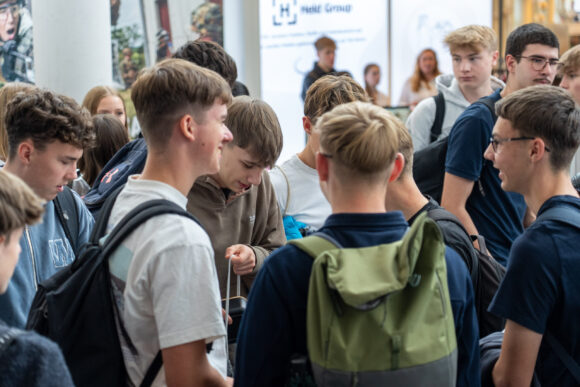
“First of all, numbers are what’s measurable. In 2025, we hosted a total of 1,100 participants at our networking events. In 2026, we’ve already had more than 800 in the first half of the year alone. That’s been very successful—and we’re fully booked through the end of the year. When I started a year ago, there weren’t even four events here during the summer months—just to give you a point of comparison. For me, good stories are when we can help founders take the next steps, and we managed to do that for 15 to 20 of them in 2025 —either by advising them, guiding them through BayStartUp, or connecting them to even broader networks, often with Professor Dr. Seidel providing guidance and coaching right here on-site.”
Which encounter or contact from last year has particularly stuck with you?
“On February 5, during my event ‘Achim and Friends II,’ Bavarian State Secretary of Finance Tobias Gotthard threw his business card against the wall during the panel discussion and urged the 200 guests to contact him directly with any problems. I’ve never experienced anything like that in the 30 years I’ve been involved in politics on a volunteer basis.”
What does a young person with a good idea need most urgently today to turn that idea into a real business?
“Advice, evaluation, and motivation—and, of course, a source of funding in the end. For the latter, we’re currently expanding our ecosystem and will be appointing an advisory board at Einstein1 for the first time in the coming days—one that doesn’t consist of the usual suspects, but rather outstanding leaders from the water, energy, supplier, higher education, and investment fund sectors.”
In your view, where has Einstein1 made the most progress over the past year?
“Definitely in our events, where we’ve seen massive growth. We’ve enhanced the website ourselves with AI features so that people can book their way through the entire event schedule. With Alberto, our in-house chatbot, we’ve created a tool that can answer all kinds of questions about Einstein1 and handle various tasks. Overall, AI is everywhere, and it goes without saying that we’re leading by example here. The team has been completely restructured; it’s highly motivated and well-balanced in terms of expertise.”
What role does the startup center play for Hof and the Upper Franconia region, personally speaking?
“For me, it’s inspiring to be around young, creative people; not a day goes by without a good idea, and hardly a week goes by without an exciting startup idea emerging. For Upper Franconia, it’s important that—especially through the successful integration with the economic region—an overarching organization has emerged that is deeply embedded in the local economy, capable of addressing issues collaboratively and bringing people together. I’m happy to repeat myself here: it’s often the serendipitous moments that are needed to make a startup a success—alongside all the good ideas and the willingness to work hard.”
Looking ahead to next year: What would you definitely like to initiate or try out?
“We’re currently setting up a video and audio studio to give our tenants and the entire Einstein1 ecosystem opportunities to showcase themselves—whether through short clips, podcasts, or live webinars. I can also imagine hosting the occasional show that fits our themes—after all, that’s partly where I come from: radio and television. I’ve been involved in that field for more than 20 years, alongside my own startups.”
What motivates you personally to continue this work on a volunteer basis?
“It motivates me to see the team grow and evolve, and to watch as each building block we devise fits together with the next. You might not see it right away, but we’re laying more and more of the groundwork that’s essential for raising awareness. Networking with other centers, funders, and institutions; joint events; business plan competitions and pitches—all of that.”
Finally, on a personal note: What are you most proud of after this first year?
“That we’re on the right track to securing solid, long-term funding with our shareholders, which will also help prevent turnover among our core staff. A little turnover certainly brings new ideas from time to time, but financial stability is essential—both internally and externally—so that a core team can focus on what matters most, and that shouldn’t be worrying about funding.”
Thank you very much.