

With the “Resource Efficiency and Digitalization” (REDIG) doctoral center, a research network has been established in Bavaria that opens up new opportunities for doctoral studies at the participating universities of applied sciences. Since 2026, Hof University of Applied Sciences has also been an official member of this network, alongside OTH Amberg-Weiden and Ansbach University of Applied Sciences. The goal of the doctoral center is to pursue interdisciplinary research approaches and to stimulate academic discourse on the dimensions of resource management, Economy & Society 4.0, and data science. The first annual meeting of the REDIG doctoral center demonstrated just how vibrant this network already is.

Numerous doctoral candidates, professors, and representatives of university administrations came together to strengthen academic exchange, develop new ideas, and further expand future collaboration.
Joint kickoff with a clear message
Already in the morning, participants took the opportunity to engage in initial discussions and get to know one another personally. The event was officially opened by the presidents of the three participating universities. In their welcoming remarks, they emphasized the importance of inter-university collaboration as well as the opportunities arising from joint doctoral programs.


Dr. Tobias Haaf, Director General of the Department of “Universities of Applied Sciences and Art Colleges” at the Bavarian State Ministry of Science and the Arts, also underscored the growing importance of doctoral centers for the Bavarian academic landscape. It is precisely the combination of different disciplinary perspectives and locations that creates ideal conditions for innovative research projects.
Following this, the vice presidents for research from the participating universities provided an update on current developments within the doctoral center. It became clear that REDIG is far more than just an organizational alliance: The network is designed to specifically open up new career paths for early-career researchers while simultaneously strengthening applied research in Bavaria. When Hof University of Applied Sciences was officially admitted to the doctoral network, it was already emphasized that the fields of digitalization, sustainable water and energy systems, and artificial intelligence represent particular strengths of the Hof location.
Academic exchange in an open atmosphere
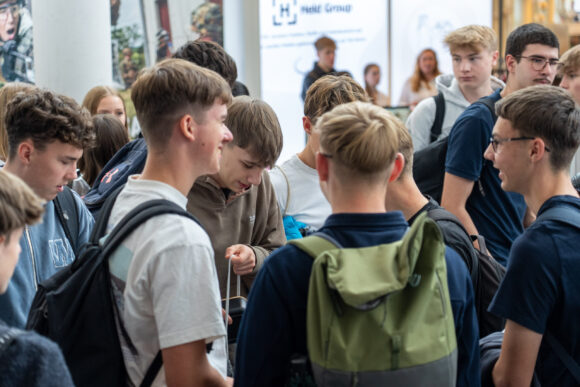
A particular focus of the meeting was on personal networking. In moderated small groups, the participants engaged in in-depth discussions, presented their research focuses, and established new contacts across disciplinary and institutional boundaries. The open atmosphere fostered interdisciplinary exchange and underscored how important personal encounters are for successful research collaborations. Discussions continued over a shared lunch before all participants gathered for a group photo.


Science Slam Showcases Creative Research Diversity
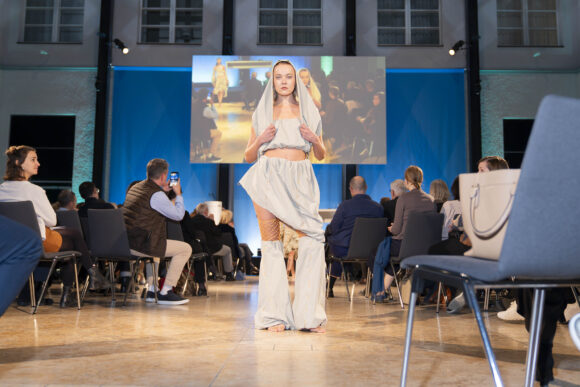
One of the highlights of the afternoon was the doctoral students’ Science Slam. In short and creative presentations, the young researchers introduced their research topics—in an entertaining, accessible, and at the same time scientifically rigorous manner. The presentations impressively demonstrated the thematic diversity within the doctoral center and highlighted how practice-oriented and innovative the research at REDIG is. The best presentation was subsequently awarded a prize.


Barcamp and Lab Tours Open New Perspectives
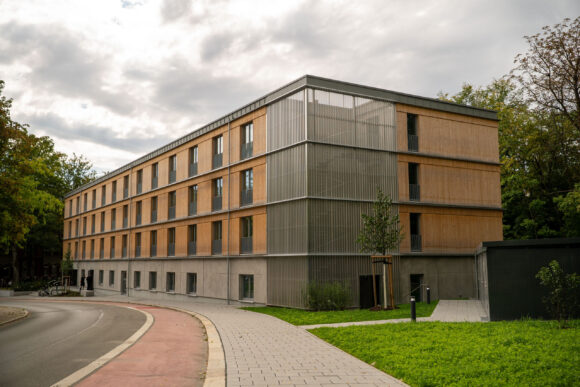
Starting at 2 p.m., the program split into two parallel formats. While the professors introduced their own topics and discussed them together in an interactive Barcamp, the doctoral students gained exciting insights into modern research infrastructure and current research projects during a tour of the new building of the Institute for Hydrogen and Energy Technology (iwe). Afterward, the groups swapped places so that all participants could experience both the Barcamp and the tour of the research and teaching building.


A Strong Network with a Future
The first annual meeting of the REDIG Doctoral Center impressively demonstrated the potential inherent in the collaboration between the three universities. Academic dialogue, personal encounters, and interdisciplinary research form the foundation for the network’s further development. The organizers’ conclusion was correspondingly positive.
The annual meeting offered a valuable opportunity to engage in conversation, make new contacts, and strengthen professional exchange. The positive atmosphere and intensive dialogue once again underscored the importance of a strong shared network. I would like to thank all participants who contributed to the success of the event with their great dedication.”
Prof. Dr. Gerald Schmola, Vice President for Research, Development, and Entrepreneurship at Hof University of Applied Sciences.
Attention is already turning to next year’s annual meeting, which will take place at OTH Amberg-Weiden.