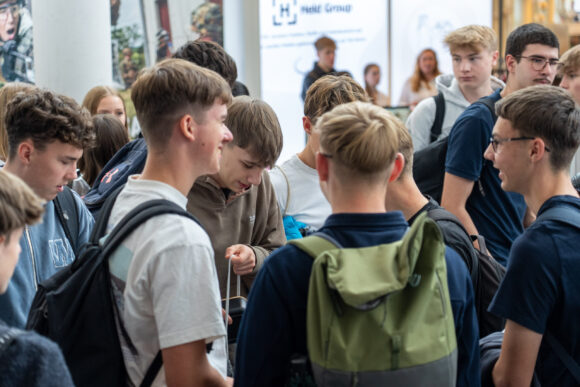


How do students perceive life in Hof – and how does this perspective differ from that of the local population? This question was addressed by a research seminar of students on the Business and Organizational Sociology course at Hof University of Applied Sciences, led by Gerhard Plietsch. The results are based on an oral survey of 223 students and 228 Hof residents. The comprehensive report now provides insights for the first time into the similarities and differences between the two groups in terms of leisure behavior, cultural participation, gastronomy, commitment – and the overall attitude to life in the city.

Untreusee is a clear favorite place for both groups – both students and locals cited it most frequently as the place where they like to spend their free time. The Theresienstein and cafés and pubs are also very popular. Nevertheless, the survey shows that students often make less use of leisure facilities, even though they are familiar with them. This is particularly evident when it comes to cultural facilities and offers in the surrounding area.
Around 42 percent of students miss certain leisure activities – twice as many as the rest of the population. In particular, low-cost cafés and bars, event spaces for students, sports and adventure activities such as laser tag, escape rooms or dance classes were mentioned.
Cultural participation: Lack of information among students
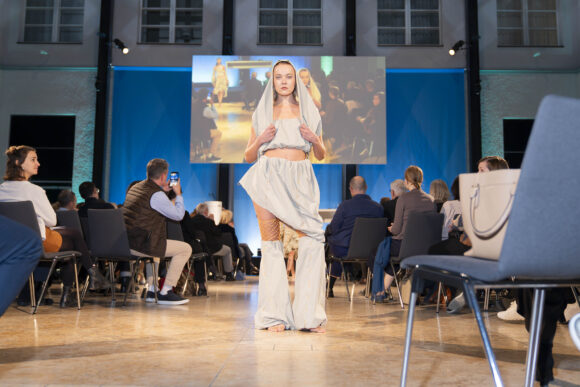
Whether theater, museum or adult education center: The population of Hof is much more familiar with cultural institutions and uses them more frequently. For example, around 60 percent have visited the Hof Theater, compared to only around 34 percent of students. Although the Hof Film Festival is also widely known, it is visited much less frequently by students.
One reason for this apparently lies in communication: while 47% of the population of Hof feel “well” informed about cultural life, only 34% of students do. At the same time, both groups rely on different sources of information: Students primarily use Instagram and personal contacts, while Hofer residents rely more heavily on traditional media such as newspapers, radio or the Facebook platform.


Gastronomy – young meets old
The gastronomic offerings are perceived differently by students and residents of Hof. Restaurants such as “Butlers”, “Rossini” and “Neunbar” are well known to both groups – and are very popular. Other restaurants such as the “Wechselbar” or the café “Zur Auszeit”, on the other hand, have a much younger target group and are often unknown to the older population.
Strikingly, non-German respondents were more likely to say that they did not know certain restaurants or did not visit them. This indicates a lack of integration into urban leisure life – an issue that is also reflected in the perception of cultural offerings.
Strong commitment – still little loyalty
Around 18% of students are involved in voluntary work, for example in university groups, in the care sector or in culture. This figure is slightly lower among the Hofer population at 13% – although more Hofer residents are members of associations. However, students in particular often lack suitable offers or visibility. Despite being involved, many students hardly feel connected to Hof: Only 13 percent said they felt “very” connected to the city, compared to 32 percent of the Hof population. Newcomers and younger people in particular showed a lower emotional connection to the city.
Wishes for the city: more buses, more life
The call for more mobility is particularly loud: better timetables and public transport connections are at the top of many students’ wish lists. There are also calls for more events for young people, a livelier nightlife and new leisure activities. The implicit message is that the city should see itself more as a place for young people to live and meet.
Hof has potential
There are many common points of contact in Hof, but also gaps in perception and structural differences that can be bridged. Stronger cooperation, better communication and targeted offers for young and diverse target groups could help to make even better use of the city’s potential.