

How can valuable nutrients from agriculture be put to better use? The ReKorD research project at Hof University of Applied Sciences is addressing this question. The goal is to convert waste products from livestock farming into high-quality fertilizers, thereby closing regional nutrient cycles. The project aims to make agriculture less dependent on mineral fertilizers while conserving resources.
Rising energy prices, geopolitical uncertainties, and the limited availability of mineral raw materials pose major challenges for agriculture. At the same time, particularly in regions with high livestock densities, large quantities of nutrient-rich byproducts are generated, the potential of which has so far been only partially tapped. This is precisely where ReKorD comes in.
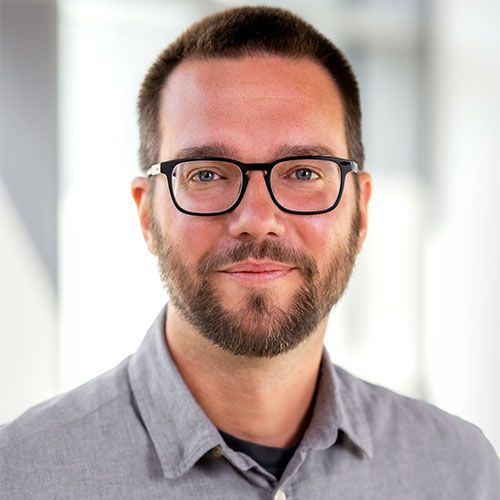
“We want to keep valuable nutrients where they are produced and make them available in a form that can be transported efficiently and applied in a targeted manner. In this way, we are laying the foundation for agriculture that is both resource-efficient and economically viable.”
Project Leader Dr. Harvey Harbach
Dr. Harvey Harbach has established the research focus “Resource-Efficient Food Production” as an independent research profile at Hof University of Applied Sciences and serves as deputy director of the Institute for Sustainable Water Systems (inwa) at Hof University of Applied Sciences. Together with his interdisciplinary team, he develops innovative solutions at the intersection of the circular economy, water and resource management, and sustainable food production.
Transportable fertilizer pellets made from waste materials
The project “ReKorD—Implementation of a Supraregional Circular Economy through the Development of an Organo-Mineral, Macro-Granulated Fertilizer Based on Livestock Residues” is being carried out at the Institute for Sustainable Water Systems (inwa) at Hof University of Applied Sciences.
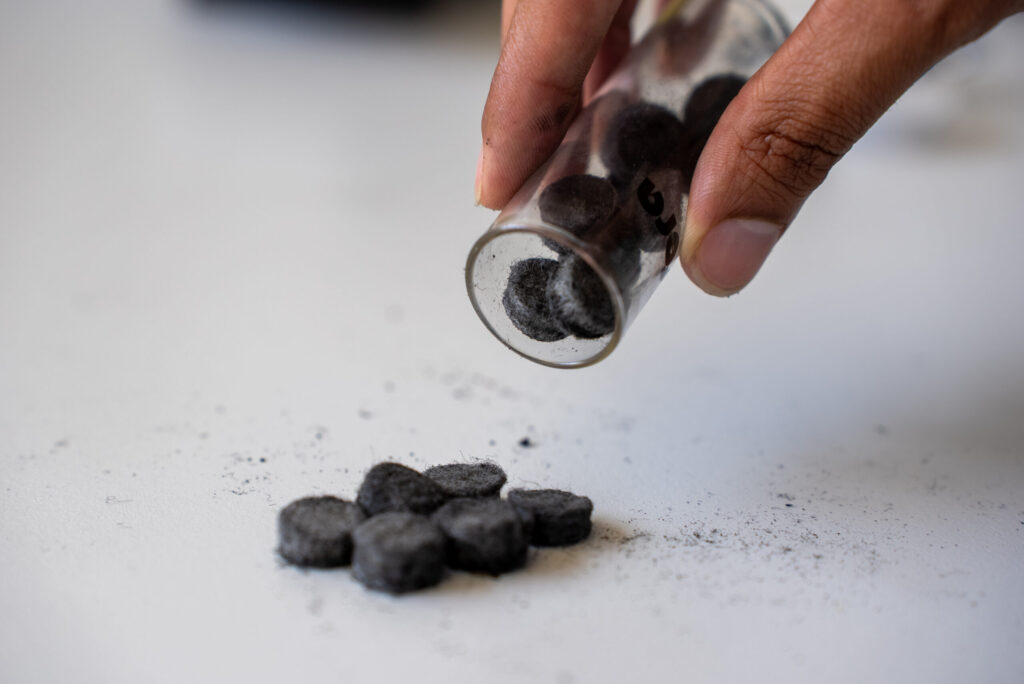
The focus is on so-called organo-mineral fertilizer pellets. These are compressed fertilizers that contain both organic components from agricultural residues and mineral nutrients. Their pellet form makes them easier to store, transport, and spread evenly across agricultural fields.
This approach thus combines the circular economy with modern process engineering, with the goal of developing a resource-efficient alternative to conventional mineral fertilizers.
First Major Milestone Reached
The research team has now achieved a significant developmental step: for the first time, successful prototypes of the fertilizer pellets were produced on a laboratory scale. Using a hydraulic press, the first functional pellets were created, which fundamentally validate the developed process.
The project is currently still in the proof-of-concept phase—a stage of development in which researchers test whether a technical idea works in principle and can later be implemented in practice. However, this success already confirms the technical feasibility of the developed pelletization concept and provides an important foundation for further development.
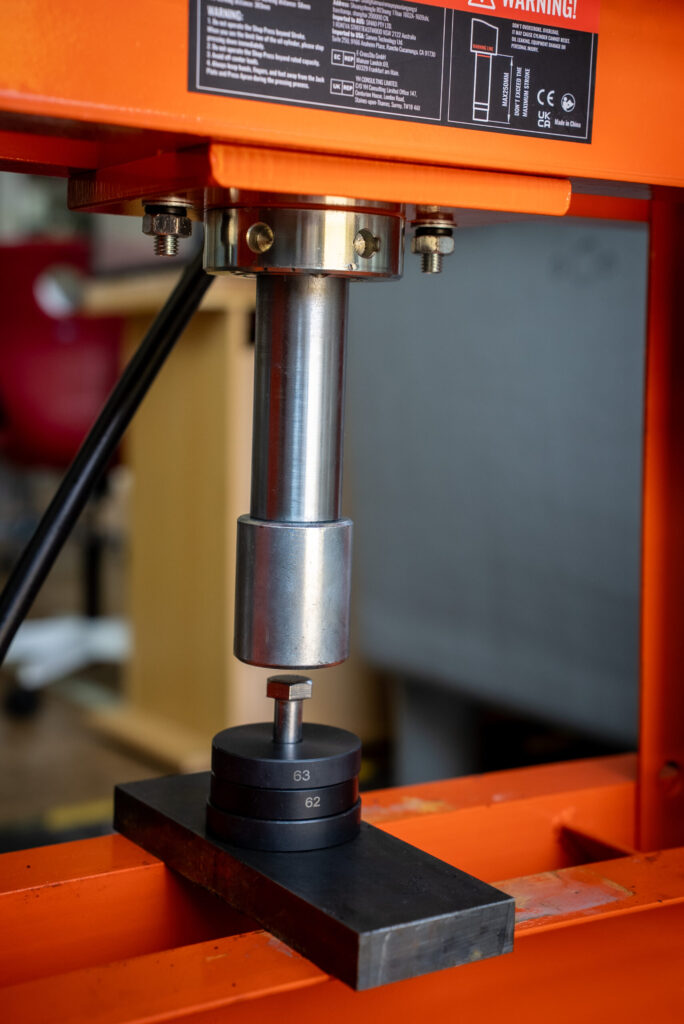
“The first successful pellet prototypes show that our approach works. We are now working to further improve the material properties and optimize the manufacturing process so that cost-effective production becomes possible.”
Project team member Vineeth Kalathiparambil Girish Kumar
Currently, the team is investigating, among other things, the optimal composition of the materials, the mechanical stability of the pellets, their shelf life, and the controlled release of the nutrients they contain. These findings will form the basis for a future industrial production process.
Science and Industry Work Hand in Hand
A key factor in the project’s success is the close collaboration between academia and industry. A total of 13 consortium partners are contributing their expertise in agriculture, materials science, process engineering, and environmental technologies. The goal is to translate research findings into practical solutions as quickly as possible.
“ReKorD’s strength lies in interdisciplinary collaboration. It is only through the interaction of different disciplines and our partners that we can successfully translate innovative ideas into concrete applications for agriculture,” emphasizes Harbach.
Contribution to the Regional Circular Economy
ReKorD is funded by the European Regional Development Fund (ERDF) as part of the “Investments in Employment and Growth” program for Bavaria 2021–2027. The ERDF supports projects that promote innovation, strengthen competitiveness, and advance sustainable development in the regions.
Through ReKorD, Hof University of Applied Sciences is making an important contribution to regional value creation, the more efficient use of natural resources, and a sustainable circular economy in agriculture.