

For many people, fish is naturally part of a healthy and balanced diet. But have you ever wondered what technical and scientific requirements are necessary to produce fish sustainably? Modern fish farming requires not only clean, oxygen-rich water, but also energy and the responsible use of resources. How can water and nutrients be used more efficiently, organic waste products recycled, and water hygiene ensured at the same time? The WasABI research project at Hof University of Applied Sciences is addressing these questions.
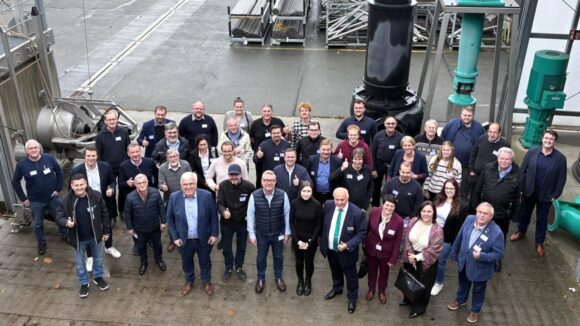
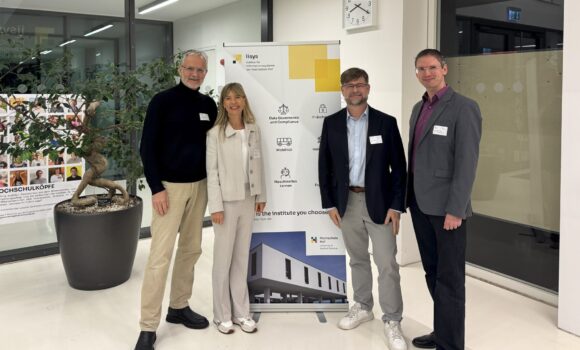
Hof University of Applied Sciences is leading the collaborative project. Under the direction of Dr. Harvey Harbach, the project concept is being implemented scientifically and technically in collaboration with the participating partners. In addition to Hof University of Applied Sciences, the project consortium includes BUE Anlagentechnik GmbH, PPU Umwelttechnik GmbH, Magdeburg-Stendal University of Applied Sciences, and the Lindbergmühle Fisheries Training and Demonstration Facility. The partners contribute their respective expertise in plant development, water treatment, energy technology, research, and practical fish production. The goal is not only to investigate the developed processes under laboratory conditions but also to integrate them into a unified demonstration system and test them under real-world conditions at a fish farm.
“We want to show how water, energy, and nutrients can be used more efficiently and integrated with one another in aquaculture. The key is that we do not view the individual processes in isolation, but rather combine them into a functioning overall system.”
Dr. Harvey Harbach, Project Manager
Sustainable Fish Farming: Using Water and Waste Products as Resources
Water is the central foundation of all fish production. Fish require stable water quality, particularly sufficient oxygen and low concentrations of pollutants. However, feeding and metabolism continuously introduce nutrients and organic substances into the rearing water. At the same time, solid byproducts such as fish sludge are generated. Their treatment and recycling involve technical effort and energy consumption.
Traditionally, wastewater and organic waste are often viewed as material streams that must be treated or disposed of. But what if these substances could be specifically utilized as resources? What if water could be purified and reused, fish sludge could be used to generate renewable energy, and recovered nutrients could be utilized for plant growth? This is precisely where WasABI comes in—at the intersection of water management, aquaculture, and energy technology.
Modular Water Treatment Using Sunlight and Titanium Dioxide
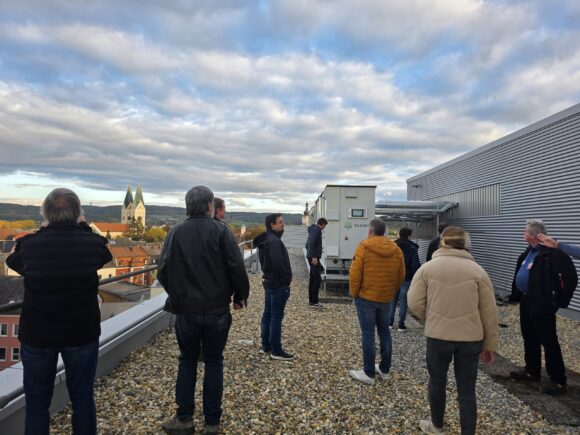
The project focuses on developing a modular water treatment system built in a container design. This system is intended to combine various treatment processes, including biological filtration, oxidative processes for treating organic contaminants, and supplementary sanitization processes. A particular focus is on investigating oxidative sanitization using light-activated materials. At Hof University of Applied Sciences, researchers are investigating, among other things, the use of sunlight in combination with titanium dioxide (TiO₂). The goal is to reduce microbial contamination in the water and thereby contribute to improving water hygiene.
In addition, WasABI is examining the use of organic residues from aquaculture: fish sludge and other biomass will be investigated for their potential in biogas production. The energy generated in this process—and, in particular, the available waste heat—could in turn contribute to the thermal sanitization of the water. At the same time, possibilities are being explored to use nutrients from aquaculture water and from residues of biogas production for plant cultivation in hydroponic systems. In these processes, plants grow without soil in a nutrient-rich water solution.
The overarching goal is to reuse water, nutrients, and energy multiple times within a resource cycle that is as closed as possible. This is intended to reduce the demand for fresh water and the use of additional resources, as well as to improve the utilization of previously unused waste materials.
“Our approach is to turn waste products—which previously required costly treatment—into valuable resources. If we can use fish sludge to generate energy and recover water and nutrients, we’ll lay the foundation for fish production that is significantly more resource-efficient.”
Dr. Harvey Harbach
Initial Research Results: Water Treatment and Biogas from Fish Sludge
Studies to date reveal the initial potential of the various technical approaches. In trials on biological water treatment, PPU Umwelttechnik GmbH successfully reduced the concentrations of ammonium and nitrite in aquaculture water. Electrochemical oxidation also demonstrated potential for the degradation of organic pollutants. At Hof University of Applied Sciences, light-activated photocatalysis is also being investigated. Initial laboratory tests using sunlight and titanium dioxide showed promising results in reducing bacterial counts. The research will continue to more accurately assess the effectiveness and potential applications of the process for aquaculture.

The use of fish sludge for biogas production was also investigated at Magdeburg-Stendal University of Applied Sciences. The process yielded approximately 261 liters of biogas per kilogram of organic dry matter, with a methane content of about 66 percent. The results highlight the potential of this waste material as an energy source. The methane yield could potentially be further increased by using more suitable feedstocks or combining it with plant biomass.
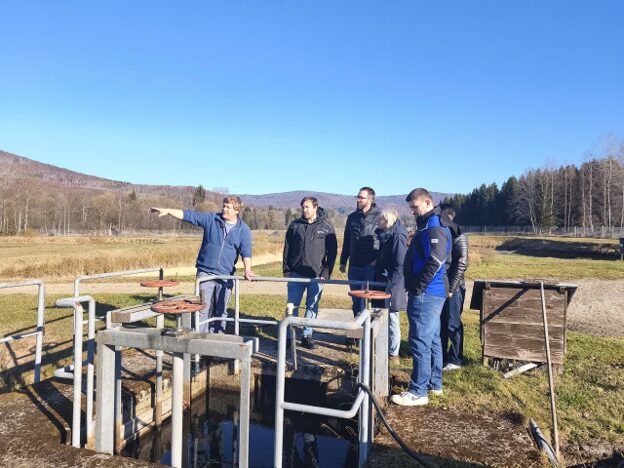
The next step is to integrate the individual approaches into a joint demonstration system. PPU Umwelttechnik GmbH is working on the development of the modular water treatment container. BUE Anlagentechnik GmbH is contributing its expertise to the technical plant design. The Lindbergmühle Fisheries Training and Demonstration Facility provides the conditions necessary for the subsequent installation and testing under practical production conditions. Hof University of Applied Sciences coordinates the scientific and technical collaboration among the project partners and oversees the integration of the various processes.
Demonstration Plant to Test Processes Under Real-World Conditions
The next phase of the project will focus on completing the demonstration system and preparing for its installation at Lindbergmühle. The facility will then be tested under real-world conditions. This will involve examining how the individual technologies interact, how reliably the water treatment works, and to what extent water, nutrients, and energy can be used more efficiently.
WasABI and the United Nations’ Global Sustainable Development Goals
WasABI thus contributes to several of the United Nations’ Sustainable Development Goals (SDGs). These include, in particular, SDG 7—Affordable and Clean Energy, through the use of biogas and waste heat; SDG 12 — Responsible Consumption and Production, through the recovery and reuse of resources; and SDG 13 — Climate Action, through the development of resource-efficient production processes and the reduction of waste. WasABI is thus pursuing a holistic approach: The focus is not on individual technologies, but rather on their intelligent integration into a unified system. The collaboration between Hof University of Applied Sciences and the participating companies and research institutions aims to demonstrate how scientific findings can be translated into practical solutions for more sustainable aquaculture.
The project’s full title is “Development of Modular Water Treatment for Sustainable Aquaculture with Oxidative Sanitization, Coupled with Biogas Plants for Waste Utilization and Temperature Regulation.” It began on September 1, 2025, and will run through August 31, 2028. The project is funded by the Federal Office for Agriculture and Food (BLE).