

Artificial intelligence opens up new opportunities for companies, but it also poses significant challenges for data protection, IT security, and social responsibility. At the 33rd Upper Franconia IT Directors’ Meeting on November 12 at the Institute for Information Systems (iisys) at Hof University of Applied Sciences, the focus was therefore on the risks of generative AI and the prerequisites for its trustworthy use. Two expert presentations shed light on different perspectives on a technology that is increasingly transforming the economy and society.
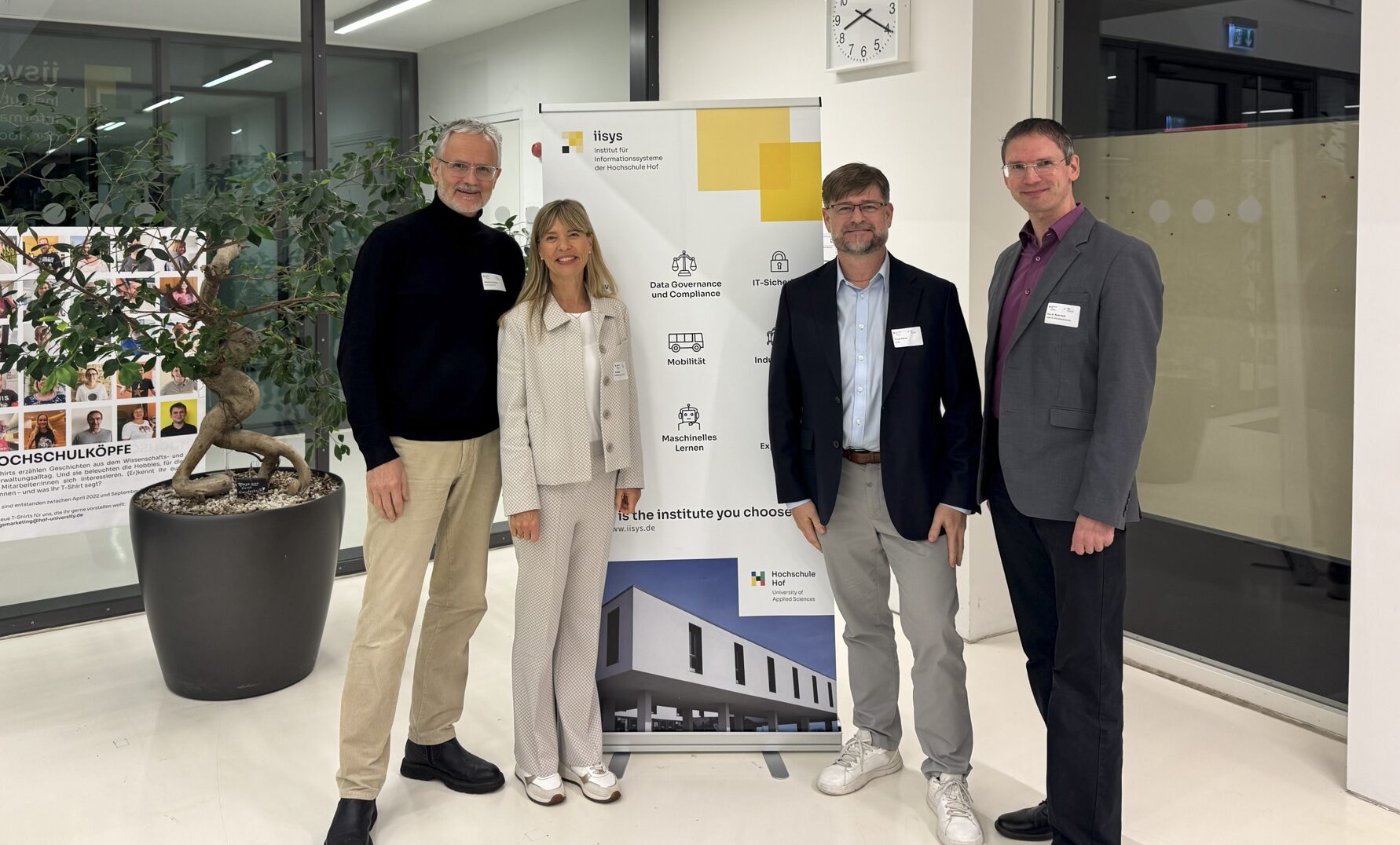
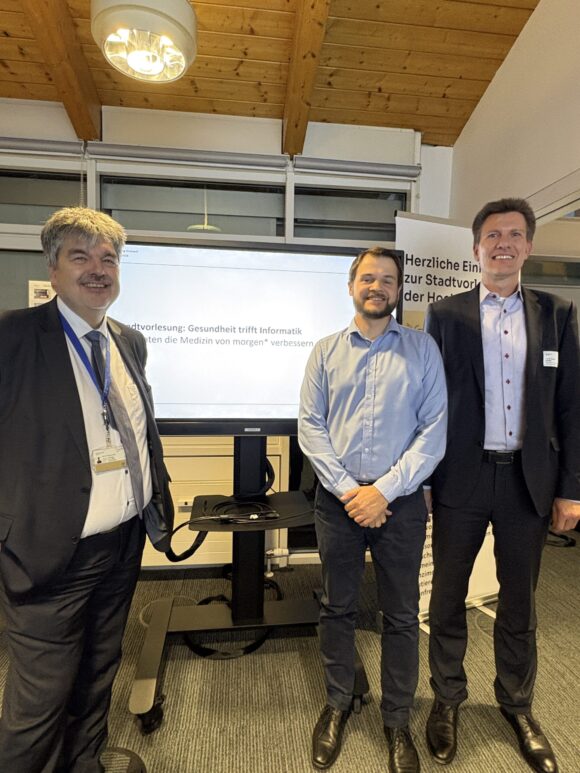
In a presentation titled “The Confessional Meets the X-Ray: Why AI Needs Trust,” Ekkehard Schmider of AI Governance Pro used two real-world examples to illustrate what matters most in the responsible use of artificial intelligence. The focus was on the protection of sensitive data, the early detection of security risks, and building trust through clear lines of responsibility. Binding rules and effective control mechanisms are indispensable, especially where AI works with confidential information. Drawing on concrete experiences, Schmider also highlighted the importance of high data quality and proactive risk management. Human decisions and controls should continue to play a central role in this process.
How dangerous is generative AI really?
Prof. Dr. René Peinl from the Institute for Information Systems at Hof University of Applied Sciences (iisys) then addressed the potential dangers of rapid technological development in his presentation titled “Will AI Kill Us All? Realistic Risks of Generative AI.” His talk focused on an objective assessment of various risk scenarios. Peinl particularly emphasized the importance of a systematic risk assessment that takes into account both the probability of occurrence and the potential extent of damage. He also distinguished between risks that directly affect individual companies and those that can have societal implications at the national level.
Exchange Between Business and Academia
The two presentations offered different yet complementary perspectives on dealing with artificial intelligence. During the get-together that followed, participants took the opportunity to delve deeper into the topics, exchange experiences, and make new contacts.
The Upper Franconia IT Leaders’ Meeting regularly provides IT managers from the region with a platform to discuss current technological developments and promote dialogue between academia and industry.