

A new international research project is dedicated to the question of how women in Colombia are contributing to peace through environmental protection and resource use. Also involved: Hof University of Applied Sciences, which is contributing its expertise in the field of sustainable water systems.

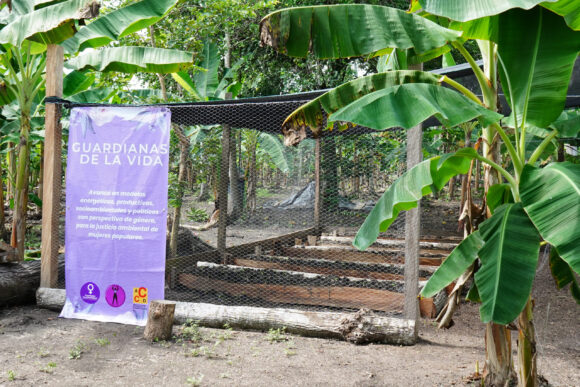
An unusual research project entitled “Strategies for ecological peacebuilding based on the concept of the feminine – using the example of the work of the Organización Femenina Popular (OFP) in the Magdalena Medio region” was launched in June 2025. It is coordinated by the Universidad Santo Tomás Seccional Bucaramanga, other partners are the Universidad Pontificia Bolivariana Seccional Bucaramanga, the traditional women’s organization OFP – and the Hof University of Applied Sciences.
The aim is to work with local women to identify, analyze and promote strategies for peace.
We want to document how local practices in environmental protection and the use of resources contribute to building peace.”
Paola Acosta Carrascal, Institute for Sustainable Water Systems at Hof University of Applied Sciences (inwa)
Peace in the Magdalena Medio
The Magdalena Medio region is a hotspot for both natural wealth and conflict: exceptional biodiversity and valuable water resources meet the consequences of decades of violence. For decades, the region has been marked by armed conflicts between guerrilla groups, paramilitary organizations and state security forces. In addition, there are economic conflicts over the use of the rich natural resources, in particular oil, mining areas and water. This mixed situation has led to massive social tensions, displacement and considerable ecological damage.
The OFP, the oldest women’s organization in Colombia, has made important contributions to environmental protection, social cohesion and community empowerment over the past 50 years. The initiatives supported by women are central to creating sustainable peace.”
Diana Mignano, International Office of Hof University of Applied Sciences
Mignano has been researching gender issues in Latin America for years and runs her own project in the region.

The role of Hof University of Applied Sciences: water as a key resource
Hof University of Applied Sciences is contributing its expertise in the field of water management to the international collaboration. There is a particular focus on the concept of “sponge regions” – landscapes that store and filter water and release it again during dry periods. “We are examining to what extent the experiences from Colombia can be incorporated into this concept,” says Paola Acosta Carrascal. The university is also taking on the task of making the results visible in Germany and thus strengthening scientific exchange between Latin America and Europe.
Challenges in research and practice
The project work is taking place under difficult conditions: Despite the 2016 peace agreement, the situation in Magdalena Medio continues to be characterized by violence and insecurity. Methodological issues also play a role – for example, how oral knowledge from the region can be scientifically documented without distorting cultural contexts. Thanks to hybrid formats and direct communication channels, for example via WhatsApp, it is nevertheless possible to keep the dialog with local women alive.
Global significance
“The project is an example of how local initiatives can provide answers to global questions in a conflict-ridden environment: How can the environment, water and peace be thought of together? And how can the perspective of women show new ways forward?” says Paola Acosta Carrascal. She continues: “The sustainable use of water is not just a technical issue, but a social and peace policy task.”
The project is funded by the German Academic Exchange Service (DAAD), Justus Liebig University Giessen (Chair of International Relations and Peace Research) and the German-Colombian Peace Institute CAPAZ.