

How do fluid movements occur on a skateboard? And what happens to the muscles and joints during these movements? In the workshop “AI and Biomechanics at the Skatepark” hosted by the TAO Student Research Center, students explored these questions together with Prof. Michael Zöllner from Hof University of Applied Sciences—through scientific experiments and hands-on exercises at the Hof Skatepark. In the process, they experienced how artificial intelligence and modern sensor technology help analyze human movements.
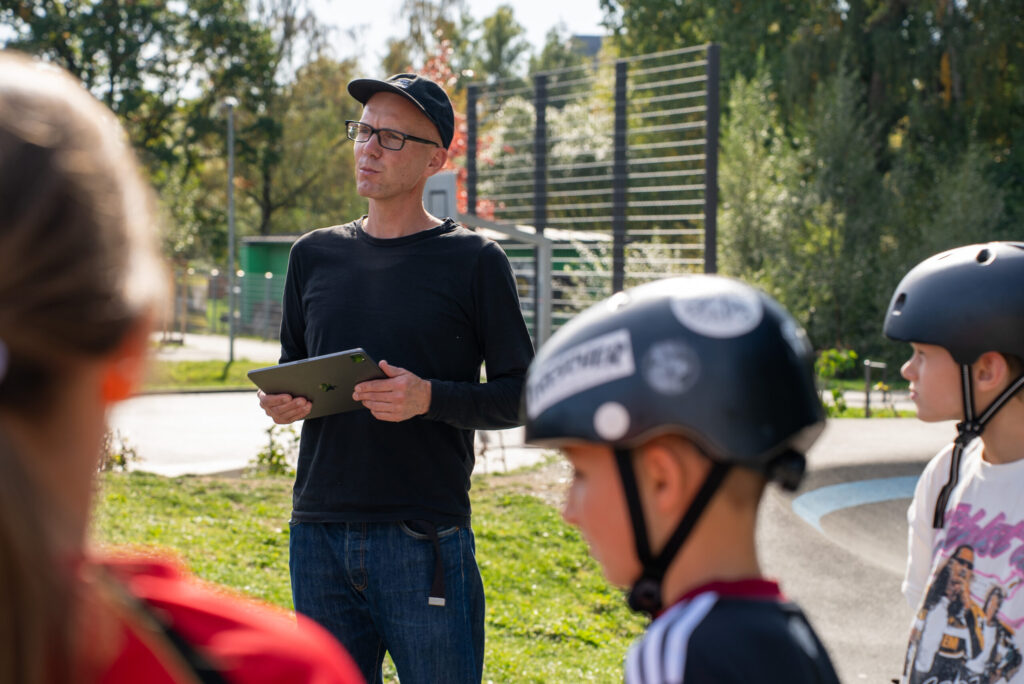
Photo: Hof University of Applied Sciences;
Together with research staff from the Interactive & Data Driven Systems research group, the students learned about the scientific fundamentals of skateboard biomechanics. How do shifts in body weight affect movement? How can you build up speed on a pump track without pushing off? And what role do AI and sensor technology play in analyzing such movement sequences?
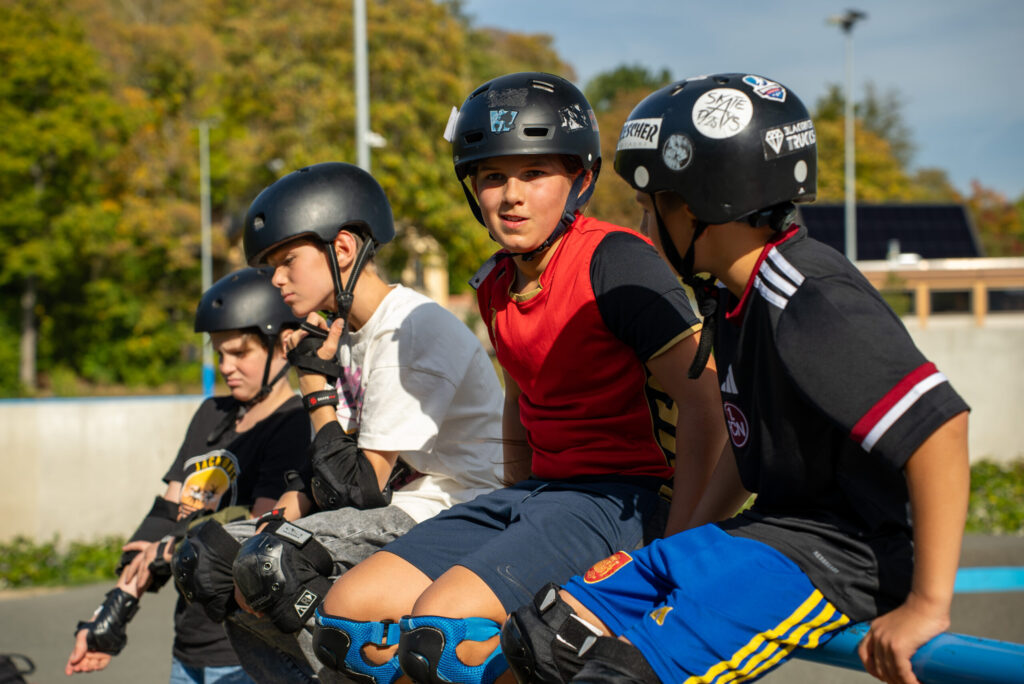
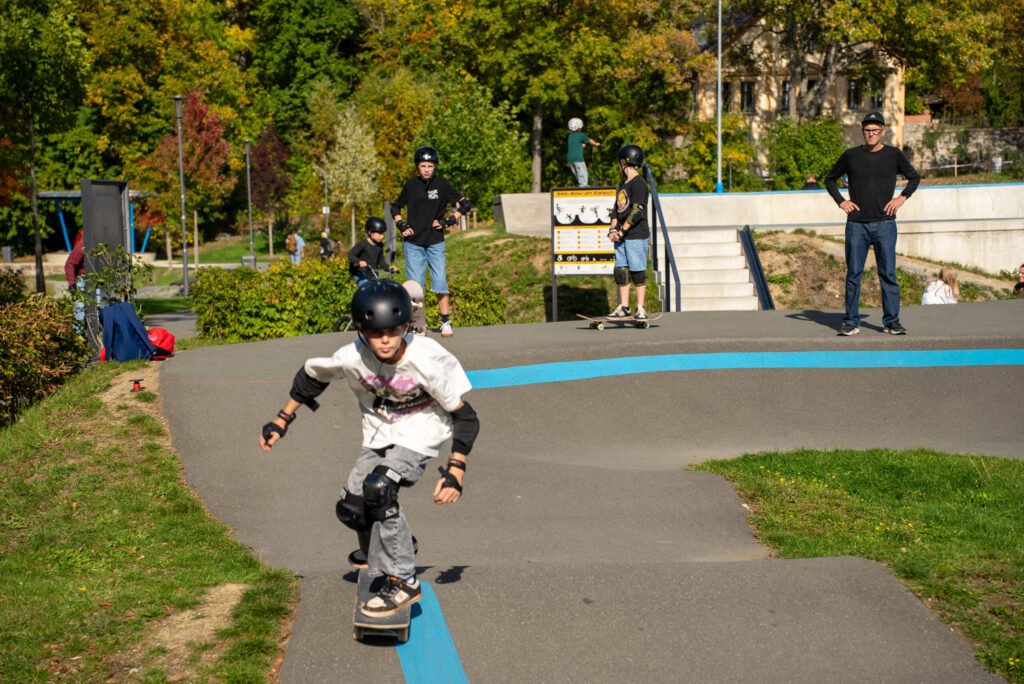
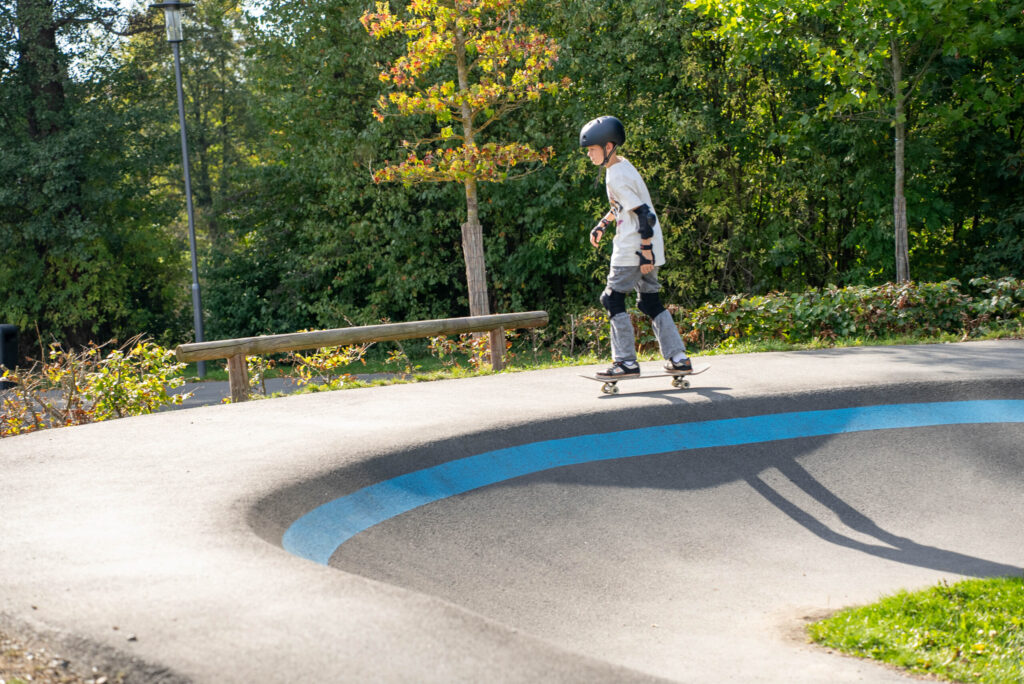
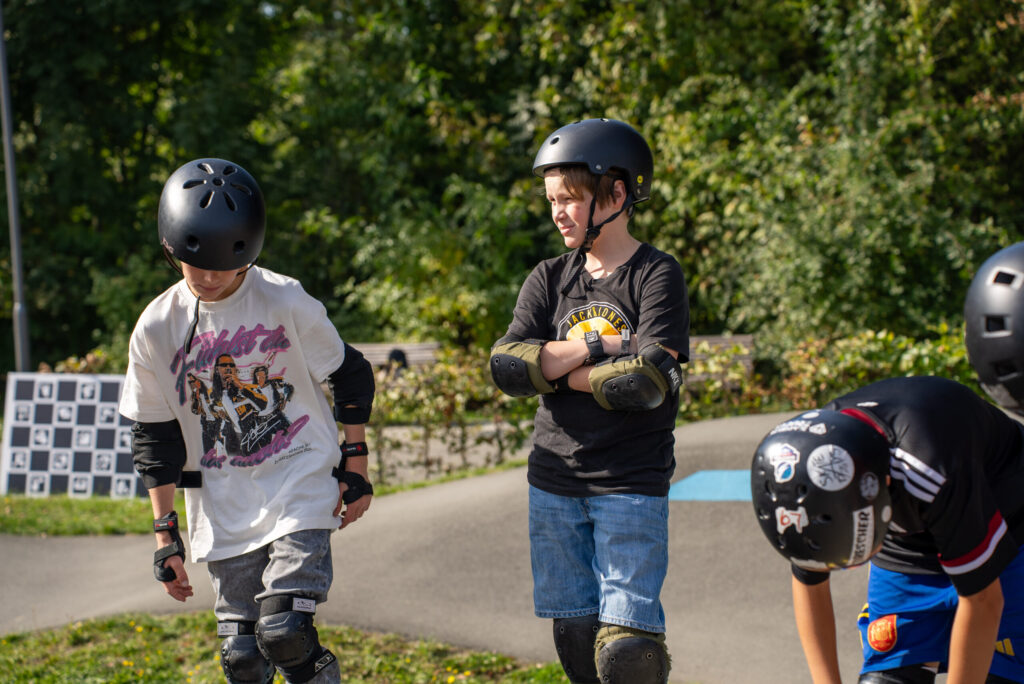
At the skatepark, the students were able to experience firsthand the physical principles they had learned in class. While skateboarding, they explored how concepts such as the inclined plane, acceleration, and friction work and how these can be observed while riding through a pump track.
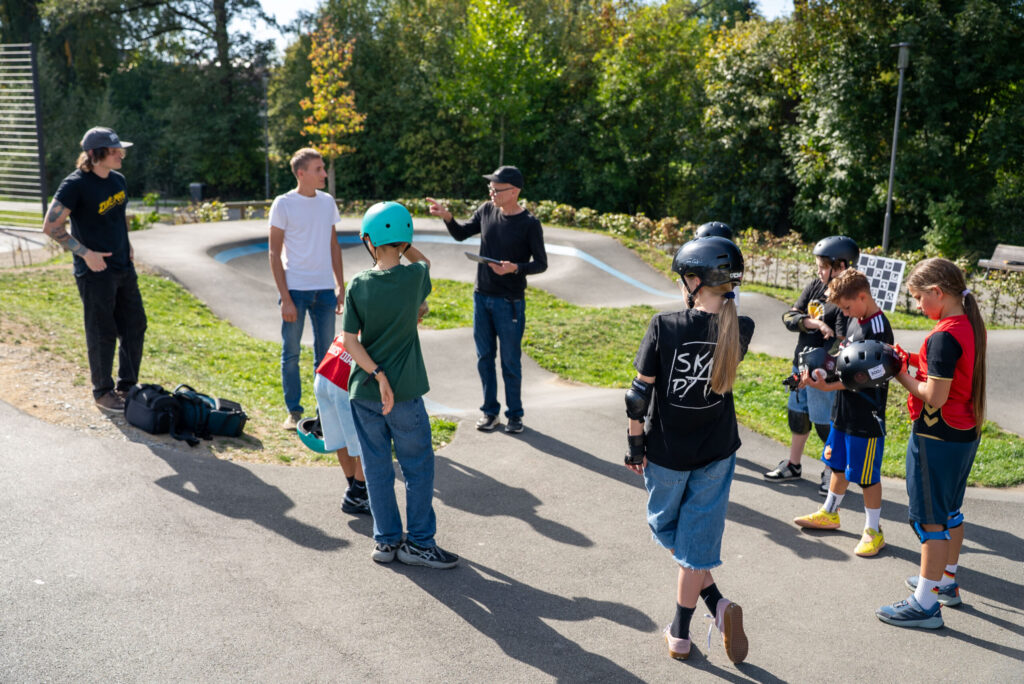
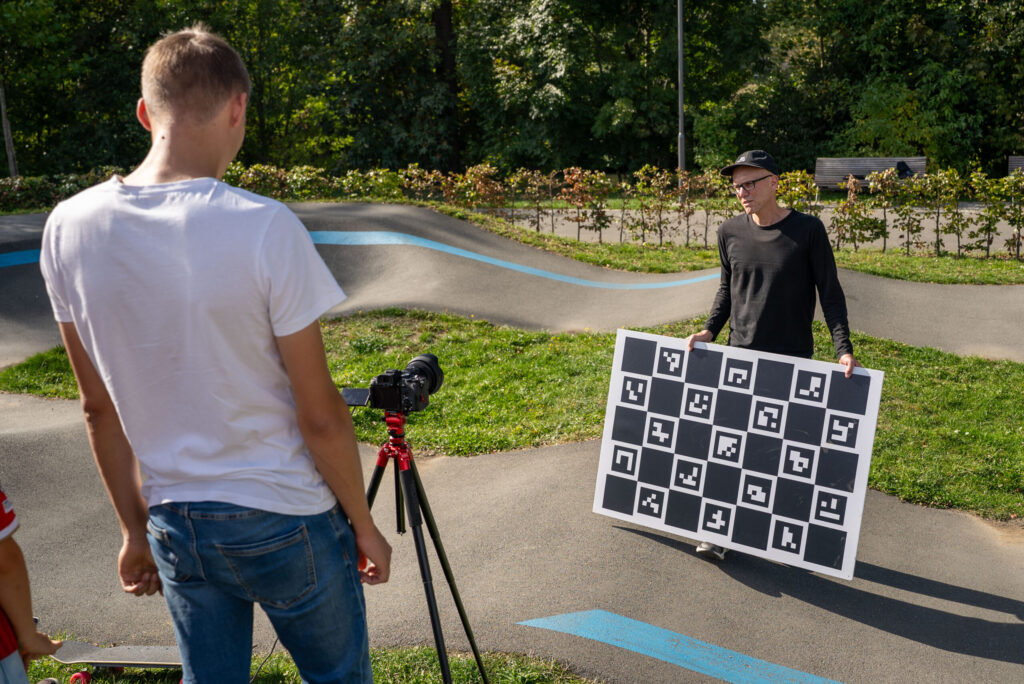
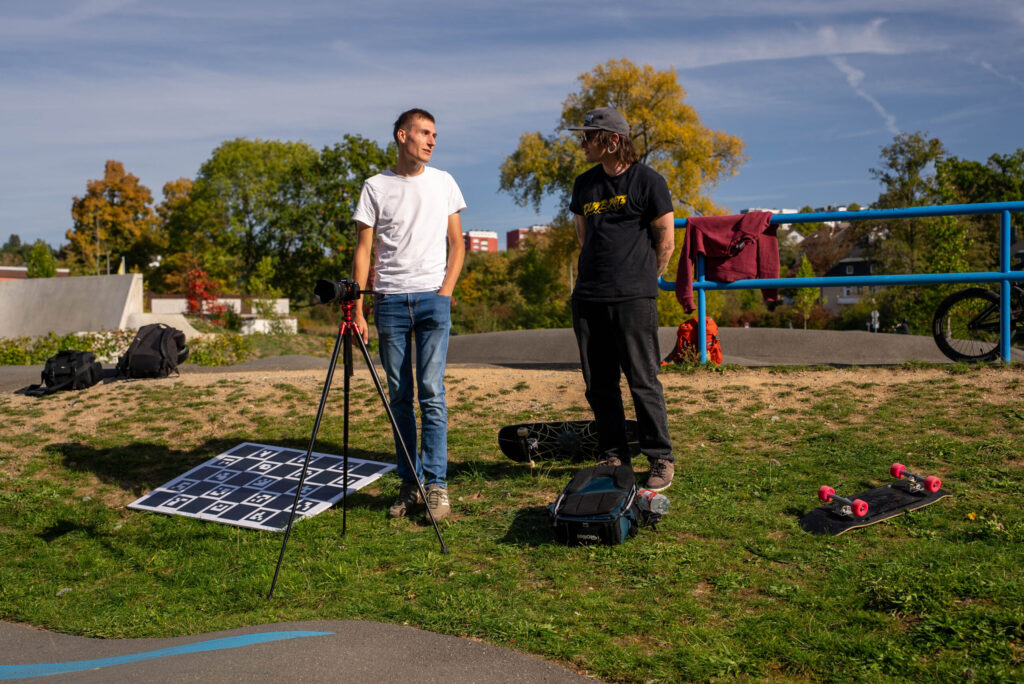
The basics of digital image processing were also on the agenda: Using camera calibration with a checkerboard pattern, a red string, angles, and the rule of three, the students learned how a camera captures its surroundings and how a computer can determine the size and position of objects in an image.
How Artificial Intelligence Makes Movements Visible
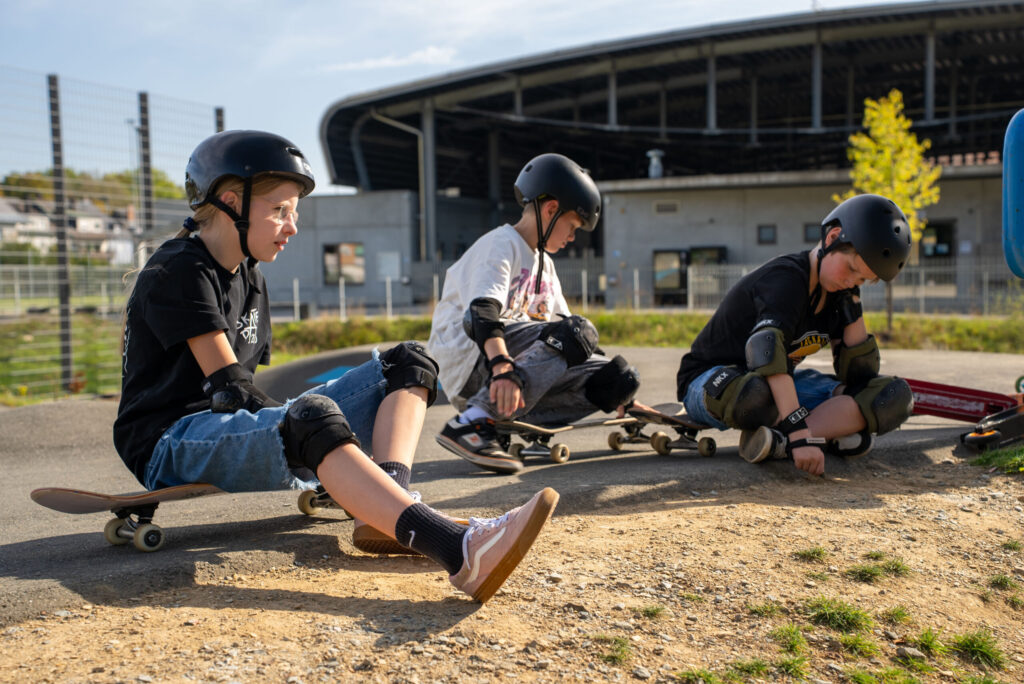
In the next step, the students were able to experience how such methods are used in research. Together with Johannes Garbarek, coach of the skaters at the Hof Skatepark, and his youth group, they conducted a study on motion analysis on the pump track. For this, a predetermined route was filmed with a camera. A group of skaters rode the section multiple times—using different skateboards with wheels that had varying rolling resistances. This allowed them to compare different conditions for the motion analysis.
Subsequently, AI-powered software for human pose estimation analyzed the video footage. It identified the skaters’ body positions and represented their movements as a digital skeleton superimposed over the video image. Based on this, the researchers were able to calculate the skaters’ speed and investigate how it relates to the flexion and extension of their legs.
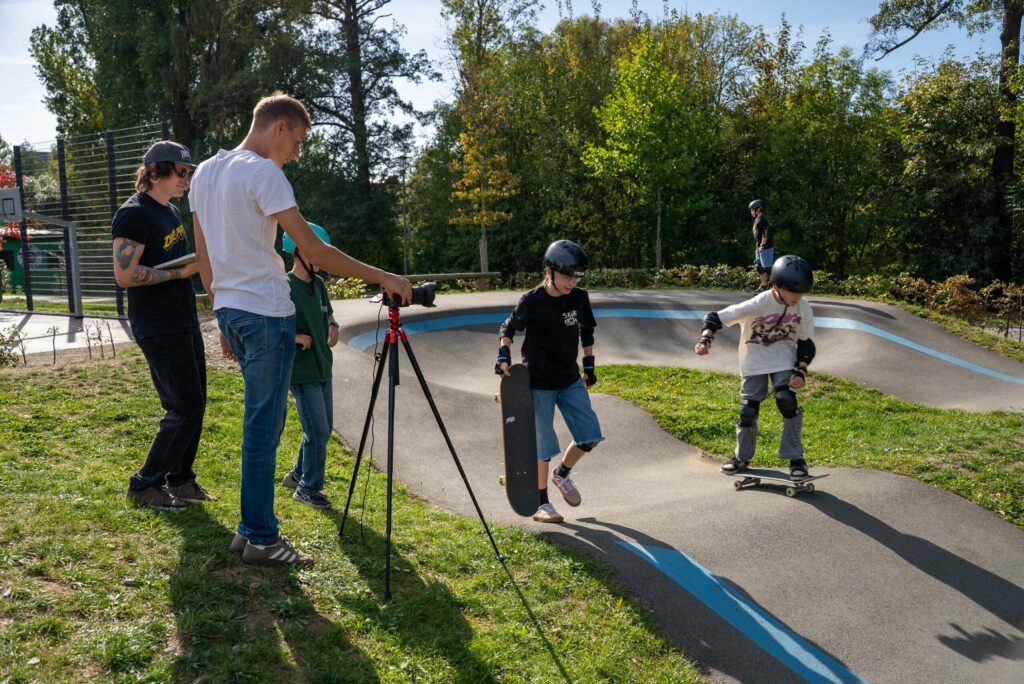
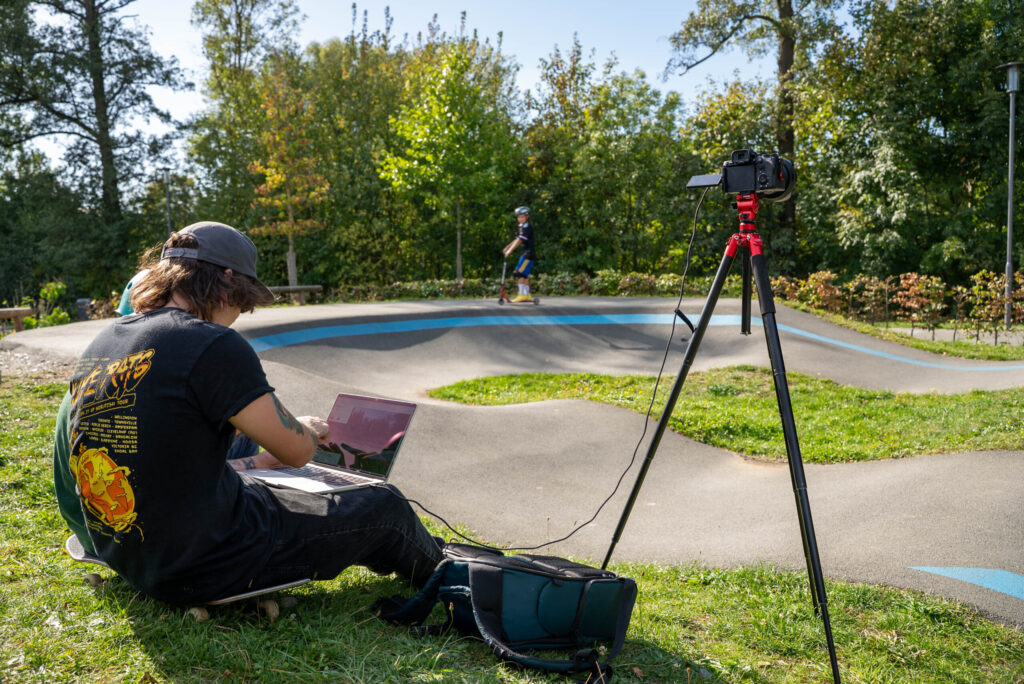
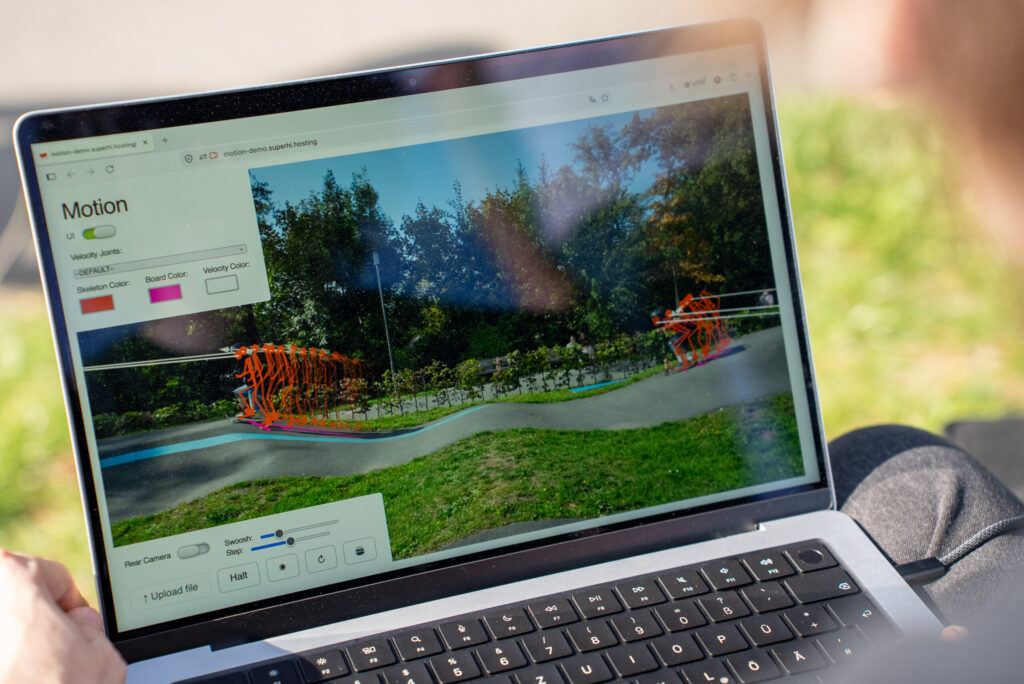
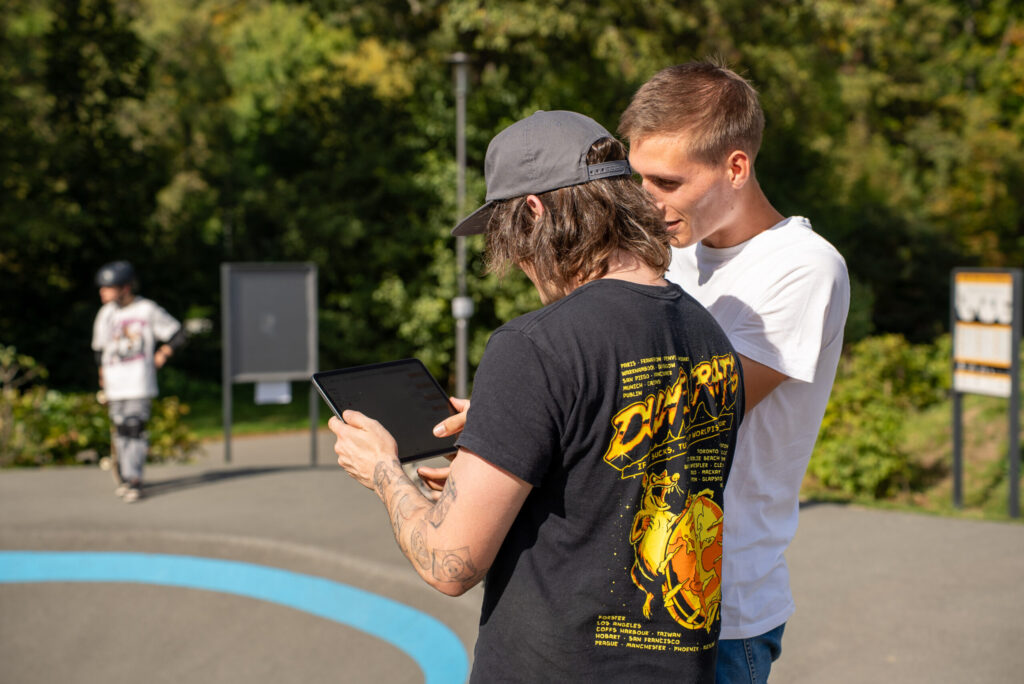
The results were visualized on the spot using a laptop. This allowed the young people to understand how video recordings are turned into scientifically analyzable data and how artificial intelligence helps to better understand movement patterns.
Hands-On Research—and Getting on the Board Themselves
After the scientific portion, there was time to try out what they had learned on a skateboard and reinforce their understanding. In sunny, late-autumn weather, the students were able to use the Hof Skatepark and put their workshop experiences directly into practice.
The Interactive & Data Driven Systems research group is currently conducting further analysis of the collected data. The results are scheduled to be published in a scientific paper next year. In this way, the workshop combines engaging knowledge transfer with cutting-edge research at Hof University of Applied Sciences.
Learning Through Real-World Problems
For Prof. Michael Zöllner, the practical relevance is crucial for making scientific concepts understandable:
“It always helped me a great deal in school and during my studies to learn and understand through real-world problems. The focus of my research on biomechanics—specifically in skating and surfing—follows this principle. In my opinion, that’s what makes a STEM degree at a university of applied sciences so attractive.”
Prof. Michael Zöllner