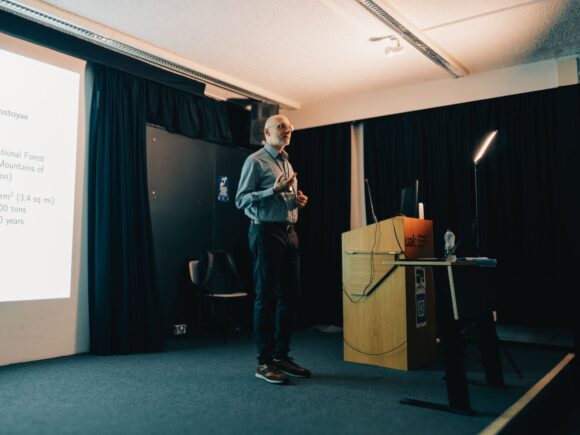


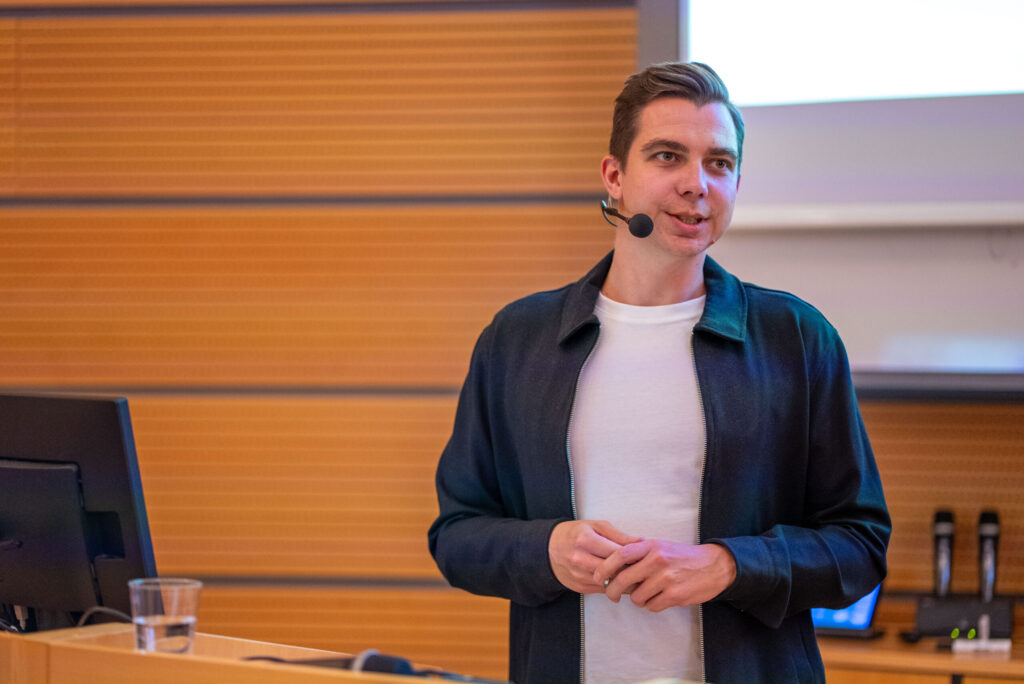
“Research thrives on breaking new ground and trying out lots of different things!”—under this motto, quoted by moderator Benedikt Hiller at the outset, the five research institutes at Hof University of Applied Sciences presented their areas of focus and current projects at the 2026 Institute Colloquium. The program—organized this time by the ibp—also included a 90-minute poster session and insights into doctoral opportunities.
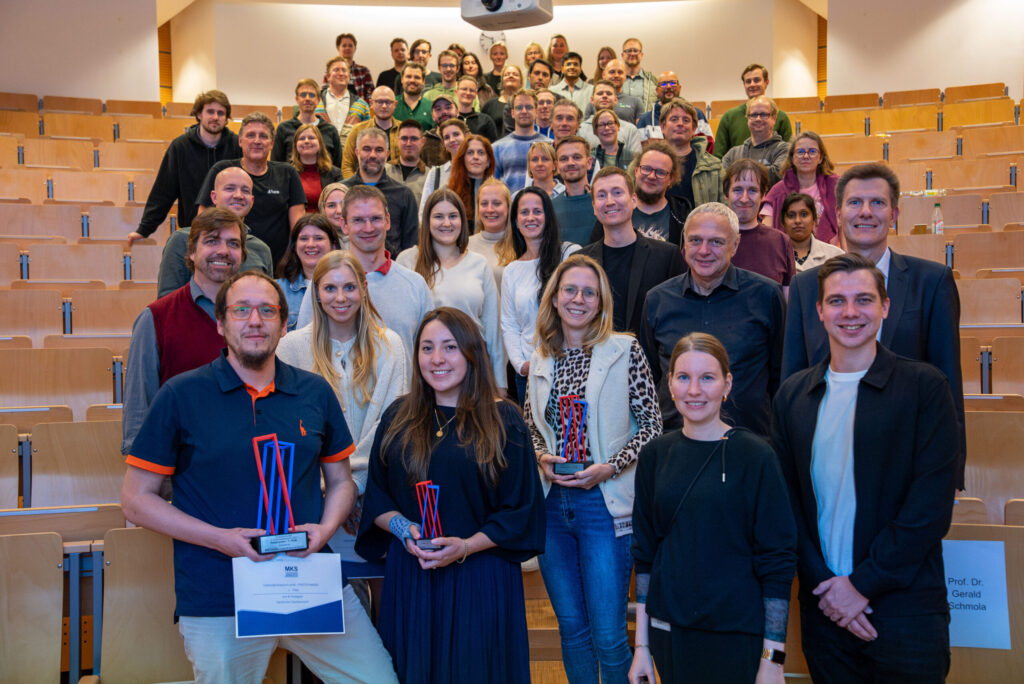
How can collaboration among Hof University’s research institutes be further strengthened? This question was the focus of the 7th Institute Colloquium, which was hosted this time by Hof University’s Institute for Circular Economy of Bio-Polymers (ibp). Since all research institutes had already hosted the annual event series at least once, the ibp took the opportunity to further develop the existing concept. Instead of focusing extensively on individual research projects, the main goal this time was to get to know the institutes, their areas of expertise, and the possibilities for cross-institute collaboration better.
“We wanted to make even greater use of the Inter-Institute Colloquium to highlight the diversity of our research and to bring the people behind the projects into conversation with one another,” explained Prof. Dr. Michael Nase, director of the ibp.
“If we know what expertise, equipment, and experience are available at the other institutes, this might lead to entirely new ideas for joint projects. It’s especially important for new staff members to get an overview of these opportunities right from the start.”
Prof. Dr. Michael Nase, Director of the ibp
In his welcoming remarks, Prof. Dr. Gerald Schmola, Vice President for Research, Development, and Entrepreneurship at Hof University of Applied Sciences, highlighted an impressive track record:
“This year, we will once again secure over 10 million euros in third-party funding for our research projects. This would never have been possible without the right team.”
Prof. Dr. Gerald Schmola, Vice President for Research, Development, and Entrepreneurship
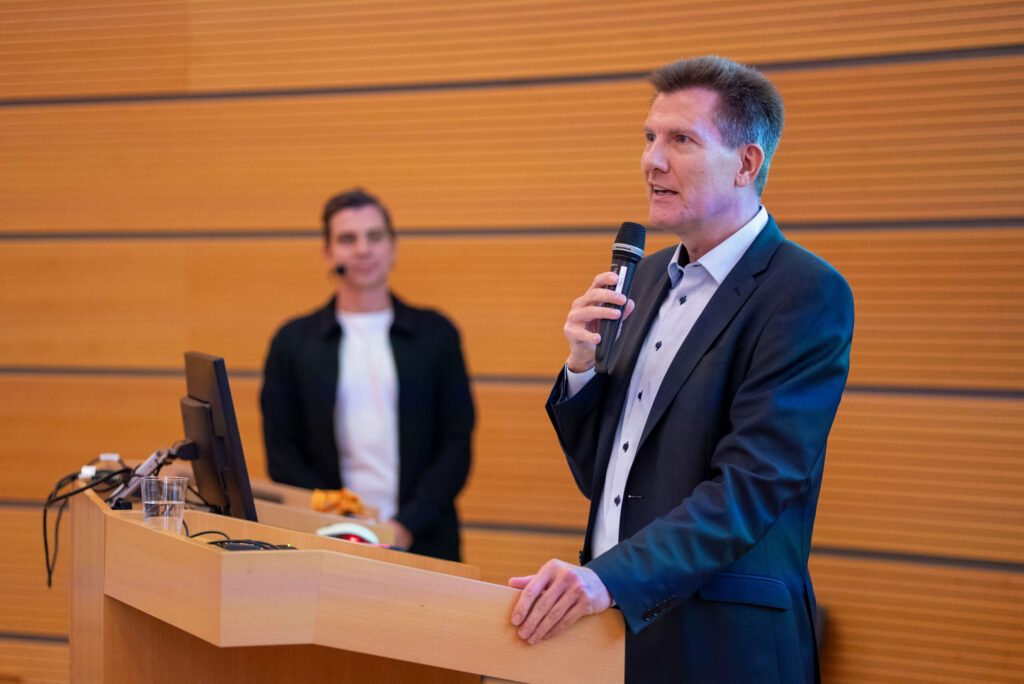
However, the goal is not only to promote research but also to strengthen the transfer of knowledge to industry and support entrepreneurship: “Always evaluate your projects to see if a spin-off could be worthwhile!”
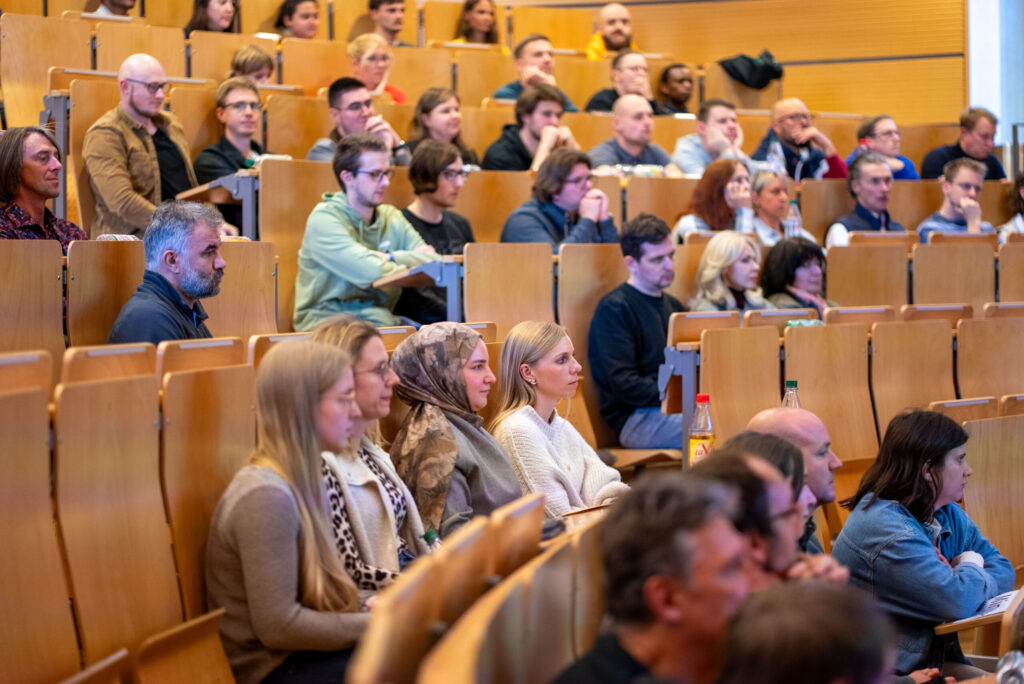
Five Institutes in the Spotlight
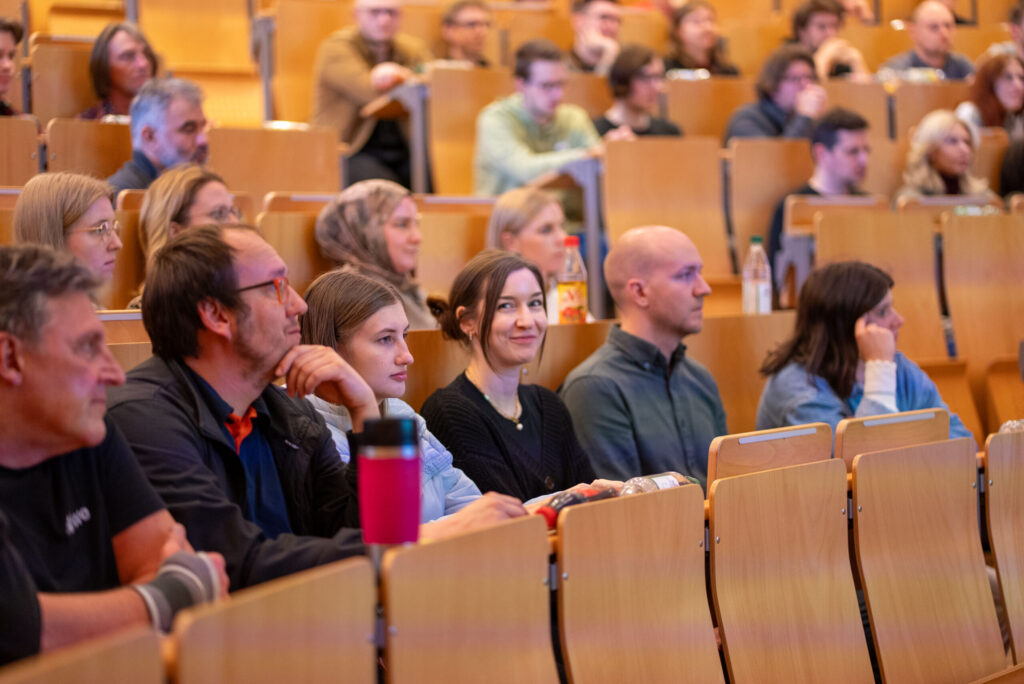
To kick things off, Nase looked back on previous institute colloquia before introducing the new event format to the audience in the university’s Audimax. The five research institutes then each presented themselves in approximately seven-minute “spotlight” presentations. The focus was not on individual projects, but rather on each institute’s profile, staff, available equipment, and opportunities for collaboration. Flagship projects also remained part of the program, though they were covered more concisely this time.
Spotlight: ibp
Institute Director Prof. Dr. Michael Nase presented the expertise and research activities of the Institute for Bio-Circular Economy (ibp), where 31 staff members are currently working on 27 projects. With approximately three million euros in secured third-party funding, new research equipment, and diverse corporate partnerships, the institute continues to expand its activities.
Four projects illustrate the breadth of the research: BioVerBiss is collaborating with BKW Kunststoff GmbH to develop bio-based protective sleeves designed to protect young trees from wildlife browsing. RE-TUBE is working on a recycling system for thermoplastic polyurethane to produce sustainable bicycle inner tubes from recycled and bio-based materials. KREATIK supports small and medium-sized plastics companies in developing sustainable products and production processes. To this end, the project combines plastics recycling and bioplastics with digitalization and artificial intelligence.
The ERDF-funded flagship project TechCirclePolymers comprises nine subprojects involving numerous corporate partners. Together, they are researching new materials made from renewable raw materials and biogenic waste products, as well as improved recycling processes. The approaches range from the utilization of bakery waste to the reuse of plastic waste from medical technology. The goal is to conserve resources and make plastics processing more sustainable.
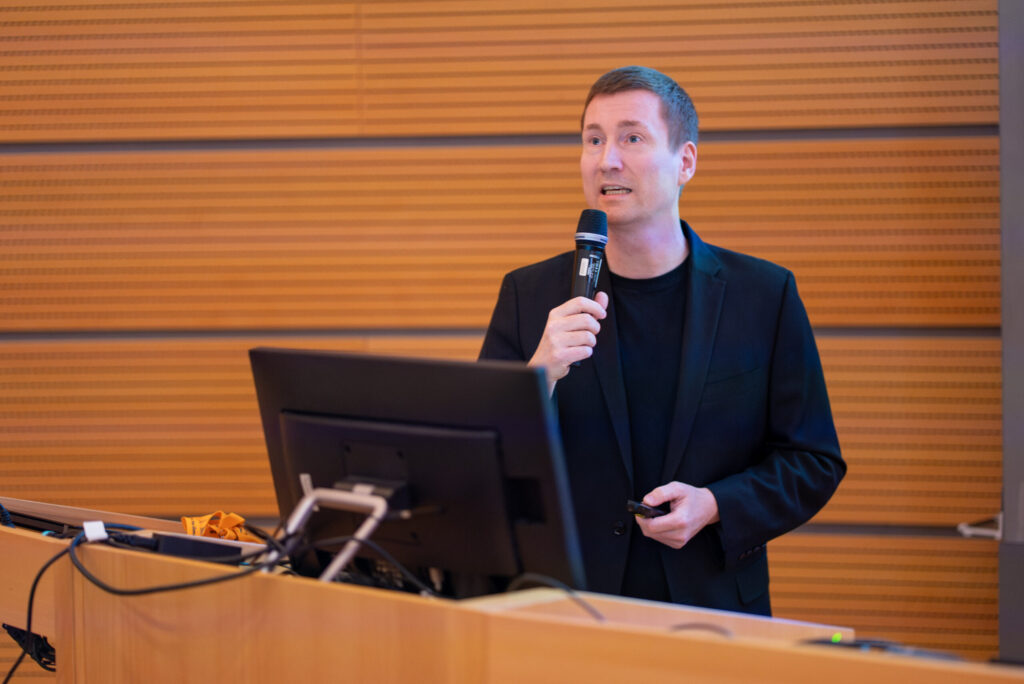
Spotlight: iwe
The Institute for Hydrogen and Energy Technology (iwe) presented its research activities and potential avenues for collaborative projects. Institute Director Prof. Dr.-Ing. Tobias Plessing outlined the work of the 21 staff members across five research groups. In addition to current projects, the institute looked back on completed projects: EnerNET supported companies in exchanging ideas on energy efficiency and innovative technologies, while HyBaBo advanced the cross-border hydrogen economy between Bavaria and Bohemia. As part of the municipal heating plan for Schwarzenbach an der Saale, the iwe also investigated how industrial waste heat can be used for a climate-friendly heat supply.
The new projects cover a broad range of topics. EnerFuel, in collaboration with the ibp, is researching the production of motor fuels and other fuels from biogenic residues and plastic waste. The ResilienceLab, in collaboration with inwa and ibp, is developing solutions for climate-resilient cities, such as through rainwater storage and green roofs. EnerKMU supports companies in improving their energy efficiency, while OUR-E investigates smart control systems for building energy supply. AmmOx is researching more efficient hydrogen production from ammonia, and ITSOpt is exploring better use of heat and cold storage systems.
As a flagship project, Plessing presented EnerTECH, which provides companies with practical knowledge on hydrogen technologies, energy storage, and energy efficiency. Workshops and networking events strengthen the exchange between research and industry. With the planned opening of the new Center for Hydrogen and Energy Technology (ZWE) at the end of the year, the research infrastructure at the Hof campus is set to be further expanded.
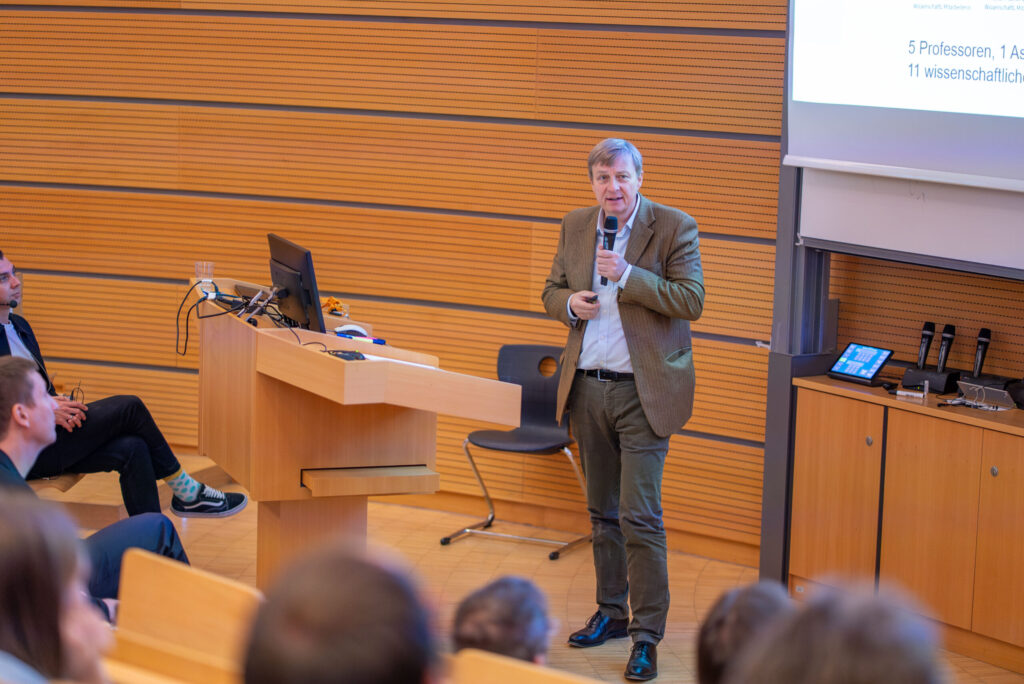
Spotlight on iisys
The Institute for Information Systems (iisys), represented by its director, Prof. Dr. René Peinl, presented its expertise in information systems and digital technologies. Across 14 research groups, the institute conducts interdisciplinary work to develop solutions for business and society. A particular highlight is the successful completion of five doctoral dissertations by Marcin Czaban, Adrian Wöltche, Sebastian Pahl, Martin Heckel, and Katharina Schiller. Their research focuses, among other things, on the transferability of driving simulator results to real-world traffic, digital mapping methods, and IT security.
Technical capabilities are also being continuously expanded: the speech and image generation models Lisa and Luis are already well-established at the university. Sara is another tool being added to the suite; as a research data management system, it is designed to index and structure image and text data in particular, making them usable for research.
As a flagship project, the institute presented the StoryMachine, led by Prof. Dr. Claus Atzenbeck. This three-year collaborative project, funded by the German Research Foundation (DFG), is working with research teams from Germany and the United Kingdom to develop a digital infrastructure for preserving, researching, and making accessible both traditional and modern storytelling traditions. In doing so, iisys combines information technology research with new possibilities for digital knowledge transfer and the cataloging of cultural content.
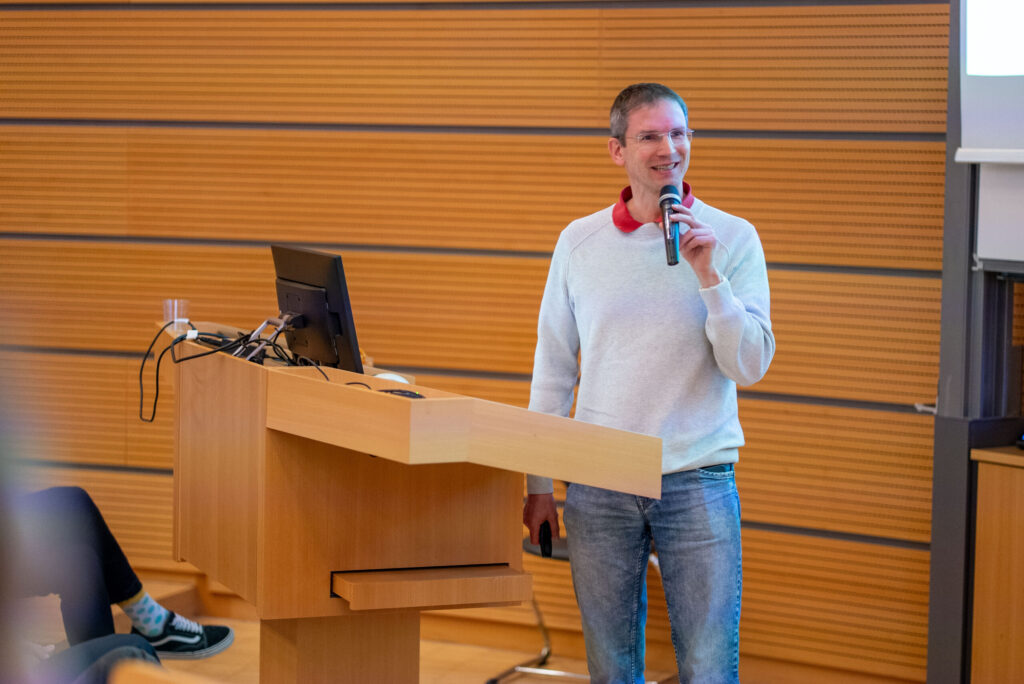
Spotlight on inwa
Dr. Andreas Aicher, representing Prof. Günter Müller-Czygan, presented the work of the Institute for Sustainable Water Systems (inwa). Twenty-five staff members from eight countries work in four research groups on solutions for sustainable water management. This year, the institute secured 6.22 million euros in third-party funding. Three doctoral candidates are currently conducting research at the institute, and other staff members are pursuing doctoral degrees.
Among its activities is the Water Transfer Workshop, conducted in collaboration with hoferLand.digital. It supports municipalities in developing solutions for sustainable water management and addressing the impacts of climate change. The Competence and Transfer Center for Sustainable Sponge Cities and Regions (ktns) also provides practical concepts that enable cities and municipalities to better store and use rainwater. However, funding for the center is set to expire at the end of 2026.
Three flagship projects demonstrate the institute’s thematic diversity: ReKorD develops organic-mineral fertilizer pellets from livestock waste to close nutrient cycles and reduce the use of mineral fertilizers. Teichkreis investigates how natural materials can bind excess nutrients in fish ponds and thereby improve water quality. WasABI is developing a modular water treatment system for aquaculture that enables the reuse of water and is intended to be integrated with biogas plants for the recovery of organic waste and heat utilization. With the planned move to the new Center for Water and Energy (ZWE), inwa will gain additional opportunities for research and collaboration.
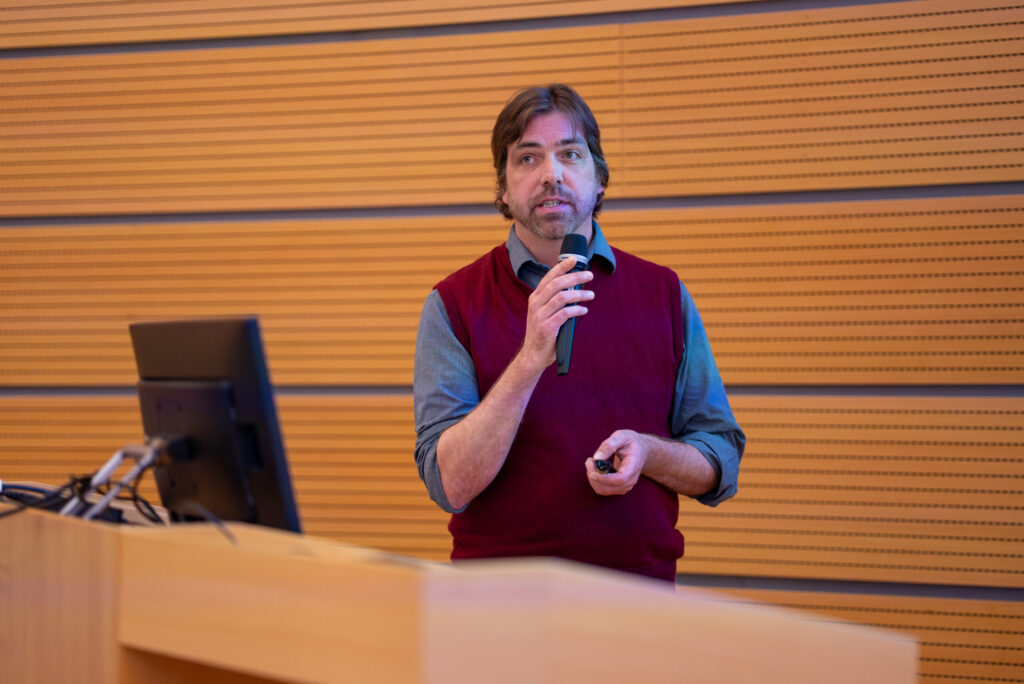
Spotlight: ifm
The Institute for Materials Science (ifm), represented by Institute Director Prof. Dr. Frank Ficker, presented its research priorities and technical capabilities. Thirty-two staff members are currently working on 28 ongoing projects. Two major industry events strengthen collaboration with the industry: The international NTC Conference on narrow textiles, braiding technologies, and smart textiles brought together around 100 participants for 35 technical presentations. The Hof Nonwovens Days attract around 500 experts from industry and research each year.
To develop new materials and manufacturing processes, the technical infrastructure has been expanded to include several new systems. These include a melt-spinning line for producing fibers, braiding machines for complex textile structures, and laboratory equipment for processing and testing fibers and plastics. This enables the institute to develop innovative materials and conduct targeted investigations into their properties.
One flagship project is SALIX AFS, which aims to make willow wood usable as a renewable raw material for textile applications. The goal is to process wood fibers into continuous threads and, using weaving and braiding technologies, produce new structures for architecture, interior design, and lightweight construction. Textile bicycle locks and Space Mesh also illustrate the breadth of the research’s applications: While textile materials for innovative security solutions are being investigated for bicycle locks, Space Mesh focuses on textile structures for applications in aerospace.
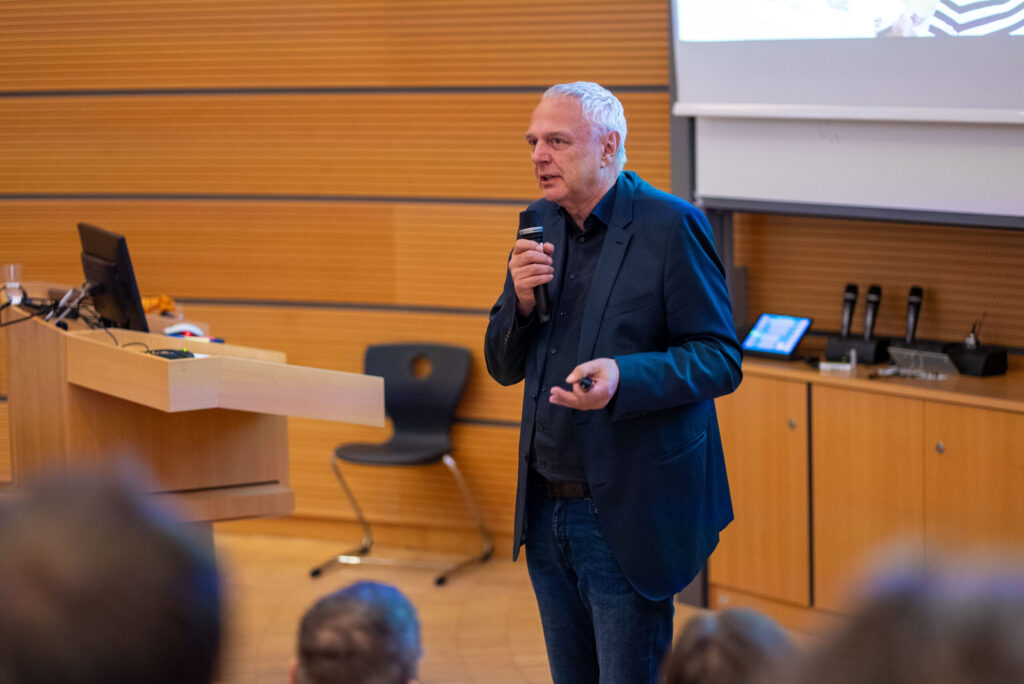
The short presentations were deliberately designed to provide an overview and spark discussions about potential collaborations. At the same time, participants received an update on what had been happening in the institutes since the last institute colloquium.
90 Minutes for One-on-One Discussions: The Poster Competition
The poster competition remained a staple of the event. However, for the first time, a 90-minute poster session was also held on-site to create as much opportunity as possible for personal exchange.
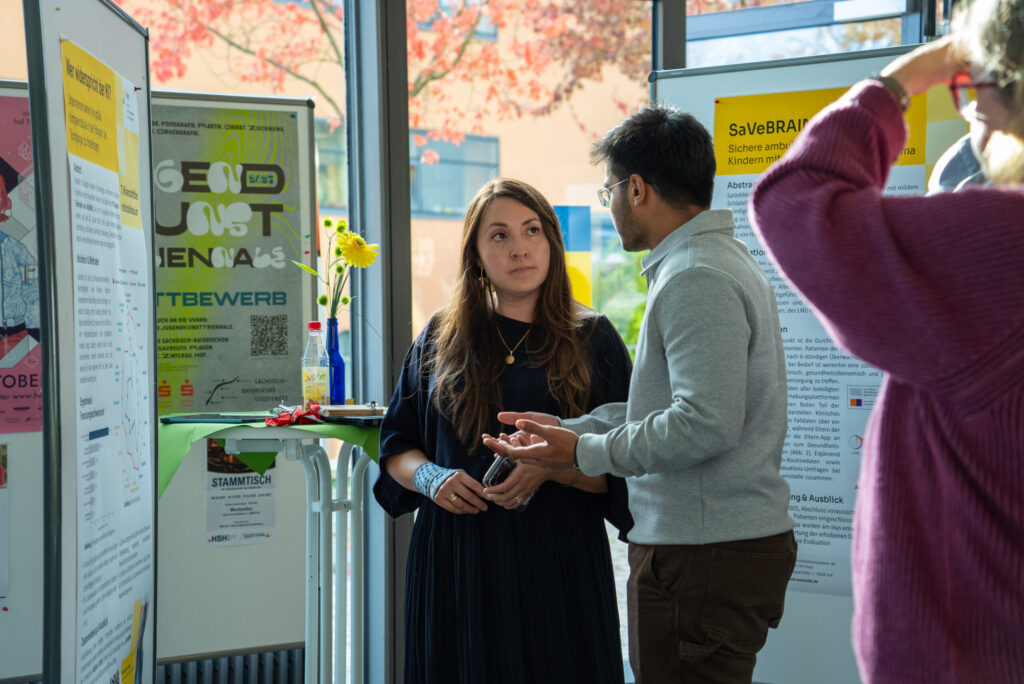
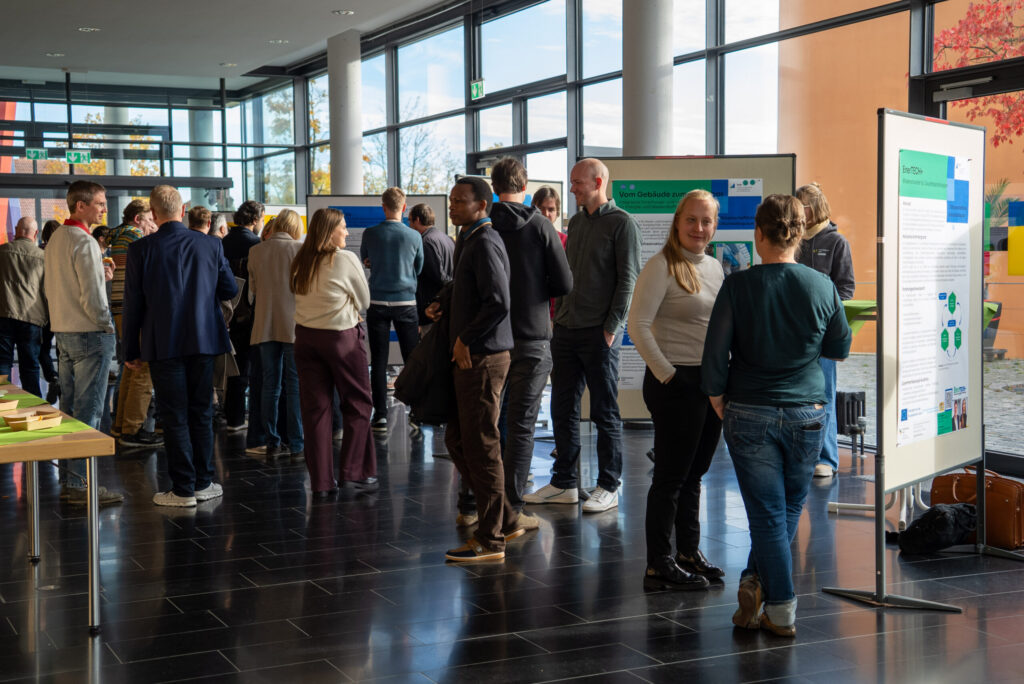
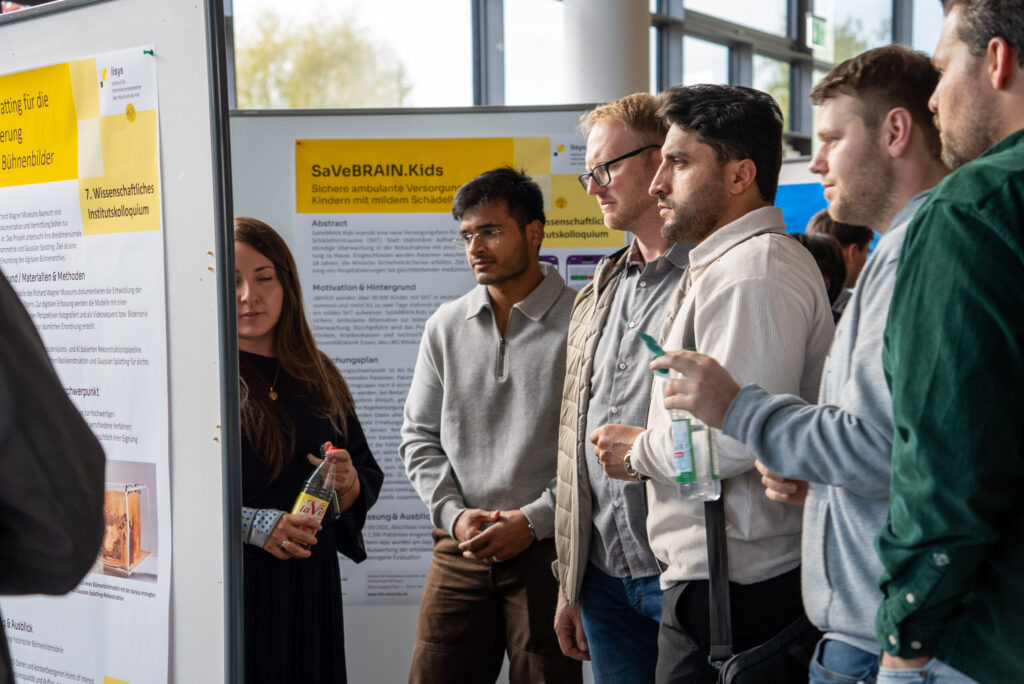
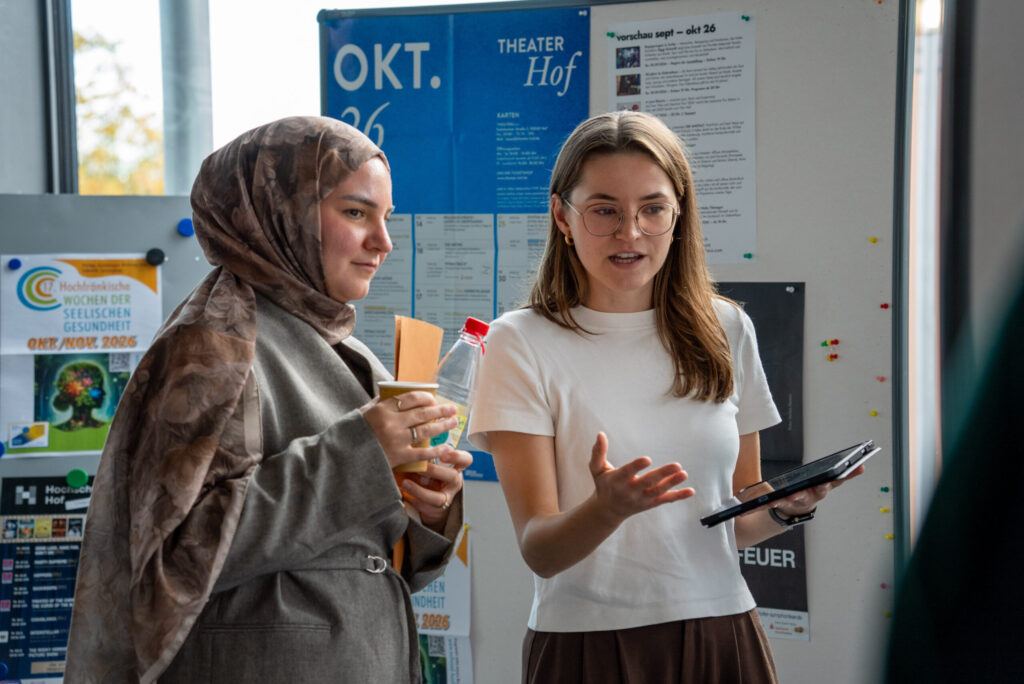
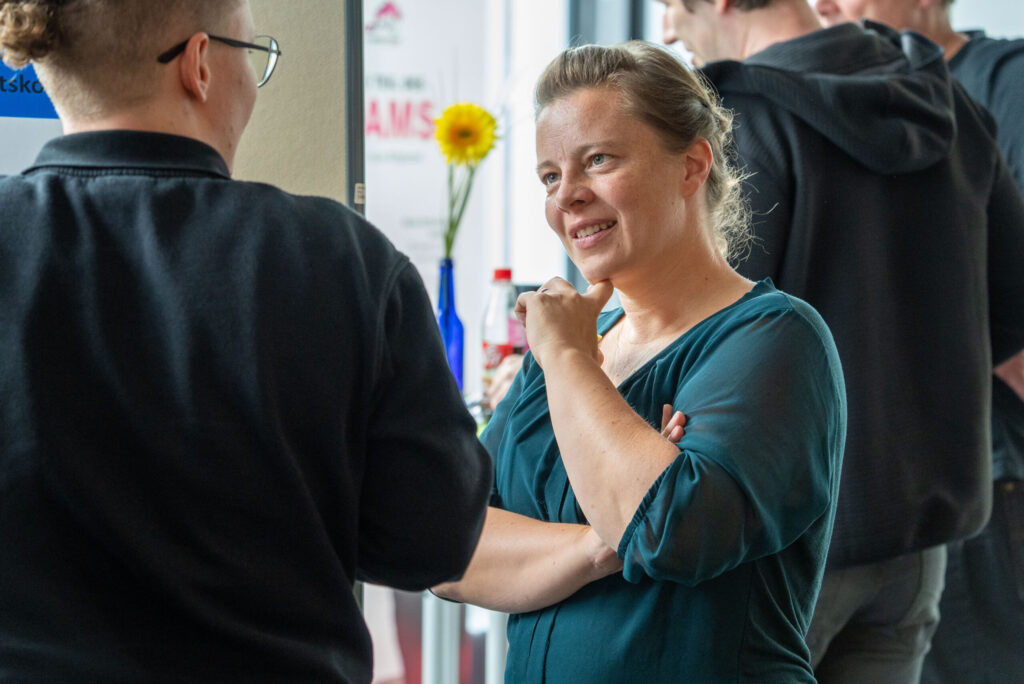
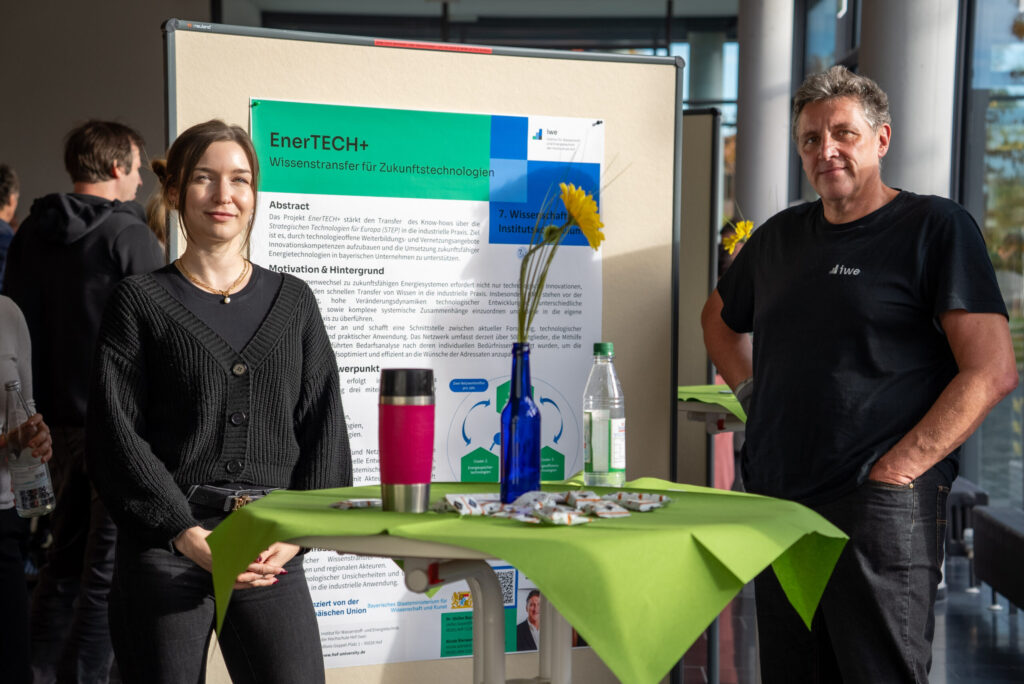
In the foyer, participants were able to explore the presented research projects in greater detail, ask questions, and engage directly with the researchers. All attendees were then invited to evaluate the posters and select the entries they found most compelling.
The winners of the poster competition:
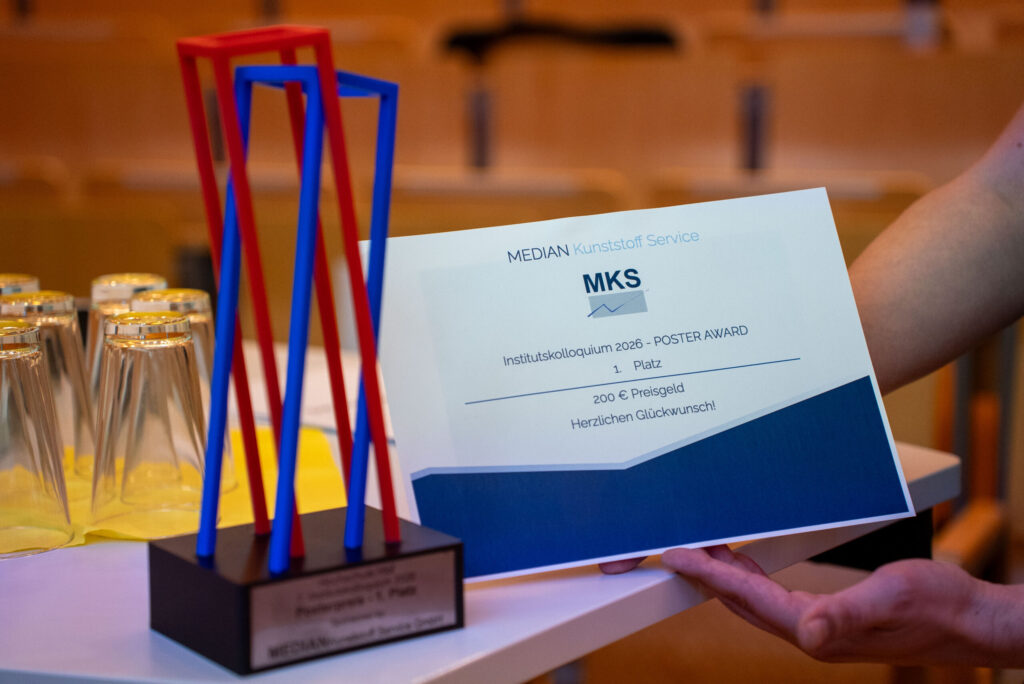
- 1st place (200 euros): CataCOD, Axel Wolfram (inwa)
- 2nd place (100 euros): TechCirclePolymers, Isabell Kleiber & Dr. Christin Baumgart (ibp)
- 3rd place (50 euros): “Who Disagrees with AI?”, Shantall Cisneros Saldana (iisys)
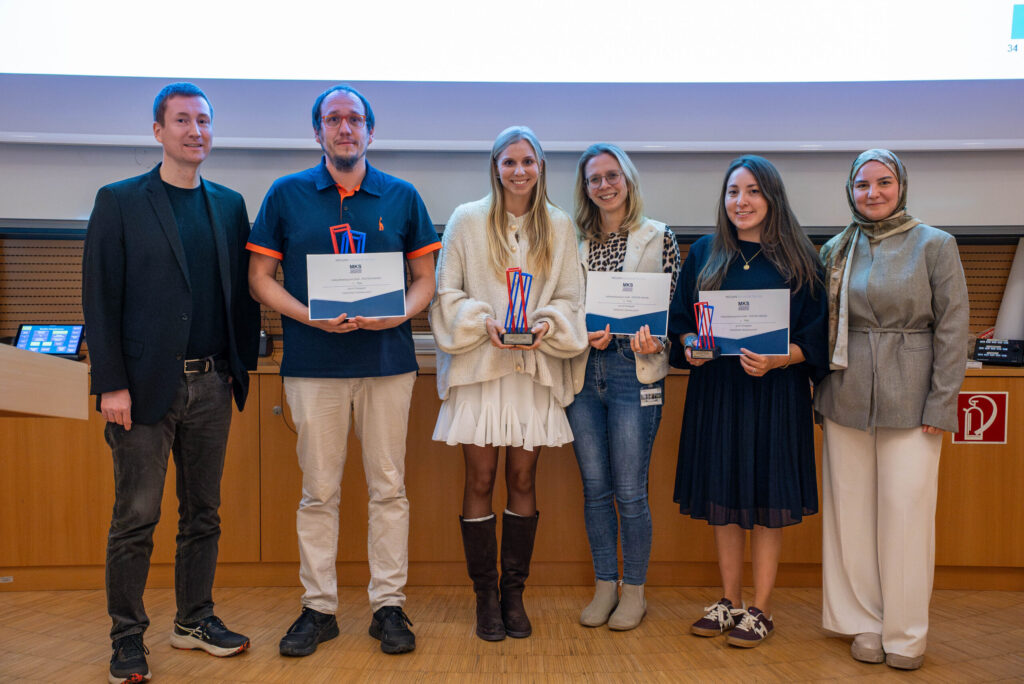
The competition was supported by MEDIAN Kunststoff Service GmbH—a spin-off of Hof University—which provided prize money of 200 euros for first place, 100 euros for second place, and 50 euros for third place. The awards ceremony was the highlight of the second part of the event.
Ph.D. Opportunities and the Resilience Lab
In addition to the Spotlight presentations, the colloquium had previously addressed two other topics. Ph.D. candidate Denise Bohrisch provided information on Ph.D. opportunities at Hof University of Applied Sciences, highlighting ways to further one’s academic development and advance personal research projects.
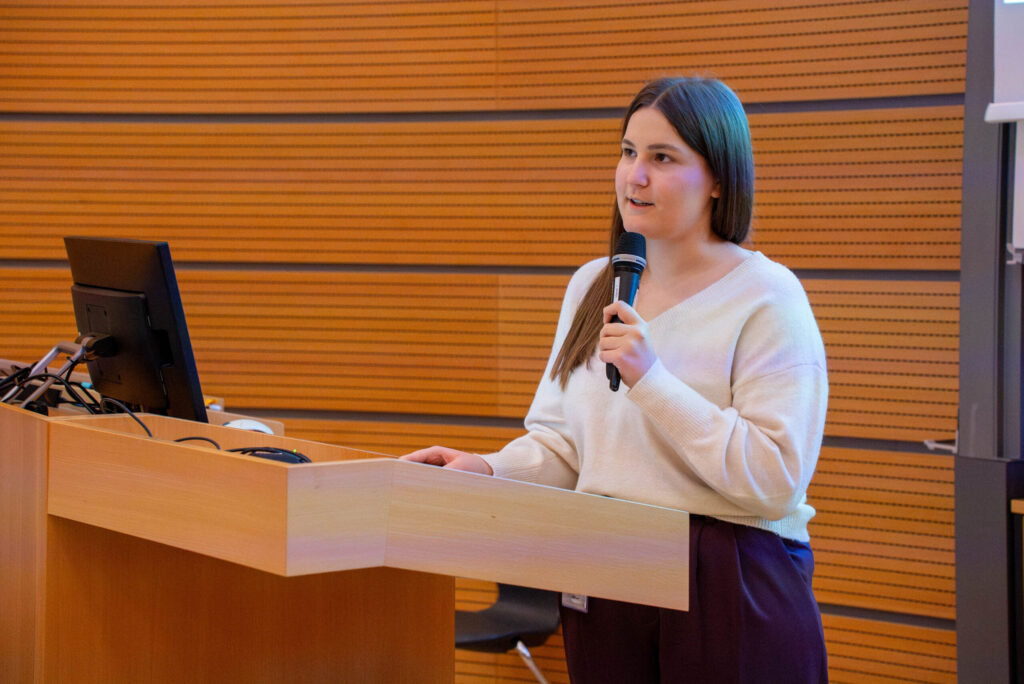
Finally, Dr. Andreas Aicher presented the Resilience Lab project in greater detail. The project addresses the question of how cities and rural regions can be better prepared for the consequences of climate change. To this end, a real-world research facility is being built on the Hof campus, where measures such as green roofs, rainwater storage, and green facades are being studied—particularly with regard to heavy rainfall and droughts. Sensors and digital data help track water flows and develop proactive water management strategies. This interdisciplinary project combines research with hands-on learning opportunities and brings together expertise from various fields to develop climate-adapted solutions and teach students how to tackle complex challenges.
Exchange as a Starting Point for New Collaborations
With the further development of the institute colloquium, Hof University placed greater emphasis on networking within its research community. The combination of brief institute presentations, a poster session, and supplementary specialist lectures offered various opportunities to learn about research and establish contacts.
“Good research thrives not only on the expertise of one’s own team but also on looking beyond the boundaries of one’s own field. The Institute Colloquium was intended to create a framework for this—so that getting to know one another leads to concrete discussions and, in the best case, new joint research projects.”
Prof. Dr. Michael Nase
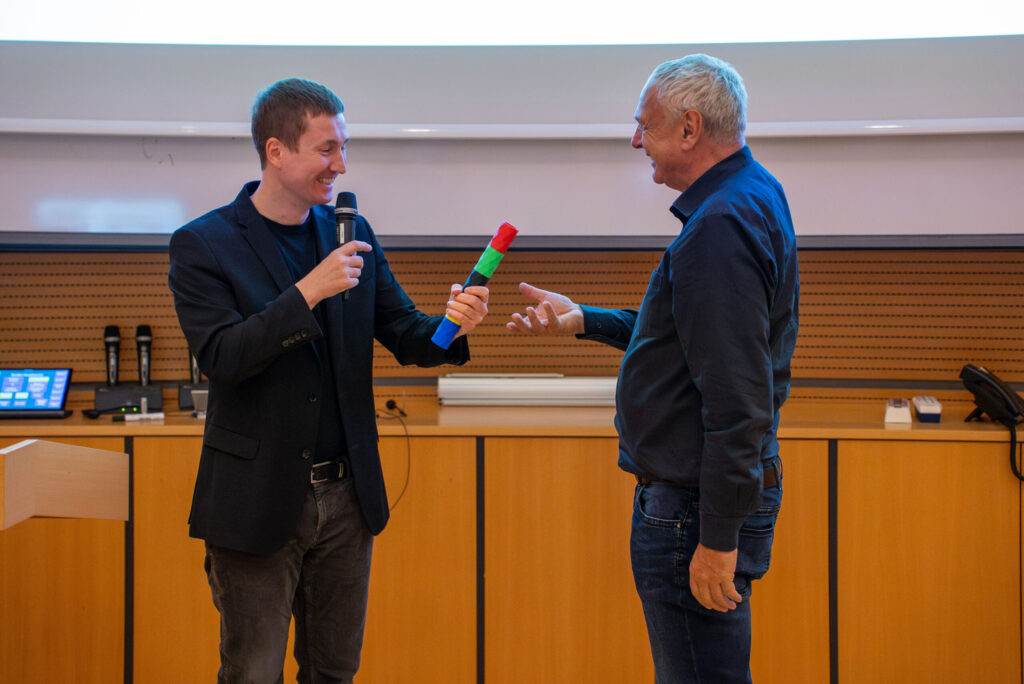
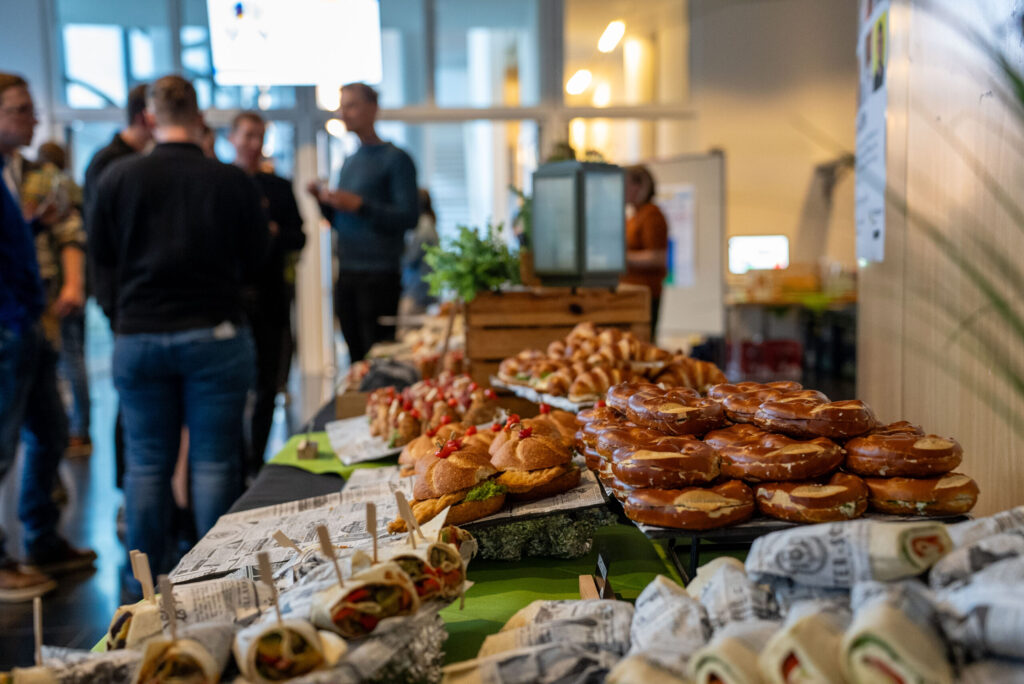
At the conclusion, the baton was passed to the next host, the Institute for Materials Science (ifm), before the event came to a close with a culinary celebration. In an initial survey conducted afterward, 93% of attendees expressed a positive opinion of the new concept for the Institute Colloquium.