

The “1qm Flax” project officially kicked off at the Hof University of Applied Sciences’ Münchberg campus. Students from various degree programs and university staff came together to conduct hands-on research into the cultivation and processing of flax as a regional and sustainable raw material. The goal of the project is to trace the entire process from sowing to the finished fiber—and beyond.

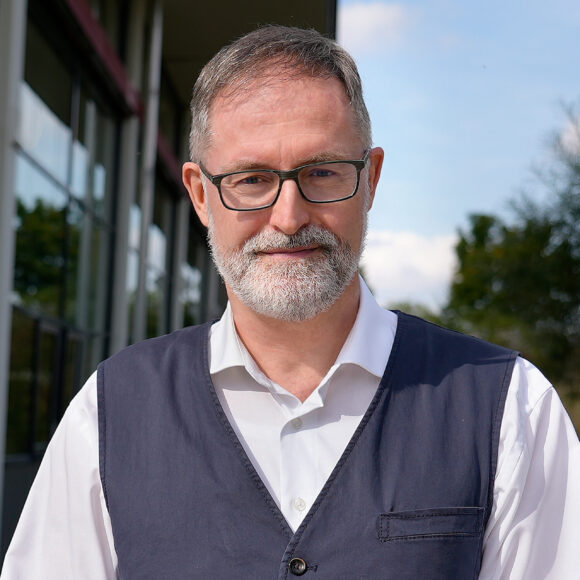
“The project perfectly combines sustainability, research, and teaching. Here, our students experience the entire value chain of a textile raw material—from the field to its application,” explains project leader Prof. Dr. Anett Matthäi.
From a mini-field to textile applications
Various flax varieties are being cultivated on a mini-field on campus that was specially laid out in November 2025. From April to August, the focus is on plant growth and the harvest. The raw material is then processed further to produce textile fibers. This gives participants comprehensive insights into the processing and use of flax, which is also becoming increasingly important for technical textiles.

The project’s relevance is also evident in a broader context: Flax cultivation areas in Europe have been growing steadily for years, with around three-quarters of global production coming from Western Europe.
Part of a Germany-wide citizen science project
With this project, Hof University is participating in the Germany-wide citizen science project “1qm Lein,” which is dedicated to the recultivation of old flax varieties. The seeds are provided centrally, while the data collected in Münchberg will be incorporated into a joint analysis by all project participants.
The next step is already on the horizon: Sowing will take place on the Münchberg campus on April 16 and 17, 2026. Anyone interested in actively participating in the project is still warmly invited to contact Prof. Dr. Anett Matthäi.