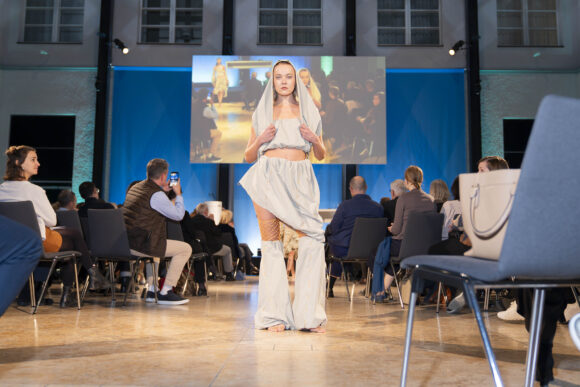


On February 13, 2026, I was invited to the award ceremony of the kbo Innovation Award Mental Health/Social Psychiatry in Munich. My Bachelor’s thesis entitled “Social media use, social comparison and self-esteem: a study of adolescents and young adults” was awarded second place in the Bachelor’s thesis category and honored with a personal laudatory speech by Dr. Margitta Borrmann-Hassenbach (Chairwoman of kbo) during the event.
The event began with welcoming remarks in which the importance of innovative, practice-oriented research in the field of mental health was emphasized. Prof. Dr. med. Johannes Hamann then gave a 30-minute lecture on the topic of “Returning to work after mental illness – results of the RETURN study”. The lecture highlighted how important it is to translate scientific findings into concrete improvements in care and to continuously strengthen the dialog between research and practice.

The award winners were then honored. The award for my work in this context means a lot to me and at the same time confirms the social relevance of the topic. The digital world shapes young people’s everyday lives to a large extent. Social media are not only communication spaces, but also comparison spaces that can have a lasting influence on self-image, the experience of belonging and self-esteem. In my view, the scientific examination of these processes is crucial in order to better understand risks, identify protective factors and further develop preventative and supportive approaches to healthy social media use in the long term.
Against this backdrop, the kbo Innovation Award for my work takes on added significance. The award recognizes outstanding empirical and practical scientific work in the field of mental health and social psychiatry and stands for a quality culture that sees innovation not as an end in itself, but as an impetus for concrete improvements in care. Particularly in view of increasing mental stress and the new demands of digital living environments, the award underlines the importance of a close and continuous exchange between research and practice.
It was a great honor for me to share this special setting with other award-winning researchers – from bachelor’s and master’s theses to dissertations. The exchange in this circle was extremely inspiring and showed me once again how important it is to pay more attention to current social challenges, especially in the field of mental health, and to destigmatize them. With the Innovation Award, the clinics of the District of Upper Bavaria (kbo) offer prospective researchers a valuable opportunity to advance practice-relevant research in this area. This enables the care of people with mental illnesses or mental disabilities to be continuously improved, actively contributing to the promotion of mental health.
Congratulations, Emely Scholz, on this outstanding achievement!