

Three young researchers from the U.S. and India are currently conducting research on sustainable plastic solutions at the Institute for Circular Economy of Bio-Polymers (ibp) at Hof University of Applied Sciences. Julia Moy and Hannah Cook from the Georgia Institute of Technology (Georgia Tech) in Atlanta, and Aditya Nair from Otto von Guericke University Magdeburg, bring diverse scientific backgrounds to the project—united by a common goal: to develop sustainable materials for the future and to experience research as closely as possible to industrial practice.
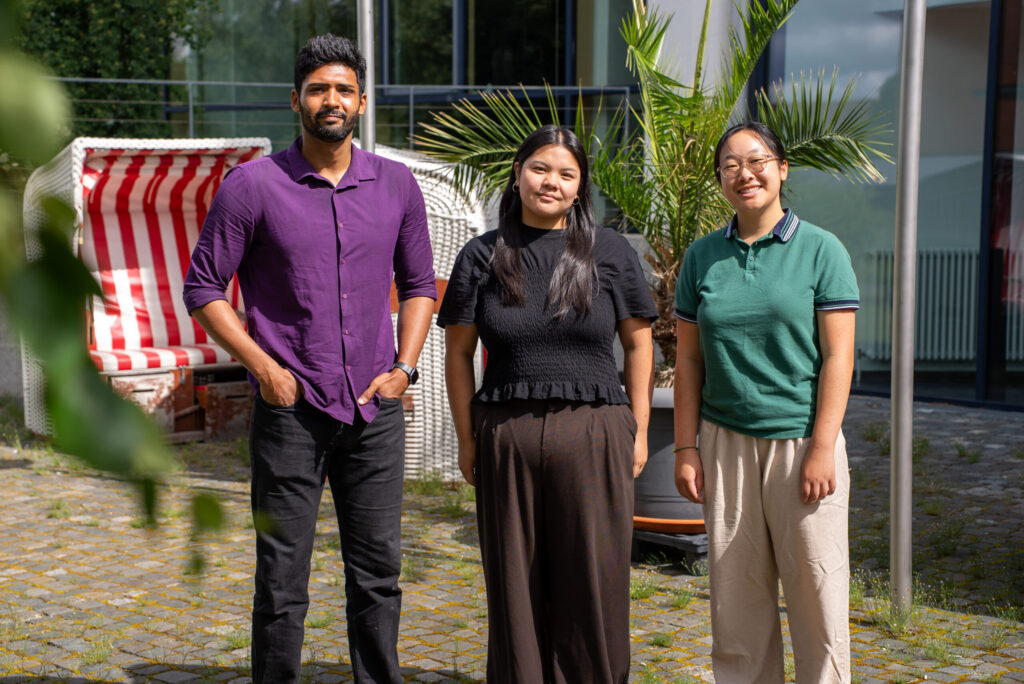
While Julia Moy and Hannah Cook are working on the “PHB-3D” research project under the scientific supervision of Benedikt Hiller, Aditya Nair is completing his mandatory master’s internship with David Krieg. Their projects overlap in terms of content: The focus is on biodegradable plastics and their properties—a field of research that is gaining global importance in light of scarce resources and growing environmental requirements. Despite their different backgrounds and educational paths, all three see Hof University of Applied Sciences as a place where scientific curiosity meets practical application. It is precisely this combination of modern research, industrial relevance, and international exchange that has brought them to Upper Franconia.
Further Developing Sustainable Plastics
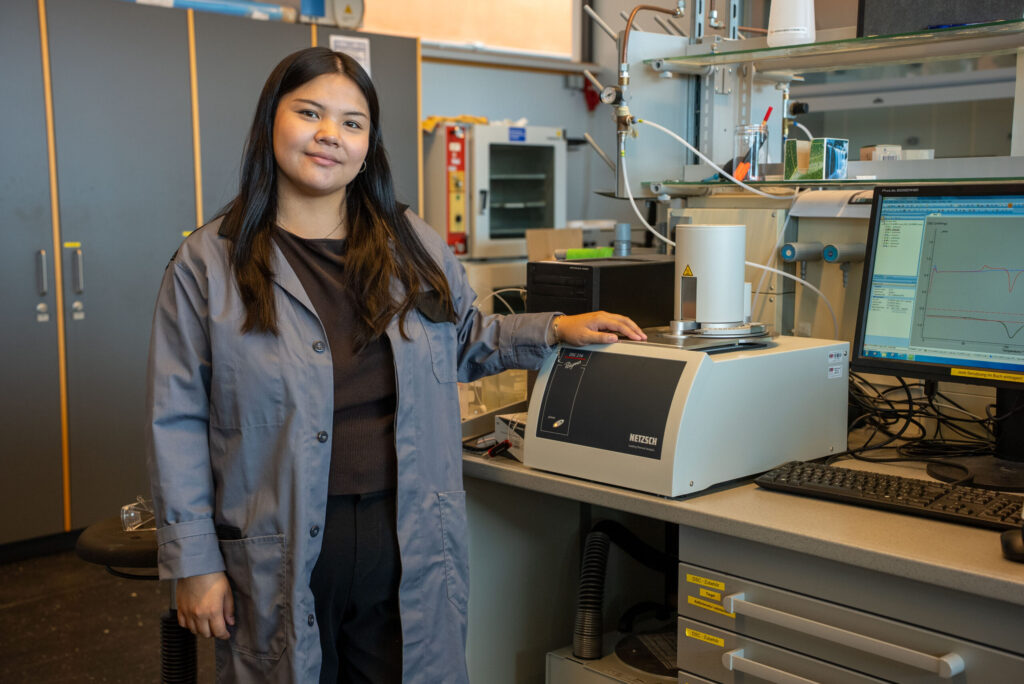
Julia Moy is studying materials science and engineering at Georgia Tech and has been working on sustainable materials for several semesters now. At the ibp, she is investigating how the particle size of bio-based fillers influences the crystallization behavior and, consequently, the mechanical properties of PHA plastics. The connection to her research in the U.S. is clear. While at her home university she focuses on microfibrillated cellulose in the paper industry, in Hof she is investigating bio-based fillers derived from byproducts of wine production for sustainable plastics.
“I wanted to learn more about polymer science from the perspective of sustainability and get to know Germany at the same time.”
Julia Moy
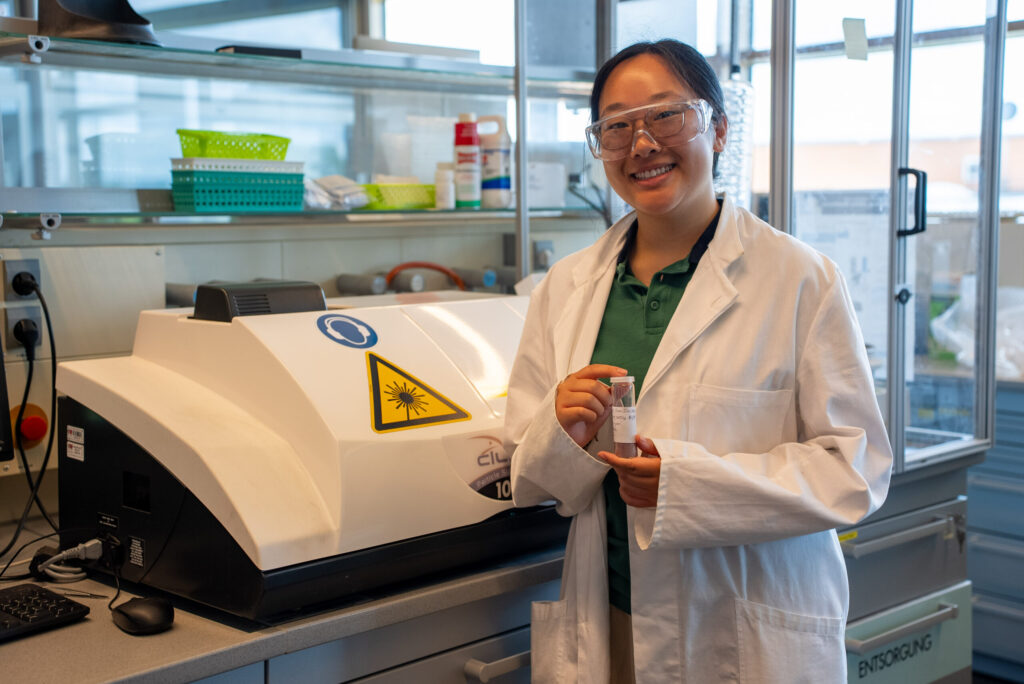
Hannah Cook is also studying materials science at Georgia Tech with a focus on biomaterials. Her research stay is funded through the DAAD-RISE program. In the “PHB-3D” project, she is analyzing the current state of commercially available PHA materials and developing approaches to improve sustainable 3D printing filaments. For her, the particular appeal lies in actively helping to shape a research project that is still in its early stages.
“Since the project is still in its early stages, I was able to help decide how to design the experiments. This opportunity to actively shape the research was particularly exciting for me.”
Hannah Cook
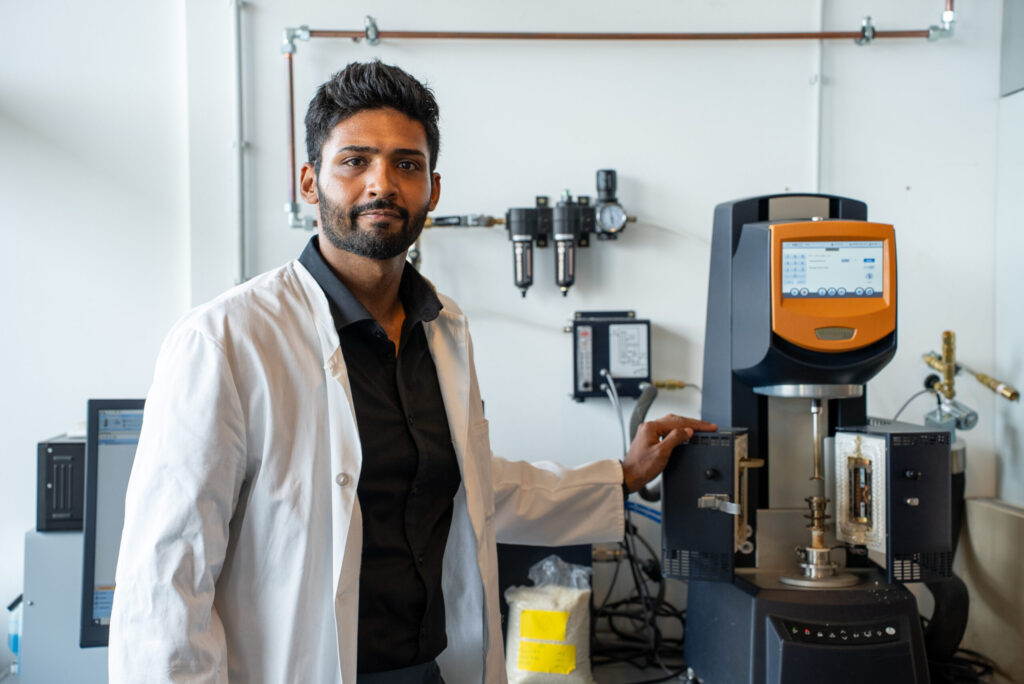
Aditya Nair, on the other hand, brings an unusually interdisciplinary background to the project. After earning a degree in mechanical engineering and an MBA in marketing, he is currently pursuing a master’s degree in Systems Engineering for Manufacturing at Otto von Guericke University Magdeburg. As part of his internship, he is investigating blends of PLA and PHA and researching how shear and cooling rates influence the crystallization behavior of biodegradable plastics.
“The work here allows me to apply theoretical knowledge from my studies directly to real-world industrial problems and bridge the gap between scientific fundamentals and practical application.”
Aditya Nair
Hands-On Research
One theme runs through all the conversations like a common thread: The three of them particularly highlight the technical equipment at the ibp. In Hof, they can test numerous industrial processes hands-on and operate machines themselves that they had never worked with before. Julia Moy worked on an industrial injection molding machine for the first time. “This gave me a much better understanding of the processes plastics go through on their way to becoming a finished product and how these processes affect their properties.”
Hannah Cook also gained hands-on experience with numerous industrial systems. “I’d only ever heard about many of these machines in lectures before. Now I was able to work with them myself, which gave me a much better understanding of the future applications of our research.” For Aditya Nair, using a rheometer was a particular highlight of his stay. “Until now, I’d only known this device from theory. Being able to operate it myself and use it to experimentally investigate material properties was a particularly valuable experience.”
International Collaboration as a Key to Success
The three guests were at least as impressed by the institute’s working atmosphere as they were by its technical facilities. Research here is not conducted in isolation, but thrives on daily exchanges between students, research assistants, and professors. Julia Moy noticed right from the first few days how naturally researchers discuss their projects with one another. “Everywhere you look, you see students and researchers talking to each other. This open collaboration makes the university a very pleasant research environment.”
Hannah Cook particularly highlights the communication within the research groups: “The intensive exchange allows us to learn from one another while also taking on our own responsibilities within the project.”
Aditya Nair also describes this sense of community as one of the greatest benefits of his stay: “Collaborating with colleagues from different disciplinary and cultural backgrounds has broadened my perspective on scientific questions and greatly fostered the exchange of knowledge.”
Germany from an Outside Perspective
In addition to their research, all three are using their time here to get to know Germany. Julia Moy particularly enjoys the natural beauty of Upper Franconia—with its lakes, forests, and parks—as well as interacting with her German colleagues. She was surprised by the high level of trust in public transportation:
“In the U.S., tickets are practically always checked. The fact that there are often no checks at all here really amazed me.”
Julia Moy
Hannah Cook particularly appreciates the blend of tradition and modernity:
“I like how people here always find reasons to celebrate together—especially in the summer.”
Hannah Cook
Aditya Nair, on the other hand, highlights the region’s tranquility and the well-organized daily routine. He was particularly impressed by German punctuality and the high priority placed on a healthy work-life balance.
Recommendation for International Early-Career Researchers
All three have reached a positive interim conclusion about their stay: Hof University of Applied Sciences offers excellent conditions for international research internships. Modern infrastructure, practice-oriented projects, and an open academic culture create an environment where professional and personal development are equally possible.
Julia Moy sums it up: “The people here are incredibly open and helpful. At the same time, the region offers many opportunities to get to know Germany.” Hannah Cook adds: “I would recommend that every researcher come to Hof—because of the exciting scientific work, the wonderful people, and the opportunity to experience German culture firsthand.” Aditya Nair would also recommend a research stay at the ibp to international students anytime: “Anyone who is open to engaging with others and takes advantage of the diverse opportunities will benefit enormously here, both professionally and personally.”