

It will take effect with the upcoming winter semester: the revised examination regulations (SPO) for the Master’s program in Computer Science at Hof University of Applied Sciences. What may sound like a mere formality at first glance is, in fact, a fundamental strategic step—toward an education that is consistently aligned with the demands of a workforce increasingly shaped by AI (as reported by campuls-digital).

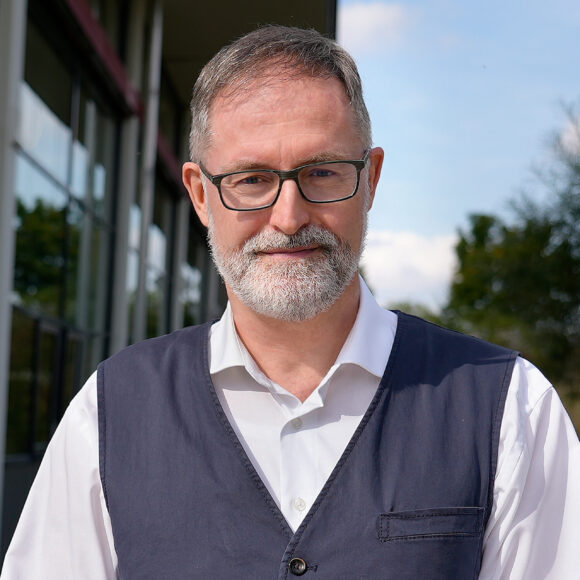
“Artificial intelligence is becoming increasingly powerful and can now even take on programming tasks,” explains program director Prof. Dr. habil. Thomas Buchmann. But rather than making computer scientists obsolete, this development is actually raising the bar:
“Well-trained specialists will be needed more than ever in the future.”
Prof. Dr. habil. Thomas Buchmann
The university’s response to this development: a refined curriculum. In particular, the areas of software development and IT security are being significantly strengthened. The goal is not only to train students in the use of AI tools, but to enable them to apply these technologies critically, securely, and efficiently.

Image: Hof University of Applied Sciences;
Focus Instead of Diversity: A Deliberate Change of Course
While many master’s programs traditionally cover a broad range of topics, Hof will focus on targeted specialization in the future.
“We are focusing on the skills that are currently and will continue to be in high demand on the job market.”
Prof. Dr. Andrej Bachmann, Dean of the Faculty of Computer Science
Two core areas are at the center of this: software development—both AI-supported and using formal methods—and IT security, for example in the field of secure software development. The program is complemented by flexible elective modules that allow for individual specializations.
AI as a tool—not a replacement
The application of AI in software engineering plays a central role in the new program. Students learn how to productively integrate AI tools into development processes—without losing sight of the fundamental principles of computer science. “It’s not about relying on AI, but about using it sensibly,” emphasizes Buchmann. In this way, the university is responding directly to the changes in the day-to-day work of developers.
Practical relevance as a hallmark
A key advantage of the Hof campus lies in its close ties to the professional world. Students benefit from:
- current topics in practical projects
- collaborations with companies
- opportunities for capstone projects in the business sector
- dual study programs
This proximity to the professional world ensures that course content doesn’t remain confined to the lecture hall but is immediately applied.
The AI User Center as a Key Asset
A true unique selling point is the AI Application Center at Hof University of Applied Sciences. Here, students can work with a wide variety of AI systems—flexibly, practically, and research-oriented.
“This opens up enormous possibilities for us in teaching. We can integrate new technologies directly into the curriculum and bring them to life.”
Prof. Dr. habil. Thomas Buchmann
Excellent Prospects for Graduates
The faculty rates the prospects for graduates as “very good.” No wonder: Those who bring both solid software expertise and knowledge of IT security and AI applications strike a chord with a changing job market.
A degree program in step with the times
With the new examination regulations, Hof University is taking a clear stance: moving away from a generalist approach toward a focused, future-oriented education. The Master’s in Computer Science is thus becoming not only more modern but also more relevant—for students and the digital economy alike.