

Hof University of Applied Sciences will participate in the Hof Fall Market “HofHaltig” on September 26 and 27, 2026 (10 a.m. to 6 p.m. each day). Under the theme “The Campus as a Living Space,” the university will present three current research projects at Booth No. 4 in front of the Thalia bookstore. The program will be complemented by a presentation on the main stage on Sunday, September 27, at 11 a.m.
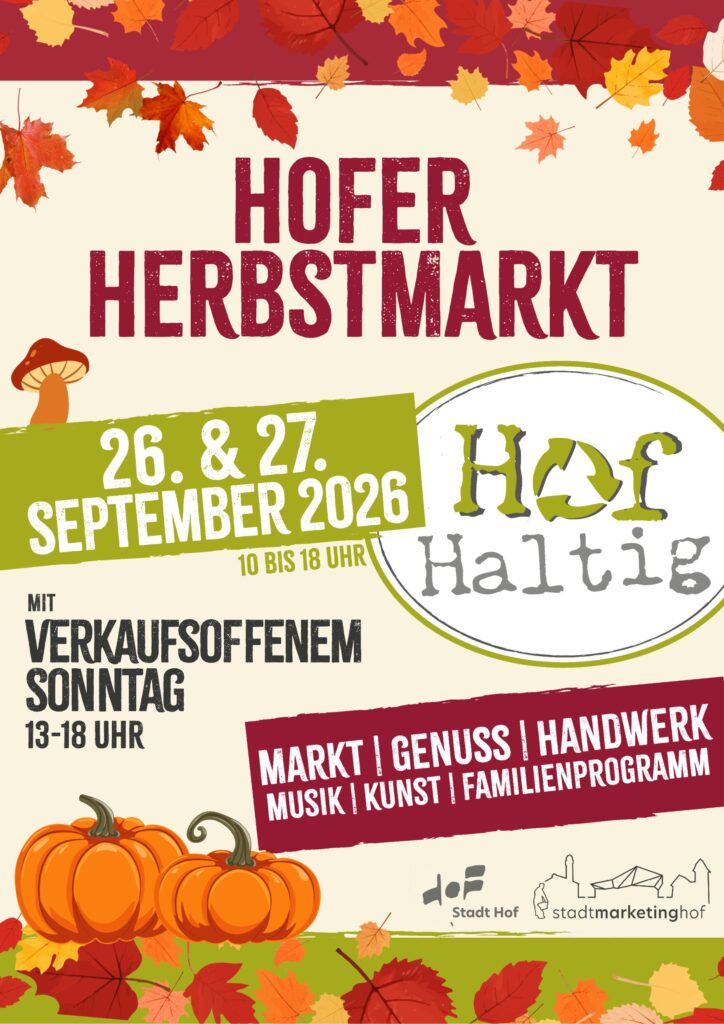
The sustainable transformation of all areas of life is one of the central societal challenges of our time. As a co-creator and driving force behind sustainable development, the focus of sustainability at Hof University of Applied Sciences is on the campus as a living space—for learning and teaching, conducting research, knowledge transfer, and working. At the Hof Autumn Market, three research institutes at Hof University of Applied Sciences will now offer a glimpse into their research. In doing so, Hof University of Applied Sciences aligns with the concept of the “HofHaltig” Autumn Market. The market stands for a conscious and responsible approach to resources, products, and the shared living space of the city center. Sustainability, regional focus, quality, and diversity are at the heart of this initiative.
Sustainable Urban Development with the Institute for Sustainable Water Systems
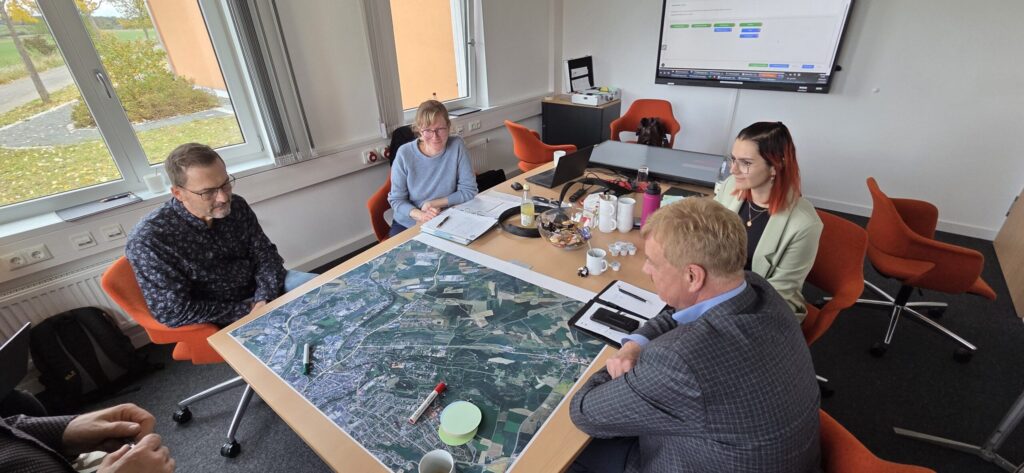
The Institute for Sustainable Water Systems (inwa) focuses , among other things, on the sustainable development of cities and municipalities. The fall market will focus on the neighborhood planning project on Trappenbergweg in Hof. The institute will explain the planned project and demonstrate how a new development area can be designed from the outset to withstand the challenges of climate change as effectively as possible.
Experiencing Art Digitally: Resource-Efficient Artificial Intelligence
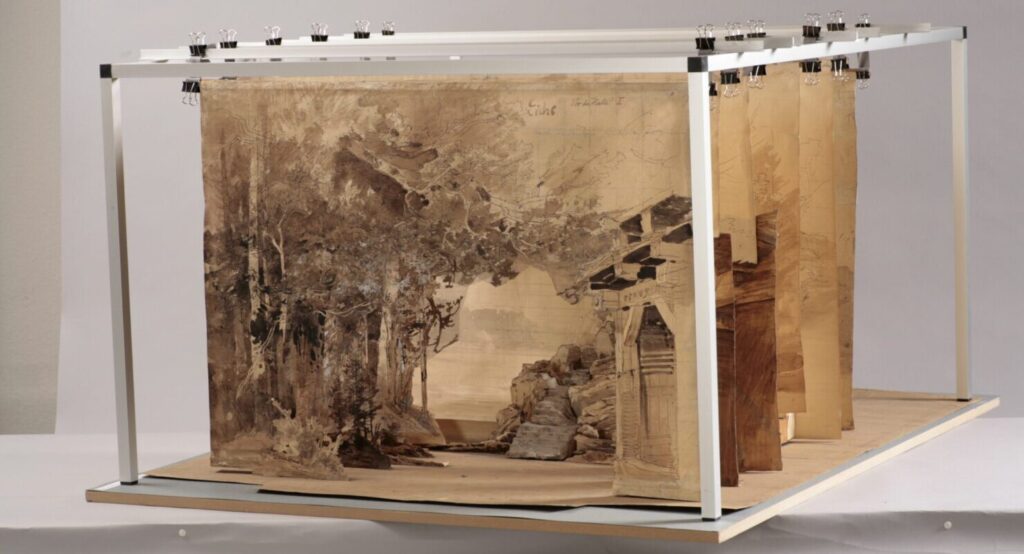
The Institute for Information Systems (iisys) focuses on resource-efficient artificial intelligence. A vivid example of this is the digitization of the stage set models at the Richard Wagner Museum in Bayreuth. Since the museum’s reopening, the valuable stage set models have been protected in a specially climate-controlled glass display case. However, the size and specific climate requirements of the display case limit the number of models that can be physically exhibited at any one time. That is why iisys is showcasing the digitized models on its server at the Fall Market. Visitors can explore them virtually and even take a virtual walk through the models. In this way, digitization opens up new possibilities for making cultural heritage accessible while conserving resources.
Plastic Waste Is Turned Into New Raw Materials
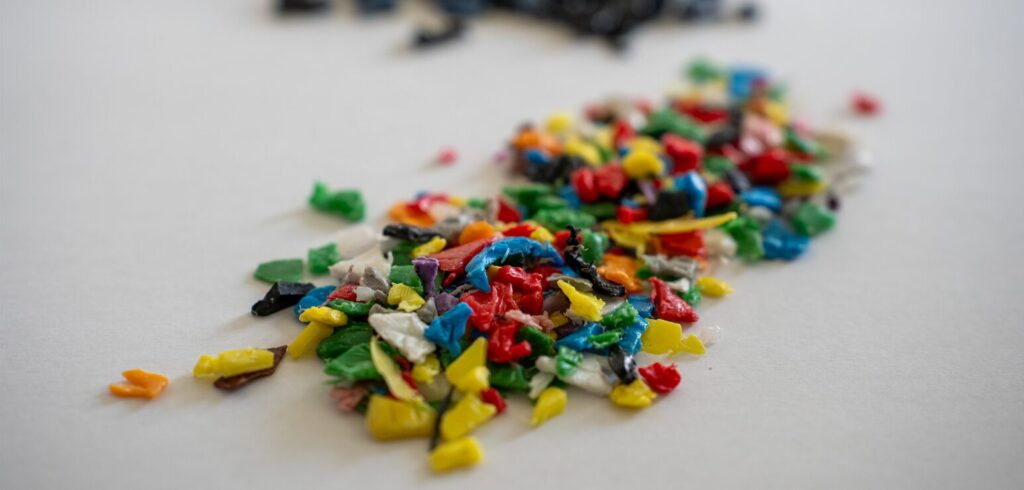
The Institute for Circular Economy of Bio:Polymers (ibp) demonstrates how usable raw materials can be created from plastic waste through its SmartReUSE project. Using analytics and artificial intelligence, the project calculates how recycled materials must be mixed effectively to produce high-quality products again. For example, old trash cans or pipes are transformed into new components such as sturdy beer keg holders, which are actually reused in everyday life.
Presentation: AI for Plastics in SMEs and Academia
The topic of artificial intelligence will also take center stage at Hof University on the main stage of the Fall Market. On Sunday, September 27, at 11 a.m., David Krieg (M.Sc.) from the Institute for Circular Economy at Bio will give a presentation on “AI for Plastics in SMEs and Academia.”
“Artificial intelligence is increasingly transforming workflows, business models, and competitive conditions—even for small and medium-sized enterprises. That’s why it’s important not to fall behind in this area.”
David Krieg
The presentation clearly explains what the term “artificial intelligence” encompasses and provides an overview of the current state of AI use in regional small and medium-sized enterprises (SMEs) as well as in materials science. It also examines successes and failures in the integration of AI within globally active corporations. Typical hurdles in the application of AI are addressed, as are practical solutions. After all, the goal of AI should be to ease the workload on employees and unlock new potential for innovation.