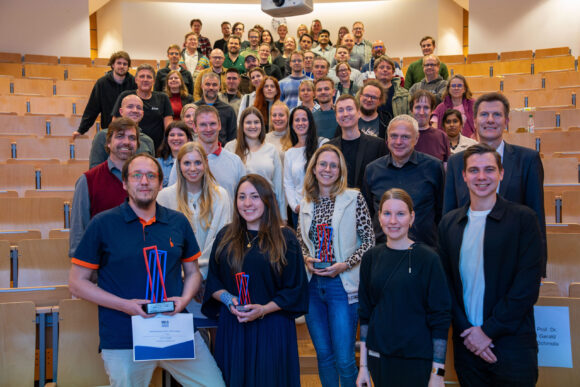


103 participants from municipalities, government agencies, academia, and the professional field gathered at Hof University of Applied Sciences to discuss how to retain water in the landscape and advance climate adaptation in rural areas. The focus was on concrete measures, digital solutions, and the question of how “sponge landscapes” can be implemented in practice.
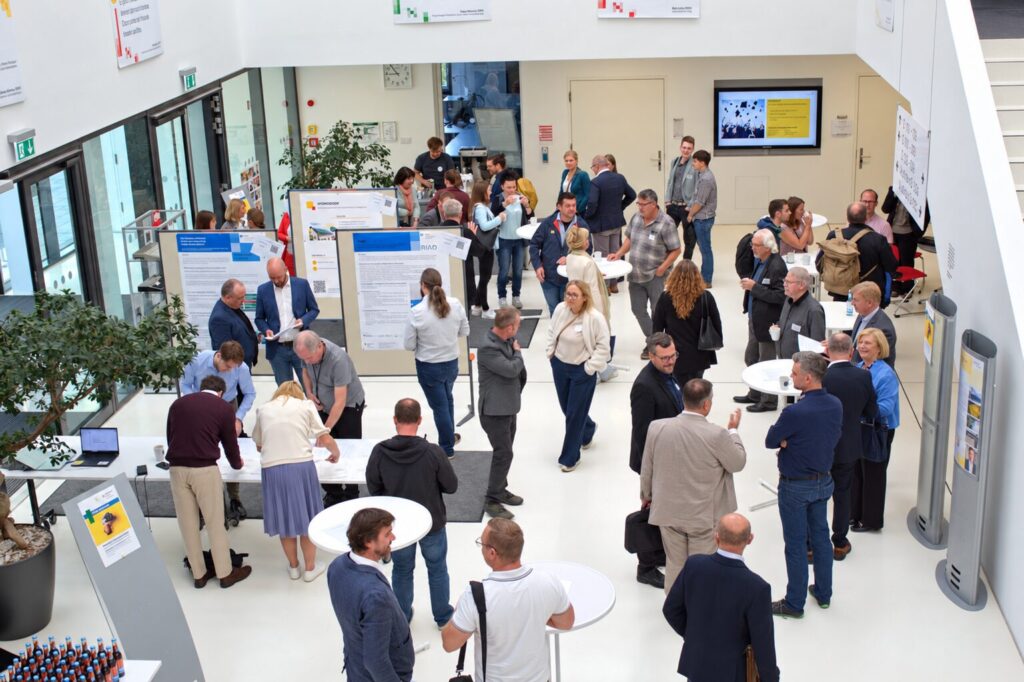
How can water be retained in the landscape instead of allowing it to drain away quickly? This was the question addressed at the 5th Hof Water Symposium on September 30 at Hof University of Applied Sciences. Under the theme “Climate Adaptation in Rural Areas—Sponge Landscapes as the Answer?,” 103 participants from government agencies, municipalities, academia, planning, and industry came together. Sponge landscapes are designed to store rainwater in the ground for as long as possible, supply the soil with moisture, and mitigate the effects of heavy rainfall and dry spells. To achieve this, agricultural land, forests, and residential areas, among other things, must be designed to better absorb and retain water. The event was hosted by the Institute for Sustainable Water Systems (inwa) at Hof University of Applied Sciences in cooperation with the Hof district.
Water Transfer Workshop: Bridging Research and Municipal Practice
The symposium focused on the results of the Water Transfer Workshop. As a subproject of the hoferLand.digital smart city pilot project, it supports municipalities in the Hof district in advancing climate adaptation using digital data and scientific findings. Opening remarks were delivered by University President Prof. Dr. Dr. h.c. Jürgen Lehmann, District Administrator Dr. Oliver Bär, and the Second Mayor of the City of Hof, Angela Bier.
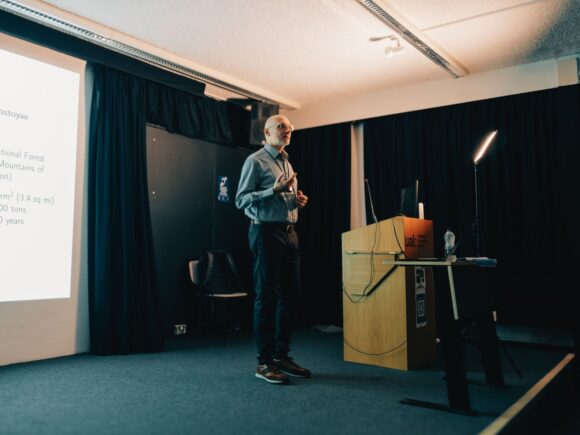
Expert insights were provided by Dr. Ganbaatar Khurelbaatar from the Helmholtz Centre for Environmental Research (UFZ) in Leipzig on blue-green infrastructure, as well as by Prof. Dr. Andreas Weiß from Coburg University and Anton Kohl from TNL Energie GmbH. They presented a modular system for land use optimized for water management and climate resilience. During a panel discussion, mayors from the Hof district shared their experiences with the “Transferwerkstatt Wasser” workshops and discussed the challenges of implementing these concepts locally.
Six thematic tables highlight specific areas for action
In the afternoon, participants deepened their understanding in a World Café. Six thematic tables focused on agriculture, forestry, buildings and real estate, digital twins, intermunicipal challenges, and practical implementation. It became clear that the shortage is often less about technical solutions than about a lack of suitable land, clear responsibilities, reliable funding, and a sufficient data foundation.
Agriculture and Forestry:
To improve water retention on agricultural land, farmers must be involved at an early stage. Hedgerows and agroforestry systems on public land were cited as possible measures. In forests, the focus is on converting to site-adapted mixed forests that improve water retention and contribute to the stability of ecosystems.
Buildings and Properties:
When it comes to measures on buildings and properties, bureaucratic hurdles and questions of economic viability are the main obstacles to implementation. Municipalities can take a leading role and raise awareness among owners and tenants about water retention options.
Digital twins:
Digital twins use digital data to model real-world areas or objects and can thus support planning decisions. However, this requires data of sufficient quality and up-to-date information, as well as uniform standards.
Intermunicipal Cooperation and Implementation:
Many challenges do not stop at municipal boundaries. To plan and implement measures over the long term, binding framework conditions and sustainable, reliable funding are needed. At the same time, the recommendation was to launch smaller projects today rather than waiting for comprehensive master plans.
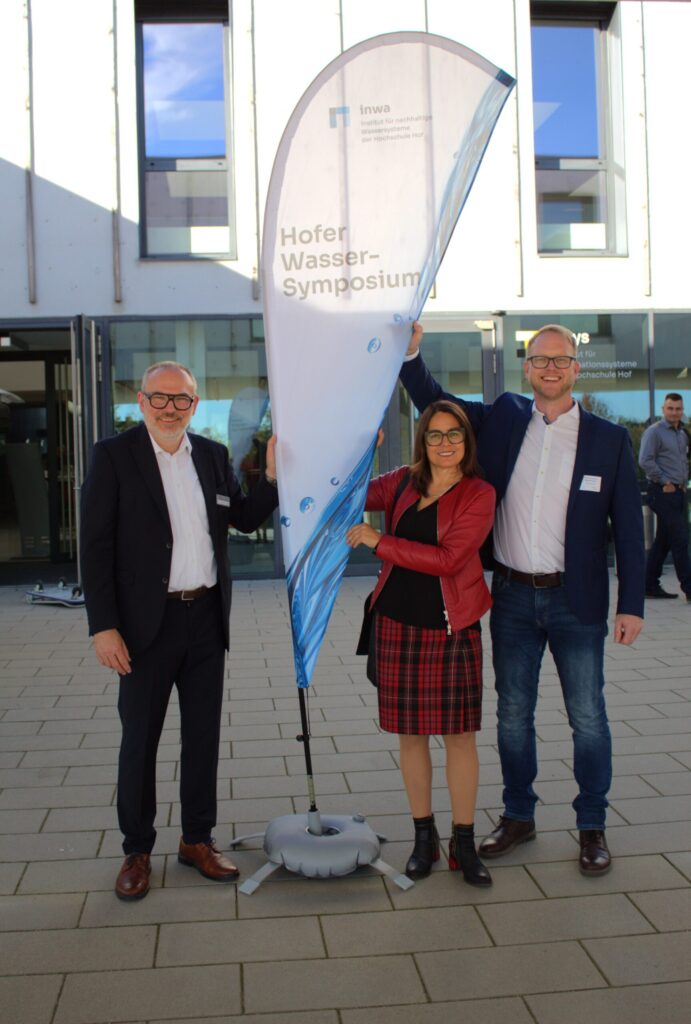
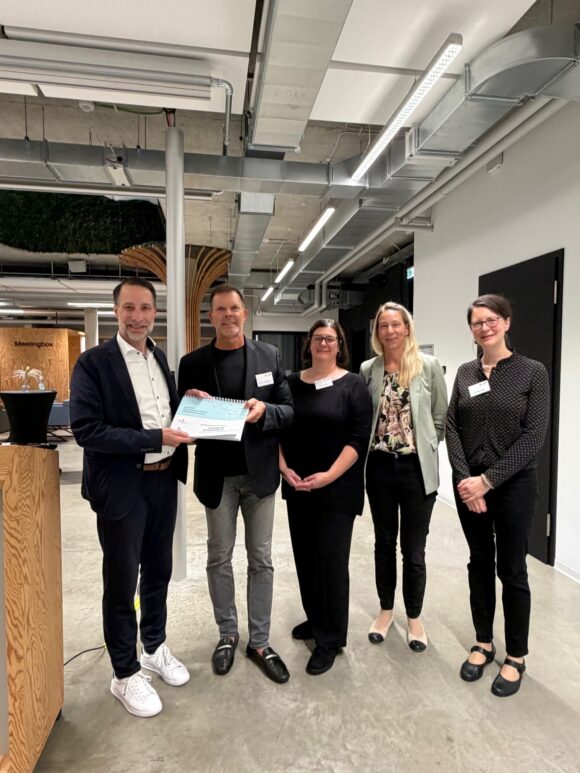
and Prof. Dr. Manuela Wimmer, along with Michael Schmidt (research associate) from the organizing team; image: Hof University;
Water retention requires concrete measures
Feedback on the 5th Hof Water Symposium was positive. Participants praised the expert presentations, the organization, and, in particular, the diverse opportunities for exchange. The World Café, in particular, demonstrated just how great the need for discussion and the interest in joint solutions are. The conclusion of the day: Significant progress has been made in water retention and the development of sponge landscapes. It is now crucial to translate the insights gained into concrete measures and establish them for the long term.
The results of the Water Transfer Workshop will be further developed at the Institute for Sustainable Water Systems (inwa) at Hof University through the Competence and Transfer Center for Sustainable Sponge Cities and Regions (ktns).
Further information: inwa.hof-university.de | Contact: wasser-symposium@hof-university.de