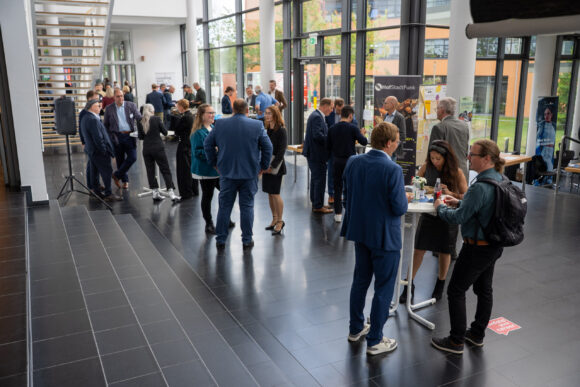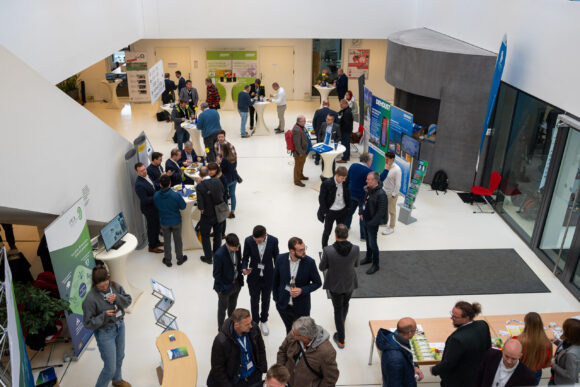


From someone who should know: Acquisition expert Hans-Lothar Busch from Baden-Baden was at Hof University of Applied Sciences for the third time – this time not for young academics, but he was available for two full days for professors and group leaders. The focus was on how to attract industry partners when traditional funding is becoming scarcer and more uncertain

One participant drew a consistently positive conclusion: “The guidelines that the seminar leader practiced with us strengthen self-confidence when talking to companies because you know you are on the right track and can control the conversation.” The seminar offered a remarkably good mix: professors from Hof, but also external participants from Coburg and Nuremberg – a heterogeneous field with a lot of potential for a concrete exchange.
The acquisition of industrial projects in particular is becoming increasingly important, says Busch, because less and less money is flowing from funding lines or because the framework conditions are becoming more uncertain. “The acceptance rates have become worse,” confirmed one participant – making it all the more urgent for research groups to professionalize their marketing strategies.
Role-playing, argumentation of benefits and genuine listening
Practical exercises in the form of role plays were typical of Hans-Lothar Busch’s seminar format. Participants exchanged ideas with each other, practiced discussion situations and simulated negotiations. Busch always emphasized the importance of the benefit argument: “What added value does the customer have?” is one of his key questions.


For him, dialog at eye level is just as important: you have to put yourself in the customer’s shoes, understand their situation and anticipate their questions. And above all: listen, don’t just talk. “Asking the customer’s condition is a must,” says Busch.
More than just a seminar
For the participants in Hof, the meeting in mid-November was far more than just another training format: it was an opportunity to sharpen their strategic focus, to prepare themselves for the increasingly difficult acquisition of funds – and to enter into negotiations with the industry with greater strength. By providing concrete tools and at the same time building self-confidence in dialog with external partners, Busch opens up paths to new, long-term industry contacts.
And perhaps this is precisely the key to a future in which science and industry really do enter into partnerships – not just for short-term projects, but for sustainable cooperation on an equal footing.